Air purifier vs furnace filter
The comparison nobody makes honestly, because the two things are not alternatives: one treats the whole house occasionally and the other treats one room continuously.
#ad We earn a commission if you buy through this link, at no extra cost to you. How this site is funded. Prices last checked November 3, 2026.
Both, and the filter first if your system runs. EPA’s own technical summary says most MERV 13 furnace filters are likely almost as effective as HEPA for indoor particles — and in the same document that air cleaning is typically limited to less than 25% of the 8,760 hours in a year, because duct filtration stops when the blower stops. A portable machine runs all 8,760 in one room.
This page exists because the two products are sold by different industries that never mention each other, and the buyer ends up choosing between them when the honest answer is that they fail in opposite directions.
How we judged it
Three questions, in this order. How much of the air does each one clean per pass? How many hours a year does it do it? And in which rooms? Marketing for both products answers the first and ignores the other two, which is why a house can have a premium filter in the furnace and a bedroom that has never been filtered.
What MERV actually promises
Furnace filters are rated by ASHRAE Standard 52.2 on a scale from MERV 1 to MERV 16. The number is not a marketing grade; it is tied to measured removal efficiency in particle size bands, and the band that matters for the fine particles in household air is 0.3 to 1 micron.
| Rating | Required removal, 0.3-1 micron | What that means here |
|---|---|---|
| Below MERV 11 | Not required to report at all | The size band that carries most indoor PM2.5 is simply untested |
| MERV 11 | At least 20% | Reports the band, but removes a fifth of it per pass |
| MERV 13 and above | At least 50% | EPA's recommended minimum for households worried about fine particles |
| A certified portable unit | Rated as CADR, not MERV | A measured cubic-feet-per-minute of clean air, comparable between brands |
EPA is explicit about what to buy: consumers who are concerned about small particles should choose furnace filters with at least a MERV 13 rating, or as high as the system fan and filter track can accommodate. It is equally explicit about the limit — the filter must be compatible with the existing ducted system so airflow is not impeded, and a trained professional may need to modify the system to fit one. A MERV 16 filter choking a blower that cannot pull through it is worse than the MERV 8 it replaced.
The hours problem, which decides the whole question
A duct filter only filters air that passes through the duct, and air only passes through the duct when the fan is running. EPA states the limit plainly: the effectiveness of furnace filters and other duct-mounted cleaners is limited by the operating hours of the HVAC system fan, and air cleaning is typically limited to less than 25 percent of the 8,760 hours in a year.
It gets starker in some homes than others. Where air conditioning comes from window units, or where the climate means neither heating nor cooling runs for months, EPA notes central systems may not operate at all or not for many months of the year — and that low runtimes greatly limit a filter’s effect simply by not passing air through it long enough.
This is the fact that decides the comparison, and the arithmetic is easy. Take a MERV 13 filter removing half the fine particles per pass, in a system that runs a fifth of the year. Then take the Honeywell InSight HPA4300, which delivers 229 certified CFM continuously in one room. The filter wins on area and loses on time; the machine wins on time and loses on area. Neither is the other’s substitute.
Which one costs more to run
The filter looks free and is not; the machine looks expensive and mostly is not. EPA’s summary notes that although central systems distribute filtered air to more of the house, they commonly cost approximately twice as much to operate as a typical portable HEPA air cleaner running for the same amount of time. That is before the filter itself, which at MERV 13 is a consumable on a three-to-twelve month cycle depending on the depth of the media and how dirty the house is.
On this side of the comparison the numbers are certified rather than estimated. Across the machines we cover, electricity runs from $17 a year at the small end to $120 at the worst, with the useful ones between $34 and $71 — the full running-cost arithmetic.
Electricity costs on this page use 18.34¢ per kWh, the U.S. average residential price for June 2026 from the U.S. Energy Information Administration, Electric Power Monthly, Table 5.3. Your rate is on your bill and is probably not this one; multiply the kWh figure by your own rate and you have your number.
How to work out your own runtime in five minutes
EPA’s under-25% figure is a national typical, and your house is not a typical. The number you want is the fraction of the year your blower actually moves air, and there are three ways to get at it without instrumentation.
Read the thermostat. Most programmable and smart thermostats report runtime — daily or monthly heating and cooling hours — somewhere in their history screens. Six hours a day is 25% of the year. Two hours a day, which is common in a mild spring, is 8%.
Count the months. If the system is idle from April to June and again from September to November, that is five months at or near zero before you even start on the daily cycle. A house with window air conditioning and gas heat can easily have a duct filter doing nothing for half the year.
Check whether the fan has a circulate setting. Many systems can run the blower independently of heating or cooling, either continuously or on a duty cycle — fifteen or twenty minutes an hour. That is the lever that turns a 25% filter into a 100% one, and it has a price attached, which is the next paragraph.
The price depends on the motor. A variable-speed ECM blower on its lowest circulate speed draws a fraction of what it does on a heating call, and running it continuously is a real but modest cost. An older single-speed PSC motor has one speed, and continuous operation on that is the expensive option — which is the context for EPA’s note that central systems commonly cost about twice as much to operate as a portable HEPA cleaner for the same hours. If you do not know which you have, the model plate on the air handler and a search will tell you in a minute.
What each one actually reaches
The furnace filter’s advantage is coverage. Every room on the duct system, including the ones nobody thought about, and no appliance in the corner, no fan noise and nothing to trip over. It also catches what is circulating between rooms, which a single portable unit never does.
The portable unit’s advantage is dose where it counts. EPA advises placing a portable cleaner where the most vulnerable occupants spend most of their time, and names a bedroom as a good place to do it. Eight hours of continuous filtration beside a sleeping allergic person is a different exposure reduction from intermittent whole-house dilution — which is also why placement matters and why a machine in a hallway is mostly decorative.
Neither reaches gases without carbon, and neither fixes a source. A litter box that needs emptying, a damp wall or a smoker in the next room will defeat both — what carbon can do.
The decision, in three cases
Central heating and cooling that runs most of the year: fit the highest MERV the equipment tolerates — EPA’s floor is 13 — and add one certified portable machine for the bedroom of whoever has symptoms. That order buys the most clean air per dollar.
No ducts, window units, or a system that idles for months: the furnace filter is close to irrelevant and the portable machine is the entire intervention. Size it by certified CADR against the room, not by the coverage claim on the box.
One specific problem in one specific room — a cat that sleeps on the bed, a nursery, a basement that smells of damp: portable, every time. The problem is local and so is the solution.
Quick picks
The machines worth putting next to a good furnace filter, ranked on certified CADR for the room each is certified for.
| # | Product | Best for | Certified CADR | Price |
|---|---|---|---|---|
| 1 | 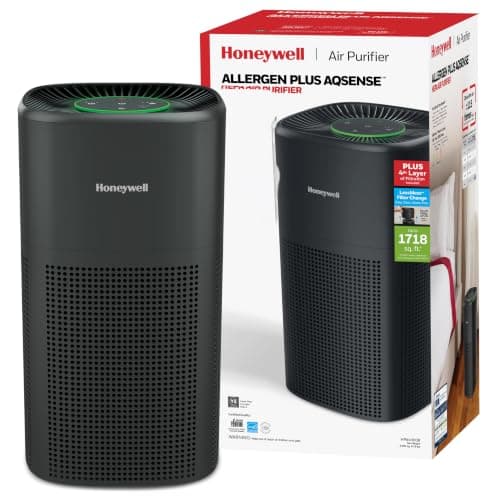 Best alongside a furnace filter Honeywell InSight HPA4300 354 certified sq ft in the one room you sleep in, running every hour the blower does not. | True HEPA on the lowest power draw | 229CFM smoke AHAM VERIFIDE | |
| 2 | 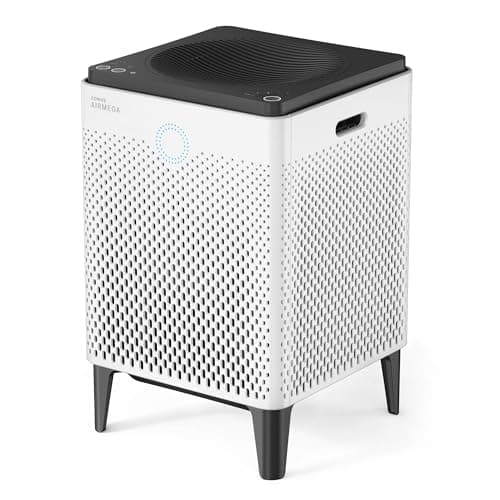 Best for an open-plan floor Coway Airmega 400 376 certified CFM, washable pre-filters, and the only whole annual bill we can compute. | Large rooms, verified Coway | 376CFM smoke ENERGY STAR verified | |
| 3 | 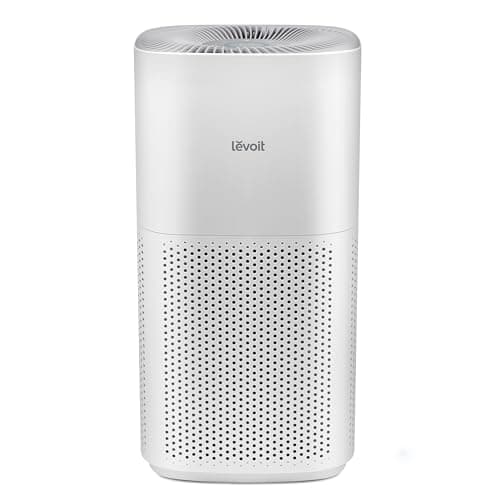 Best large single room LEVOIT Core 600S 391 certified CFM across 606 certified sq ft with 0.00 ppb measured. | Large open-plan rooms | 391CFM smoke ENERGY STAR verified |
#ad We earn a commission if you buy through this link, at no extra cost to you. How this site is funded. Prices last checked November 3, 2026.
What to buy alongside the filter
Honeywell InSight HPA4300
Honeywell · model HPA4300B
#ad We earn a commission if you buy through this link, at no extra cost to you. How this site is funded. Prices last checked November 3, 2026.
The efficiency winner among true-HEPA units at living-room size: 229 certified smoke CADR on 31 watts, zero measured ozone, and a filter the register classifies as HEPA rather than HEPA-Type.
229 smoke / 238 dust / 245 pollen CFM · 233 PM2.5
- Certified room size
- 354 sq ft
- Energy / year
- 185 kWh
- Electricity / year
- $34
- Air per watt
- 7.4 CFM/W
- Power draw
- 31 W
- Noise
- Not published
- Measured ozone
- 0 ppb
- Filter class
- HEPA
- AHAM rule, 300 sq ft
- Clears it (200 needed)
No ionizer — filtration only
Both registers classify this unit as fan-and-filter only.
229 certified smoke CADR across 354 certified square feet on 31 watts — $34 a year, which is roughly half what EPA says the central system costs for the same hours. The register records the filter HEPA and measures 0.00 ppb ozone.
The honest con: no published noise figure, no filter price and no interval, so unlike a furnace filter you cannot price the consumable before you commit.
Coway Airmega 400
Coway · model Airmega 400 (AP-2015F)
#ad We earn a commission if you buy through this link, at no extra cost to you. How this site is funded. Prices last checked November 3, 2026.
The Coway that is actually in a certification register: 376 certified smoke CADR, 583 square feet, zero measured ozone. If you want a Coway, this is the one with third-party numbers.
376 smoke / 384 dust / 409 pollen CFM · 380 PM2.5
- Certified room size
- 583 sq ft
- Advertised coverage
- 3,120 sq ft in 60 minutes
- Energy / year
- 366 kWh
- Electricity / year
- $67
- Air per watt
- 6.1 CFM/W
- Power draw
- 66 W
- Noise
- 22-52 dB(A)
- Measured ozone
- 0 ppb
- Filter class
- Composite Filter
- AHAM rule, 500 sq ft
- Clears it (334 needed)
No ionizer — filtration only
ENERGY STAR classifies this unit 'Fan and Filter', 0.00 ppb measured ozone.
376 certified CFM across 583 certified square feet, washable pre-filters, and the only machine we cover where both halves of the annual bill are published: $196 a year all in. Our full review.
The honest con: the most expensive machine here to buy and to own, and the register declines to classify its filter either HEPA or HEPA-Type — it is recorded as a composite filter, which tells you less than the Honeywell’s entry does.
LEVOIT Core 600S
LEVOIT · model Core 600S (LAP-C601S-WUS)
#ad We earn a commission if you buy through this link, at no extra cost to you. How this site is funded. Prices last checked November 3, 2026.
391 certified smoke CADR is real large-room capability, and it is honest about needing 387 kWh a year to deliver it — the highest electricity bill of any LEVOIT we cover.
391 smoke / 398 dust / 436 pollen CFM · 394 PM2.5
- Certified room size
- 606 sq ft
- Advertised coverage
- 2,909 sq ft at 1 air change per hour
- Energy / year
- 387 kWh
- Electricity / year
- $71
- Air per watt
- 6 CFM/W
- Power draw
- 49 W
- Noise
- 26-55 dB
- Measured ozone
- 0 ppb
- Filter class
- HEPA-Type
- AHAM rule, 500 sq ft
- Clears it (334 needed)
No ionizer — filtration only
ENERGY STAR classifies this unit 'Fan and Filter', 0.00 ppb measured ozone.
391 certified CFM across 606 certified square feet with 0.00 ppb measured, 26-55 dB published, and a $59.99 filter. Our full review.
The honest con: 387 kWh a year is the highest electricity bill of any LEVOIT we cover — $71 — and in a room under about 400 square feet it is more machine than the furnace filter leaves anything for.
Common questions
Is a MERV 13 furnace filter as good as a HEPA air purifier?
Do I still need an air purifier if I have a good furnace filter?
Can I just leave the furnace fan set to ON all the time?
Will a high-MERV filter damage my furnace?
Which should I buy first?
Sources
- EPA — Residential Air Cleaners: A Technical Summary, 3rd edition (EPA 402-F-09-002)
- EPA — Air Cleaners and Air Filters in the Home
- EPA — Guide to Air Cleaners in the Home
- AHAM — air filtration standards and the two-thirds rule
- ENERGY STAR certified room air cleaners database
Figures were read on the dates shown against each source. If one has changed, or if we have got something wrong, tell us and we will correct the page.
Read next
- CADR & costHow to Choose an Air PurifierThe whole selection method as a walkthrough: room first, certified CADR second, register third, ozone fourth, running cost last.
- CADR & costAre air purifiers worth it?Worth it for airborne particles in a room you spend hours in. Not worth it for gases, mold behind walls, or a room you cannot size correctly.
- CADR & costTrue HEPA vs HEPA-TypeWhy 'True HEPA' certifies nothing, and which units the registers actually classify as HEPA.
- CADR & costWhat an air purifier costs to runCertified annual energy use converted to dollars for every unit, with the rate and its source stated.
- CADR & costDo houseplants clean the air?No. The peer-reviewed review that converted plant chamber studies into CADR found them orders of magnitude slower than opening a window. What to buy if you wanted clean air rather than a plant.