Are air purifiers worth it?
The honest version: worth it for some problems, useless for others, and the running cost is higher than the sticker suggests. Here is how to tell which case you are in.
#ad We earn a commission if you buy through this link, at no extra cost to you. How this site is funded. Prices last checked September 23, 2026.
Worth it when three things are true: you have an airborne particle problem, the machine’s certified CADR matches the room, and you will keep buying filters. Fail any one of those and the money is wasted. The honest annual cost is electricity plus filters — roughly $34 to $196 a year depending on the machine.
This page exists because the question is usually answered by someone selling one. The useful answer has conditions attached, and the conditions are checkable.
What a purifier measurably does
A portable air cleaner removes particles from the air of one room at a measured rate. That rate is its Clean Air Delivery Rate, tested to a standard (ANSI/AHAM AC-1) in a sealed chamber with three test particles: tobacco smoke, dust and pollen. It is one of the few numbers in consumer goods that is independently verified and directly comparable between brands — what CADR is and is not.
What follows from that is narrow and real. In the room it is sized for, running continuously, a certified machine measurably lowers airborne particle concentration. Cat and dog allergen, pollen, dust, wildfire and tobacco particulate are all in that category.
What it does not do
It does not clean the room next door. CADR is measured in a sealed chamber. Air that leaves through a doorway is not being treated, and two machines’ figures cannot be added together.
It does not fix a source. Mold growing behind a wall, a litter box that needs emptying, a smoker in the next room: the purifier treats the symptom continuously and forever. Source control is cheaper.
It does not remove gases unless it carries carbon, and then only for a while. The CADR test measures particles. Odor molecules are gases; they need activated carbon, carbon saturates, and almost nobody publishes how fast — what carbon actually does.
It does not reach most dust mite allergen. The majority rides on particles that settle within minutes, into bedding and carpet. Mattress covers and hot washing beat any machine for that problem.
What the trials actually show
“Worth it” implies a benefit, and the honest summary of the clinical literature is narrower than either the marketing or the skeptics suggest. Controlled trials of HEPA filtration in allergic households generally find measurable reductions in airborne allergen and small, statistically real improvements in symptoms. They do not find that symptoms disappear, and they rarely find effects as large as the reduction in airborne particle counts alone would suggest.
The gap between those two things is the most useful fact on this page. A purifier addresses the airborne fraction of an exposure. For cat allergen, which rides on small particles that stay airborne for hours, that fraction is substantial. For dust mite allergen, most of which sits in bedding until it is disturbed, it is small. Same machine, same room, very different value — which allergens stay airborne and which do not.
EPA’s own guidance takes the same shape: portable air cleaners can reduce indoor particle concentrations, and they are the third step after controlling the source and ventilating. Any page that tells you a machine fixes an allergy is selling one.
The real cost, both halves
The sticker price is the part everyone compares. The bill that matters is annual, and it has two halves. Electricity is certified and therefore knowable: across everything we cover it runs from $17 a year at the small end to $120 at the worst, with most useful machines between $34 and $71.
| Machine | Electricity | Filters | Total per year |
|---|---|---|---|
| Coway Airmega 400 | $67 | $129 (12-month set) | $196 |
| LEVOIT Core 400S | $43 | $49.99 a filter, interval not published | Not computable |
| Honeywell InSight HPA4300 | $34 | Neither published | Not computable |
Electricity costs on this page use 18.34¢ per kWh, the U.S. average residential price for June 2026 from the U.S. Energy Information Administration, Electric Power Monthly, Table 5.3. Your rate is on your bill and is probably not this one; multiply the kWh figure by your own rate and you have your number.
Two conclusions a buyer can act on. First, the cheap machine is frequently the expensive one: the least efficient unit we cover costs $120 a year in electricity alone, more than triple the most efficient one at a similar output. Second, if a manufacturer will not publish a filter price and an interval, you are signing up for a recurring cost nobody will quote you.
Three questions that settle it for your room
1. Is the problem airborne? Dander, pollen, dust, smoke particulate: yes. Smell without a particle source: only with carbon, and temporarily. Mold growing behind a wall, or damp: no — that is a moisture problem and a purifier treats spores in the air while the colony keeps producing them.
2. Can you size it correctly? Measure the room, apply AHAM’s two-thirds rule, and check the certified CADR — not the advertised coverage, which is routinely four to five times larger. If the machine you can afford does not clear the rule for the room you have, the honest options are a smaller room, a bigger machine or no machine — the calculator does this.
3. Will you keep buying filters? A purifier with a loaded filter is a noisy fan. If the honest answer is that you will not remember or budget for replacements, buy the machine whose manufacturer publishes both a price and an interval, so the commitment is visible before you make it.
Three yeses and it is worth it. One no and you are buying an appliance to solve a problem it does not address, which is where most of the disappointment in this category comes from.
When it is worth it, concretely
Worth it: a bedroom or living room you spend hours in, with a shedding animal, a pollen season, a smoker, a wildfire month or a dust problem you can see. A correctly sized certified machine, running continuously, costs about the price of a coffee a week to run and does something measurable.
Not worth it: a room you pass through; a whole house you hoped one unit would cover; a mold problem with a water source you have not fixed; a machine chosen on advertised coverage rather than certified CADR, which is how most undersized purchases happen.
Worth it only with conditions: odor. Carbon works, then stops working, and the replacement schedule is the cost. Buy carbon if odor is the problem, and budget for it.
Quick picks
If the answer is yes for your room, these three are where the evidence points.
| # | Product | Best for | Certified CADR | Price |
|---|---|---|---|---|
| 1 | 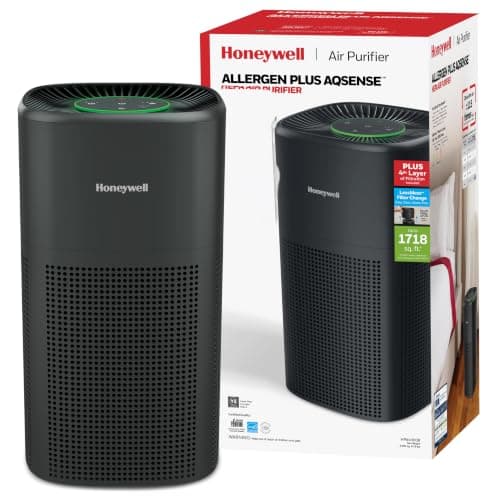 Best value on the evidence Honeywell InSight HPA4300 229 certified CFM on 31 watts, recorded HEPA, 0.00 ppb measured. | True HEPA on the lowest power draw | 229CFM smoke AHAM VERIFIDE | |
| 2 | 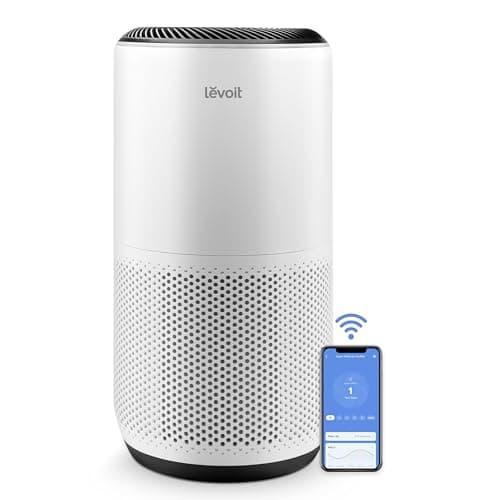 If you want the numbers published LEVOIT Core 400S 231 certified CFM, 22-52 dB and a named filter price. | Popular pick, mid-size rooms | 231CFM smoke ENERGY STAR verified | |
| 3 | 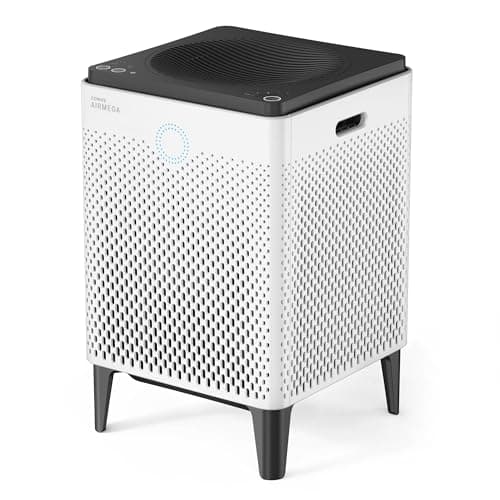 Whole running cost knowable Coway Airmega 400 376 certified CFM, and the only machine here with both cost halves published. | Large rooms, verified Coway | 376CFM smoke ENERGY STAR verified |
#ad We earn a commission if you buy through this link, at no extra cost to you. How this site is funded. Prices last checked September 23, 2026.
If the answer is yes, these are the machines
Honeywell InSight HPA4300
Honeywell · model HPA4300B
#ad We earn a commission if you buy through this link, at no extra cost to you. How this site is funded. Prices last checked September 23, 2026.
The efficiency winner among true-HEPA units at living-room size: 229 certified smoke CADR on 31 watts, zero measured ozone, and a filter the register classifies as HEPA rather than HEPA-Type.
229 smoke / 238 dust / 245 pollen CFM · 233 PM2.5
- Certified room size
- 354 sq ft
- Energy / year
- 185 kWh
- Electricity / year
- $34
- Air per watt
- 7.4 CFM/W
- Power draw
- 31 W
- Noise
- Not published
- Measured ozone
- 0 ppb
- Filter class
- HEPA
- AHAM rule, 300 sq ft
- Clears it (200 needed)
No ionizer — filtration only
Both registers classify this unit as fan-and-filter only.
229 certified smoke CADR across 354 certified square feet for $34 a year at 7.4 CFM per watt — the best air-per-watt figure on this site. Listed in both registers, filter recorded HEPA, 0.00 ppb measured ozone, no ion stage.
The honest con: Honeywell publishes no noise figure, no filter interval and no filter price we could source, so the running cost stops at electricity and the bedroom question is unanswerable before you buy.
LEVOIT Core 400S
LEVOIT · model Core 400S (LAP-C401S)
#ad We earn a commission if you buy through this link, at no extra cost to you. How this site is funded. Prices last checked September 23, 2026.
The best-selling unit in the category, and a clean example of the coverage gap: ENERGY STAR certifies it for 358 square feet while the box advertises 1,718.
231 smoke / 240 dust / 259 pollen CFM · 236 PM2.5
- Certified room size
- 358 sq ft
- Advertised coverage
- 1,718 sq ft at 1 air change per hour
- Energy / year
- 237 kWh
- Electricity / year
- $43
- Air per watt
- 5.8 CFM/W
- Power draw
- 38 W
- Noise
- 22-52 dB
- Measured ozone
- 0 ppb
- Filter class
- HEPA-Type
- AHAM rule, 350 sq ft
- Short (234 needed)
No ionizer — filtration only
ENERGY STAR classifies this unit 'Fan and Filter' and measures 0.00 ppb ozone. LEVOIT markets it as ozone free.
231 certified CFM across 358 certified square feet with 0.00 ppb measured, plus the two figures most rivals leave blank: 22-52 dB and a $49.99 filter. App, sensor and scheduling if you want them.
The honest con: beaten on air per watt by the Honeywell above for a near-identical room, a HEPA-Type rather than HEPA classification, and no published filter interval — so the annual filter cost still cannot be computed.
Coway Airmega 400
Coway · model Airmega 400 (AP-2015F)
#ad We earn a commission if you buy through this link, at no extra cost to you. How this site is funded. Prices last checked September 23, 2026.
The Coway that is actually in a certification register: 376 certified smoke CADR, 583 square feet, zero measured ozone. If you want a Coway, this is the one with third-party numbers.
376 smoke / 384 dust / 409 pollen CFM · 380 PM2.5
- Certified room size
- 583 sq ft
- Advertised coverage
- 3,120 sq ft in 60 minutes
- Energy / year
- 366 kWh
- Electricity / year
- $67
- Air per watt
- 6.1 CFM/W
- Power draw
- 66 W
- Noise
- 22-52 dB(A)
- Measured ozone
- 0 ppb
- Filter class
- Composite Filter
- AHAM rule, 500 sq ft
- Clears it (334 needed)
No ionizer — filtration only
ENERGY STAR classifies this unit 'Fan and Filter', 0.00 ppb measured ozone.
The only machine we cover where both halves of the running cost are published: $67 of electricity plus $129 of filters a year. 376 certified CFM across 583 square feet, 0.00 ppb, washable pre-filters. Our full review.
The honest con: it is the most expensive machine here to buy and to own, the register declines to classify its filter HEPA or HEPA-Type, and in a room under about 400 square feet it is more machine than you need.
Common questions
Are air purifiers actually worth the money?
How much does it cost to run an air purifier for a year?
Do air purifiers help with allergies?
Is it worth leaving an air purifier on all the time?
Sources
- EPA — Guide to Air Cleaners in the Home
- ENERGY STAR certified room air cleaners database
- AHAM — air filtration standards and the two-thirds rule
- EIA — average retail price of electricity
Figures were read on the dates shown against each source. If one has changed, or if we have got something wrong, tell us and we will correct the page.
Read next
- CADR & costWhat an air purifier costs to runCertified annual energy use converted to dollars for every unit, with the rate and its source stated.
- CADR & costHow to Choose an Air PurifierThe whole selection method as a walkthrough: room first, certified CADR second, register third, ozone fourth, running cost last.
- CADR & costWhat CADR actually meansThe cornerstone explainer: what CADR measures, why it resists gaming, and certified versus claimed.