HEPA vs ionizers vs ozone generators
Three things sold in the same aisle that work in completely different ways, one of which regulators tell you to avoid.
#ad We earn a commission if you buy through this link, at no extra cost to you. How this site is funded.
HEPA filtration physically traps particles and produces no by-products. Ionizers charge particles so they clump and settle, and may emit ozone as a side-effect. Ozone generators produce ozone deliberately. EPA advises avoiding air cleaners that intentionally produce ozone, because ozone is a lung irritant.
These three sit next to each other in shops and in search results, and they are not variants of one thing. Understanding the differences takes about four minutes and it is the single most useful thing on this site if somebody in your house has a respiratory condition.
HEPA: mechanical, boring, and the baseline
A HEPA filter is a dense mat of fine fibers. Air is pushed through it and particles are physically captured — intercepted, impacted, or caught by diffusion depending on their size. Nothing is created, nothing is emitted, and the captured material is removed from the room when you replace the filter.
The only meaningful variables are how efficient the media is and how much air passes through it, and Clean Air Delivery Rate captures both together. That is why CADR is the number to buy on and why filter grade alone is a poor proxy. What CADR measures.
Ionizers: a different mechanism with a side-effect
An ionizer emits charged ions into the room. Airborne particles pick up that charge, become attracted to each other and to surfaces, clump, and settle out of the air faster than they otherwise would. Particles are removed from suspension, which is genuinely something — but note where they go. They land on surfaces in the room rather than being captured in a filter you can throw away.
The relevant concern is that generating ions can also generate ozone. EPA states that air cleaners containing electrostatic precipitators, ionizers, UV lights without adequate lamp coatings and plasma air cleaners may have the potential to emit ozone.
How much, in practice? This is where the ENERGY STAR register earns its keep, because it publishes a measured figure per model.
| Unit | Technology as recorded | Ozone ppb |
|---|---|---|
| Honeywell HPA4300 / 4100 / 6000 | Fan and filter | 0.00 |
| Winix AT40 / AT41 | Fan and filter | 0.00 |
| LEVOIT Core 400S | Fan and filter | 0.00 |
| LEVOIT Core 600S | Fan and filter | 0.00 |
| Medify Air MA-40 | Fan and filter | 0.00 |
| Coway Airmega 400 | Fan and filter | 0.00 |
| Winix C710 | Fan and filter | 1.00 |
| Alen BreatheSmart 75i | Fan and filter | 1.00 |
| Winix T810 | Fan and filter, PlasmaWave | 1.35 |
| Blueair 411i / 311i / 211i Max | Fan and filter | 2.00 |
| Blueair Blue Pure 211+ | Ion generator, fan and filter | 5.00 |
Ozone generators: a different product entirely
These are not stronger air purifiers. They work by generating a reactive gas, and the concentrations required to affect airborne contaminants are not concentrations that are appropriate in a room with people in it. They are marketed hardest for exactly the situations where people are most desperate — smoke damage, mold, persistent odors. The full comparison.
What to actually do
- No respiratory conditions in the house: buy on certified CADR and running cost. A 2 ppb ionizing machine is not something to worry about.
- Asthma, COPD, or a small child: choose a machine the register records as fan-and-filter with 0.00 ppb. You give up nothing — our overall pick across this site is in that group.
- You already own an ionizing machine: if the ionizer is switchable, switch it off. Certified CADR does not depend on it.
- Never run an ozone generator in an occupied space.
Quick picks
Certified machines that the register records as fan-and-filter with zero measured ozone.
| # | Product | Best for | Certified CADR | Price |
|---|---|---|---|---|
| 1 | No photo Zero ozone, best efficiency Honeywell InSight HPA4300 Fan and filter only, 0.00 ppb measured, 7.4 CFM per watt. | True HEPA on the lowest power draw | 229CFM smoke AHAM VERIFIDE | |
| 2 | 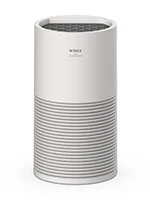 Zero ozone, more air Winix AT41 265 certified CFM with no ion generator at all. | Pet allergies, whole living room | 265CFM smoke AHAM VERIFIDE | |
| 3 | No photo Zero ozone, large rooms LEVOIT Core 600S 391 certified CFM across 606 sq ft, 0.00 ppb measured. | Large open-plan rooms | 391CFM smoke ENERGY STAR verified |
#ad We earn a commission if you buy through this link, at no extra cost to you. How this site is funded.
Common questions
Are ionizers bad for you?
What is the difference between an ionizer and an ozone generator?
Should I turn off the ionizer on my air purifier?
Sources
- EPA — Guide to Air Cleaners in the Home
- ENERGY STAR certified room air cleaners database, with measured ozone
- AHAM VERIFIDE directory of certified room air cleaners
Figures were read on the dates shown against each source. If one has changed, or if we have got something wrong, tell us and we will correct the page.
Read next
- AllergiesAir purifier vs ozone generatorWhy an ozone generator is not a stronger air purifier, and what EPA says about using them indoors.
- Pet allergiesAir purifiers for asthma in a pet householdWhy ionizer status outranks CADR when someone is asthmatic, with measured ozone figures for every unit.
- AllergiesDo air purifiers help with asthma?The evidence reported as written, and why ionizer status matters more here than CADR.