Do houseplants clean the air?
The NASA study is real, 37 years old, and was run in a sealed chamber the size of a wardrobe. What happened when somebody converted three decades of plant studies into the same unit air purifiers are measured in.
#ad We earn a commission if you buy through this link, at no extra cost to you. How this site is funded. Prices last checked November 3, 2026.
No, not at any rate you would notice. A 2019 review converted 30 years of plant chamber studies into the same unit air purifiers are measured in and found the removal rate orders of magnitude slower than a building’s own air exchange. If the goal is measurably cleaner air in one room, the Honeywell InSight HPA4300 delivers 229 certified CFM for about $34 a year in electricity.
This is one of the few questions in this category with a clean answer, and the reason it keeps getting a muddy one is that the famous study is real. It just does not say what it is quoted as saying.
How we judged it
The same way we judge a machine, which is the point. A thing that cleans air can be described by how much air it cleans per unit of time — that is what Clean Air Delivery Rate is, in cubic feet per minute. So the question “do plants clean the air” becomes a comparable one: what is a plant’s clean air delivery rate, and who measured it?
Three things had to be true for a plant to earn a recommendation here. Somebody other than a seller must have measured the removal rate. The measurement must have been made in conditions resembling a room rather than a sealed box. And the resulting rate must be large enough to matter next to the air exchange a house already has. The first is nearly satisfied. The second and third are not.
What the NASA study actually was
In 1989 NASA published work on plants and volatile organic compounds, aimed at sealed spacecraft rather than living rooms. Individual plants were placed in small sealed chambers, a compound such as formaldehyde or benzene was introduced, and the concentration was watched as it fell. It did fall. That is the entire basis of nearly every “air-purifying plants” list published since.
A sealed chamber has one property your home does not: no air exchange. Remove the seal and the plant is competing with every other route air takes out of a room, and that is where the comparison collapses.
What happened when somebody did the arithmetic
In 2019, Bryan Cummings and Michael Waring at Drexel University pulled together roughly a dozen studies spanning 30 years of this research and converted each one into clean air delivery rate, so plants could be compared with ventilation and with machines. Their conclusion, published in Nature’s Journal of Exposure Science and Environmental Epidemiology, was that the rate at which plants dissipated volatile organic compounds in a chamber is orders of magnitude slower than the standard rate of air exchange in a building.
Drexel’s own account of its researchers’ finding puts the scale in household terms: it would take 100 to 1,000 plants per square meter of floor space to compete with the air-cleaning capacity of a building’s air handling system — a capacity the same summary compares to just a couple of open windows in a house. A ten-by-twelve foot bedroom is about 11 square meters of floor. The low end of that range is more than a thousand plants in the bedroom.
The half of the question nobody studied
Every plant study above is about gases. The problem most people on this site are trying to solve is not gases. Cat and dog allergen, pollen, dust mite debris and smoke particulate are particles, and they behave nothing like formaldehyde — which allergens stay airborne and which settle.
For particles there is no plant literature to convert, because there is no plant particle-removal test. A leaf is a surface, and particles do settle on surfaces; they also settle on your bookshelf, which nobody sells as an air purifier. The honest statement is that a plant’s particle removal rate is not low, it is unmeasured — and the machines on this page have a figure produced by a third party for exactly that job.
| What it is | Certified smoke CADR | Who measured it | Room it is certified for |
|---|---|---|---|
| A potted houseplant | No figure exists | Nobody — no CADR test has been run on a plant | — |
| Honeywell InSight HPA4300 | 229 CFM | AHAM VERIFIDE | 354 sq ft |
| LEVOIT Core 400S | 231 CFM | ENERGY STAR | 358 sq ft |
| Blueair Blue Pure 311i Max | 283 CFM | AHAM VERIFIDE | 439 sq ft |
Why the label says it anyway
“Air-purifying plant” is not a regulated phrase, and there is no body that certifies one. The 1989 work it rests on was commissioned with sealed spacecraft and closed life-support systems in mind — environments with no air exchange at all, where a slow removal process has time to matter. Lifted out of that context and onto a garden-center label, the same result implies something it never tested: that a plant does useful work in a room with a door, a window and a heating system.
The 2019 review did not find fraud, then, and it is worth being precise about that, because “the NASA study was debunked” is as wrong as the claim it replaces. The chamber results stand. What the review established is the thing nobody had computed: converted into a rate and compared with the air exchange every building already has, those results are too small to act on. A real finding, honestly scaled, that turns out not to support the product built on it.
What plants are genuinely for
They are pleasant to live with, and there is a body of research on indoor greenery and mood and attention that is nothing to do with filtration. None of it requires the air-cleaning claim to be true, which is why the claim being false costs you nothing — unless you bought plants instead of a machine for a room with a shedding animal in it, which is the mistake this page exists to prevent.
Two cautions for an allergic household, both modest. Wet potting soil is a damp organic surface indoors, and EPA’s guidance on mold is that growth follows moisture; and flowering plants produce pollen. If someone in the house reacts to mold or pollen, a row of over-watered pots in the bedroom is working against the machine in the corner.
What a plant would have to deliver to count
It is worth doing the arithmetic in the units this site uses, because “orders of magnitude” is easy to nod along to and hard to picture. A ten-by-twenty foot bedroom with 8 ft ceilings holds 1,600 cubic feet of air. One air change an hour — the weakest cleaning rate anyone advertises — means moving 1,600 cubic feet in sixty minutes, which is about 27 cubic feet a minute. AHAM sizes certified machines at 4.8 air changes instead, so the same room wants roughly 134 CFM, which is what the two-thirds rule produces.
So the bar for a houseplant to be an air cleaner in any useful sense is somewhere between 27 and 134 cubic feet of air a minute, continuously, in one bedroom. The 2019 review did not find a plant falling short of that number. It found that the entire published literature, converted into the same unit, sat orders of magnitude below a building’s background air exchange — which is itself a fraction of what a certified machine delivers.
A second comparison makes the point from the other end. The Honeywell InSight HPA4300 moves 229 cubic feet a minute, which is 13,740 cubic feet an hour — about 9 times the volume of that bedroom, every hour, for $34 a year. No arrangement of pots competes with that, and no arrangement of pots was ever tested against it.
This is also why the question is worth answering carefully rather than dismissively. The plant studies were real experiments with real results; the error is one of scale, and scale is exactly what a Clean Air Delivery Rate measures. The reason this site keeps returning to one number is that it survives this kind of comparison — a machine, a window and a plant can all be put on the same axis, and only two of them appear on it at all.
The free option the review actually endorses
The most quotable line in the Drexel summary is not about plants. It is that a building’s air handling capacity — the thing plants would need to be thousandfold to match — is comparable to a couple of open windows. If your problem is stale indoor air and the pollen count outside is low, opening a window beats every plant and every machine, costs nothing, and is what both EPA and AHAM list ahead of filtration.
Filtration earns its place when you cannot ventilate: pollen season, wildfire month, a city street, a cat that lives indoors. That is the case where the measured number matters, and where a plant has nothing to offer.
Quick picks
If you came here hoping a plant would do it, these are the three machines that measurably do, ranked on certified CADR against the room each is certified for.
| # | Product | Best for | Certified CADR | Price |
|---|---|---|---|---|
| 1 | 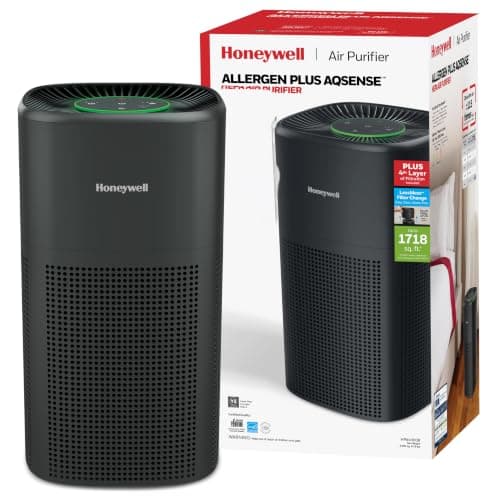 Best overall Honeywell InSight HPA4300 229 certified CFM on 31 watts — the measured clean-air rate a plant does not have. | True HEPA on the lowest power draw | 229CFM smoke AHAM VERIFIDE | |
| 2 | 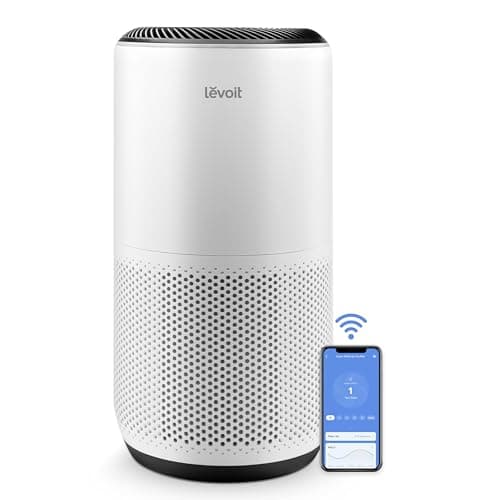 Best if you want the numbers published LEVOIT Core 400S 231 certified CFM, 0.00 ppb measured, 22-52 dB and a $49.99 filter. | Popular pick, mid-size rooms | 231CFM smoke ENERGY STAR verified | |
| 3 | 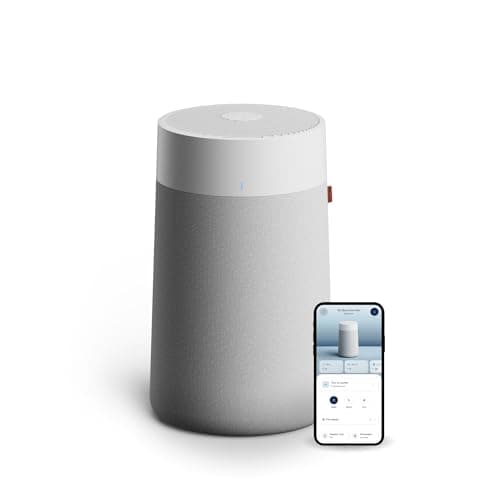 Best small-room alternative Blueair Blue Pure 311i Max 283 certified CFM at 8.4 CFM per watt for a bedroom-sized space. | Mid-size rooms on a small electricity bill | 283CFM smoke AHAM VERIFIDE |
#ad We earn a commission if you buy through this link, at no extra cost to you. How this site is funded. Prices last checked November 3, 2026.
The machines that have the number a plant does not
Honeywell InSight HPA4300
Honeywell · model HPA4300B
#ad We earn a commission if you buy through this link, at no extra cost to you. How this site is funded. Prices last checked November 3, 2026.
The efficiency winner among true-HEPA units at living-room size: 229 certified smoke CADR on 31 watts, zero measured ozone, and a filter the register classifies as HEPA rather than HEPA-Type.
229 smoke / 238 dust / 245 pollen CFM · 233 PM2.5
- Certified room size
- 354 sq ft
- Energy / year
- 185 kWh
- Electricity / year
- $34
- Air per watt
- 7.4 CFM/W
- Power draw
- 31 W
- Noise
- Not published
- Measured ozone
- 0 ppb
- Filter class
- HEPA
- AHAM rule, 300 sq ft
- Clears it (200 needed)
No ionizer — filtration only
Both registers classify this unit as fan-and-filter only.
229 certified smoke CADR across 354 certified square feet at 7.4 CFM per watt, which is the best air-per-watt figure on this site. Listed in both registers, filter recorded HEPA rather than HEPA-Type, 0.00 ppb measured ozone and no ion stage. About $34 a year to run.
The honest con: Honeywell publishes no noise figure, no filter price and no replacement interval we could source, so the recurring half of the bill cannot be computed before you buy — and in a bedroom the noise question matters.
LEVOIT Core 400S
LEVOIT · model Core 400S (LAP-C401S)
#ad We earn a commission if you buy through this link, at no extra cost to you. How this site is funded. Prices last checked November 3, 2026.
The best-selling unit in the category, and a clean example of the coverage gap: ENERGY STAR certifies it for 358 square feet while the box advertises 1,718.
231 smoke / 240 dust / 259 pollen CFM · 236 PM2.5
- Certified room size
- 358 sq ft
- Advertised coverage
- 1,718 sq ft at 1 air change per hour
- Energy / year
- 237 kWh
- Electricity / year
- $43
- Air per watt
- 5.8 CFM/W
- Power draw
- 38 W
- Noise
- 22-52 dB
- Measured ozone
- 0 ppb
- Filter class
- HEPA-Type
- AHAM rule, 300 sq ft
- Clears it (200 needed)
No ionizer — filtration only
ENERGY STAR classifies this unit 'Fan and Filter' and measures 0.00 ppb ozone. LEVOIT markets it as ozone free.
231 certified CFM across 358 certified square feet with 0.00 ppb measured, plus the two figures most rivals leave blank: 22-52 dB and a $49.99 filter. Our full review.
The honest con: beaten on air per watt by the Honeywell above for a slightly smaller certified room, ENERGY STAR classifies the filter HEPA-Type despite the “True HEPA” name, and LEVOIT still publishes no replacement interval, so the annual filter cost is a price without a schedule.
Blueair Blue Pure 311i Max
Blueair · model 3332111100 (Blue Pure 311i Max)
#ad We earn a commission if you buy through this link, at no extra cost to you. How this site is funded. Prices last checked November 3, 2026.
439 certified square feet on under 30 watts. The best power-to-coverage ratio at mid size, with the same ion-generator caveat as the rest of the Max range.
283 smoke / 314 dust / 365 pollen CFM · 298 PM2.5
- Certified room size
- 439 sq ft
- Energy / year
- 193 kWh
- Electricity / year
- $35
- Air per watt
- 8.4 CFM/W
- Power draw
- 29.6 W
- Noise
- Not published
- Measured ozone
- 2 ppb
- Filter class
- HEPA-Type
- AHAM rule, 250 sq ft
- Clears it (167 needed)
Ion generator — fitted
AHAM classifies this model 'Fan Filter with Ion Generator'; ENERGY STAR records 'Fan and Filter' with 2 ppb measured ozone.
283 certified CFM across 439 certified square feet at 8.4 CFM per watt — the second-best efficiency figure here — for about $35 a year. Our full review.
The honest con: ENERGY STAR measures 2 ppb rather than zero and AHAM classifies the Max range as carrying an ion generator with no documented way to switch it off. In a room with an asthmatic in it, the Honeywell’s measured zero is the safer buy.
Common questions
Do air-purifying plants actually work?
Which houseplant cleans the air best?
Do plants remove dust, pollen or pet dander?
Can houseplants make allergies worse?
So what should I buy instead?
Sources
- Cummings & Waring (2019), Journal of Exposure Science and Environmental Epidemiology — potted plants and indoor air quality (doi 10.1038/s41370-019-0175-9)
- Drexel University — "Study: Actually, Potted Plants Don't Improve Air Quality"
- EPA — Guide to Air Cleaners in the Home
- AHAM — air filtration standards and the two-thirds rule
- ENERGY STAR certified room air cleaners database
Figures were read on the dates shown against each source. If one has changed, or if we have got something wrong, tell us and we will correct the page.
Read next
- CADR & costWhat CADR actually meansThe cornerstone explainer: what CADR measures, why it resists gaming, and certified versus claimed.
- CADR & costAre air purifiers worth it?Worth it for airborne particles in a room you spend hours in. Not worth it for gases, mold behind walls, or a room you cannot size correctly.
- CADR & costAir purifier vs furnace filterA MERV 13 filter is nearly as good as HEPA per pass and runs only when the blower does — under 25% of the year, per EPA. What that means for which you buy first.
- CADR & costThe Best HEPA Air PurifiersRanked among the units a register actually classifies HEPA rather than HEPA-Type — a much shorter list than the marketing suggests.