The Best Air Purifiers for a Home With Pets
You are not buying an air purifier for a home. You are deciding which rooms get one, at what size — and the animals, unlike the machine, walk from room to room.
#ad We earn a commission if you buy through this link, at no extra cost to you. How this site is funded. Prices last checked October 6, 2026.
Buy rooms, not a house. Cover the bedroom first, the main living space second, and size each one at six air changes an hour rather than the general 4.8, because the animal does not stop shedding while the machine runs. For most pet households that is the Honeywell InSight HPA4300 in the bedroom and the Coway Airmega 400 in the living room — about $101 a year in electricity between them.
Search for an air purifier for a home with pets and you get a list of single machines, each one presented as though it were the answer to the whole house. None of them is, and the reason is not a shortcoming of any particular unit. A portable air cleaner treats the air in the room it is standing in. A home is several rooms with doors between them, and in a pet household the source of the problem walks through those doors all day.
So this page is organized the way the purchase actually works. Not “which machine is best”, but which rooms are worth covering, in what order, at what size, and what the resulting plan costs to run for a year. Every performance figure below comes from AHAM’s certification directory or EPA’s ENERGY STAR database, both of which you can check yourself in about a minute.
Why “for the home” is the wrong unit of purchase
Certified coverage is a closed-room number. Both registers measure Clean Air Delivery Rate in a sealed test chamber and convert it to a suggested room size. That conversion assumes the air has nowhere else to go. Put the same machine in a room with an open doorway onto a hallway and it is now diluting a much larger volume with the same fan, which is why a unit certified for 583 square feet does not cover a 583 square-foot house.
The allergen is mobile and the machine is not. Cat and dog allergen rides on skin flakes that settle, get walked on, and go back into the air. The animal redistributes it continuously — the purifier cannot follow. This is the mechanism behind every sizing decision on this page, and it is set out in full in what HEPA actually does to pet dander.
The sizing rule most people use was not written for a pet. AHAM’s two-thirds rule targets 4.8 air changes an hour, a sensible general figure for a room with an occasional dust source. A shedding animal is not an occasional source. We size pet rooms at six air changes instead — our judgment applied to AHAM’s own method rather than a standard of its own, and we say so every time we use it.
What happens between the rooms
The question underneath “which air purifier for my home” is almost always whether one large machine can do the work of three smaller ones. Certification says no, and the reason is a doorway. A unit certified for 687 square feet reached that figure in a sealed chamber. Open a door onto a hallway and the same fan is now mixing clean air into a volume it was never measured against, at a rate nothing in either register describes.
The corollary matters more than it sounds: two machines’ CADR figures do not add together. There is no certification for the sum, no test method behind it, and this site will not print one. Two units in two rooms are two separate room-sized results, which is precisely why a plan is a list of rooms rather than a total square footage — why the figures never add.
The one real exception is a floor that is genuinely open. If the kitchen, dining area and living room are one connected volume with no doors, that is one room for sizing purposes and one correctly sized machine beats two undersized ones. Everything else in a house is a sequence of separate decisions.
The rooms worth covering, and what each one needs
The table below is the whole method in one place. The middle column is what the general rule asks for; the right-hand column is what we ask for in a room with an animal in it. The gap between them is a flat 25%, because six air changes is 25% more than 4.8 — but that 25% is frequently the difference between two machine classes.
| Room | AHAM two-thirds rule | At six air changes | Units that clear it |
|---|---|---|---|
| Bedroom, 150 sq ft | 100 CFM | 120 CFM | HPA4300, Core 400S |
| Office or spare room, 180 sq ft | 120 CFM | 144 CFM | HPA4300, Core 400S |
| Living room, 250 sq ft | 167 CFM | 200 CFM | HPA4300, HPA6000, Airmega 400 |
| Living room, 350 sq ft | 234 CFM | 280 CFM | Airmega 400, Core 600S |
| Open-plan ground floor, 500 sq ft | 334 CFM | 400 CFM | Airmega 450, Airmega ProX |
| Open-plan ground floor, 650 sq ft | 434 CFM | 520 CFM | Airmega ProX only |
Electricity costs on this page use 18.34¢ per kWh, the U.S. average residential price for June 2026 from the U.S. Energy Information Administration, Electric Power Monthly, Table 5.3. Your rate is on your bill and is probably not this one; multiply the kWh figure by your own rate and you have your number.
The order to buy in
First, the bedroom. It is counter-intuitive, because the animals spend their day somewhere else. It is still right. The bedroom is the one room where you breathe the same air for eight uninterrupted hours behind a closed door, and a closed door is the only condition under which a certified room-size figure means what the register says. It is also the one room where keeping the animal out is realistic, which doubles the machine’s effect for free — why symptoms peak overnight.
Second, the main living space. This is where the load is produced and where you spend your waking hours. It is usually the largest room in the plan and therefore the most expensive machine, which is exactly why it is second rather than first: if the budget only stretches to one unit, the bedroom returns more for the money.
Third, and only if it applies: a home office you work in all day, or a finished basement the animals use. A spare bedroom nobody sleeps in does not need a machine, and a kitchen is a ventilation problem rather than a filtration one.
How we judged
Certified smoke CADR at six air changes, never advertised coverage. Manufacturer coverage claims in this category are routinely quoted at one air change an hour — the Core 400S box says 1,718 sq ft at 1 air change per hour, against 358 square feet certified.
Running cost across the whole plan, not per machine. Two units running continuously is the actual purchase, so it is the actual bill, and it is the figure nobody publishes.
A documented washable pre-filter wherever hair is in play. It is what protects the expensive cartridge, and in a multi-room plan it is also what keeps the replacement schedules from compounding.
Measured ozone and ion status, stated for every pick. The EPA is unambiguous that portable cleaners which intentionally produce ozone should be avoided, and a large share of people buying for a pet household are asthmatic — what the ionizer stage actually does.
What the whole plan costs to run
Electricity is the part that can be computed exactly, because both registers publish certified annual energy use. Filters are the part that usually cannot, because most manufacturers decline to publish a price, an interval, or either. Where a figure is unpublished this table says so rather than estimating it.
| Plan | Certified energy | Electricity a year | Filters |
|---|---|---|---|
| Bedroom only — HPA4300 | 185 kWh | $34 | Price not published |
| Bedroom + living room — HPA4300, HPA6000 | 392 kWh | $72 | Neither price published |
| Bedroom + living room — HPA4300, Airmega 400 | 551 kWh | $101 | $129 for the Coway |
| Three rooms — HPA4300, Airmega 400, Core 400S | 788 kWh | $145 | Two of three published |
A worked example: 1,150 square feet, a cat and a dog
Abstract rules are easy to agree with and hard to act on, so here is the whole method applied to one ordinary single-floor home. Nothing in this example is hypothetical except the floor plan: every CADR figure is the certified one and every cost is computed from the register’s own annual energy figure.
| Room | Size | Needs at six air changes | Machine | Certified CADR |
|---|---|---|---|---|
| Bedroom | 150 sq ft | 120 CFM | Honeywell InSight HPA4300 | 229 CFM |
| Living room | 320 sq ft | 256 CFM | Coway Airmega 400 | 376 CFM |
| Home office | 140 sq ft | 112 CFM | Honeywell HPA6000 | 257 CFM |
| Kitchen, hall, bathroom, spare room | 540 sq ft | Not covered | None | — |
Read the bottom row, because it is the honest part. This plan treats 610 of 1,150 square feet — a little over half the house — and leaves the kitchen, the hall, the bathroom and an unused spare room untreated. That is not a failure of the plan. It is the plan: those are the rooms where either nobody spends hours, or filtration is the wrong tool. Covering them would roughly double the capital cost and the running bill to treat air nobody is breathing for long.
The second thing worth noticing is that the office machine is a bigger unit than the room strictly needs. That is deliberate too. Extra certified capacity buys the option of running at a lower, quieter fan speed and still clearing the room, which in practice is the difference between a machine that runs all day and one that gets switched off — why the quiet speed is the one that matters.
Quick picks
Picked by the room each one is for, sized at six air changes an hour, with the running cost of the whole plan weighed rather than the price of any one machine.
| # | Product | Best for | Certified CADR | Price |
|---|---|---|---|---|
| 1 | 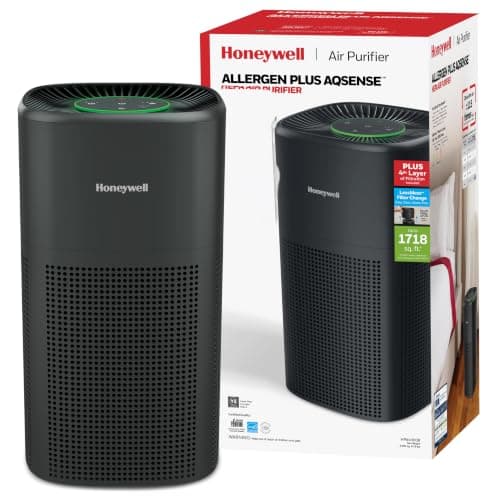 Start here: the bedroom Honeywell InSight HPA4300 Certified HEPA, zero measured ozone, and the lowest running cost of anything at this output. | True HEPA on the lowest power draw | 229CFM smoke AHAM VERIFIDE | |
| 2 | 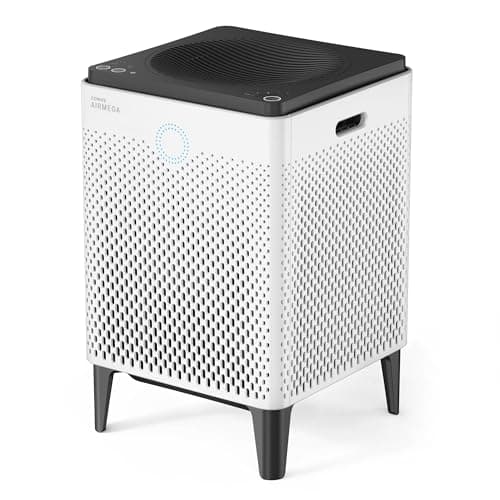 The main living space Coway Airmega 400 470 sq ft at a pet load, washable pre-filters both sides, and the only published filter bill here. | Large rooms, verified Coway | 376CFM smoke ENERGY STAR verified | |
| 3 | 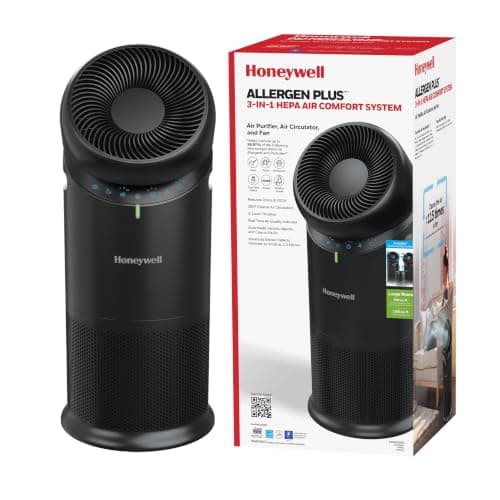 Best second machine Honeywell HPA6000 321 sq ft at a pet load for 35 watts — the cheapest honest way to cover a third room. | Large living rooms, true HEPA | 257CFM smoke AHAM VERIFIDE | |
| 4 | 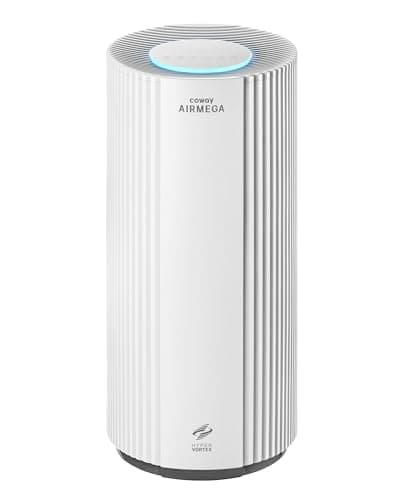 If the ground floor is open-plan Coway Airmega 450 553 sq ft at a pet load, vacuumable pre-filter, zero measured ozone. | Open-plan floors up to about 665 sq ft | 443CFM smoke ENERGY STAR verified | |
| 5 | 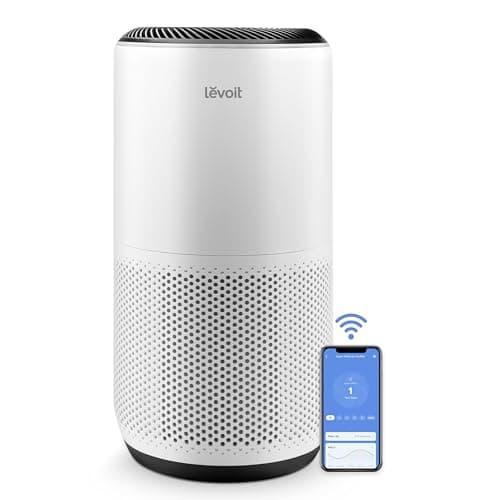 If you only buy one LEVOIT Core 400S The popular pick, with a published pet-allergy carbon filter and a published noise range. | Popular pick, mid-size rooms | 231CFM smoke ENERGY STAR verified | |
| 6 | 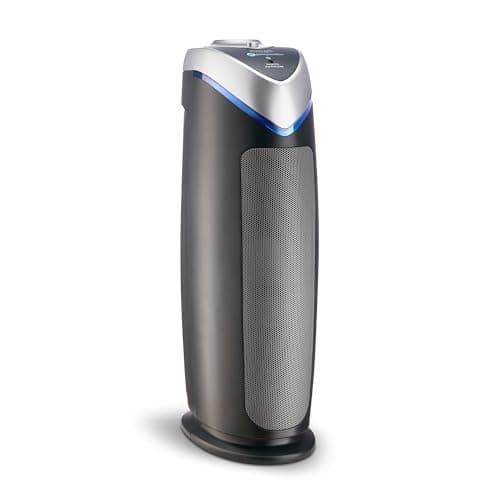 Skip this one for a whole home GermGuardian AC4825 Certified for 153 sq ft, the worst efficiency here, and a UV-C lamp you cannot switch off. | Skip this one | 99CFM smoke AHAM VERIFIDE |
#ad We earn a commission if you buy through this link, at no extra cost to you. How this site is funded. Prices last checked October 6, 2026.
The picks, by the room they are for
Honeywell InSight HPA4300
Honeywell · model HPA4300B
#ad We earn a commission if you buy through this link, at no extra cost to you. How this site is funded. Prices last checked October 6, 2026.
The efficiency winner among true-HEPA units at living-room size: 229 certified smoke CADR on 31 watts, zero measured ozone, and a filter the register classifies as HEPA rather than HEPA-Type.
229 smoke / 238 dust / 245 pollen CFM · 233 PM2.5
- Certified room size
- 354 sq ft
- Energy / year
- 185 kWh
- Electricity / year
- $34
- Air per watt
- 7.4 CFM/W
- Power draw
- 31 W
- Noise
- Not published
- Measured ozone
- 0 ppb
- Filter class
- HEPA
- AHAM rule, 250 sq ft
- Clears it (167 needed)
No ionizer — filtration only
Both registers classify this unit as fan-and-filter only.
229 certified smoke CADR covers about 286 square feet at six air changes an hour — comfortably more bedroom than most people have — on 31 watts, which is $34 a year to run continuously. ENERGY STAR classifies its filter HEPA rather than HEPA-Type, a distinction most of this price bracket does not earn, and measures its ozone emission at 0 ppb with no ion stage at all.
The honest con: Honeywell publishes no noise figure, no filter price and no washable pre-filter for it. In the bedroom the missing noise figure is the one that matters, and we will not guess at it — you are buying the best-documented air and the worst-documented livability on this page.
Coway Airmega 400
Coway · model Airmega 400 (AP-2015F)
#ad We earn a commission if you buy through this link, at no extra cost to you. How this site is funded. Prices last checked October 6, 2026.
The Coway that is actually in a certification register: 376 certified smoke CADR, 583 square feet, zero measured ozone. If you want a Coway, this is the one with third-party numbers.
376 smoke / 384 dust / 409 pollen CFM · 380 PM2.5
- Certified room size
- 583 sq ft
- Advertised coverage
- 3,120 sq ft in 60 minutes
- Energy / year
- 366 kWh
- Electricity / year
- $67
- Air per watt
- 6.1 CFM/W
- Power draw
- 66 W
- Noise
- 22-52 dB(A)
- Measured ozone
- 0 ppb
- Filter class
- Composite Filter
- AHAM rule, 400 sq ft
- Clears it (267 needed)
No ionizer — filtration only
ENERGY STAR classifies this unit 'Fan and Filter', 0.00 ppb measured ozone.
376 certified smoke CADR covers about 470 square feet at a pet load — a real living room with animals in it. Washable pre-filters on both faces, activated carbon for litter box and wet-dog smell, 0 ppb measured with no ion stage, a published 22-52 dB(A) noise range, and — uniquely in this category — a published filter price. Our full review.
The honest con: $67 a year in electricity is the highest of our three main picks, and ENERGY STAR declines to classify its filter either HEPA or HEPA-Type, recording it only as a composite filter. Coway also publishes its own smoke CADR as 328, below the 376 the register certifies — unusual, and in the conservative direction.
Honeywell HPA6000
Honeywell · model HPA6000B
#ad We earn a commission if you buy through this link, at no extra cost to you. How this site is funded. Prices last checked October 6, 2026.
More certified air movement than the HPA4300 for four more watts, and the same zero on ozone. The sensible step up if your room is nearer 400 square feet.
257 smoke / 262 dust / 285 pollen CFM · 259 PM2.5
- Certified room size
- 398 sq ft
- Energy / year
- 207 kWh
- Electricity / year
- $38
- Air per watt
- 7.3 CFM/W
- Power draw
- 34.9 W
- Noise
- Not published
- Measured ozone
- 0 ppb
- Filter class
- HEPA
- AHAM rule, 320 sq ft
- Clears it (214 needed)
257 certified smoke CADR covers about 321 square feet at six air changes for 34.9 watts — $38 a year. Classified HEPA, 0 ppb measured, no ion generator. If you are covering a second or third room and the budget has already gone on the living room, this is the honest way to do it without buying a machine that cannot clear the room it is in.
The honest con: the same documentation gap as its smaller sibling — no published noise figure, no filter price, no washable pre-filter — and in a hairy house the pre-filter is the specification you most want on paper.
Coway Airmega 450
Coway · model Airmega 450 (AP-2524B)
#ad We earn a commission if you buy through this link, at no extra cost to you. How this site is funded. Prices last checked October 6, 2026.
687 certified square feet with zero measured ozone and a vacuumable pre-filter. The step between the Airmega 400 and the ProX, and the cheapest certified way past 600 square feet.
443 smoke / 445 dust / 450 pollen CFM · 444 PM2.5
- Certified room size
- 687 sq ft
- Advertised coverage
- 3,285 sq ft in 60 minutes
- Energy / year
- 389 kWh
- Electricity / year
- $71
- Air per watt
- 6.7 CFM/W
- Power draw
- 72 W
- Noise
- 23.6-57.7 dB(A)
- Measured ozone
- 0 ppb
- Filter class
- HEPA-Type
- AHAM rule, 550 sq ft
- Clears it (367 needed)
No ionizer — filtration only
ENERGY STAR classifies this unit 'Fan and Filter' and measures 0.00 ppb ozone. Coway's specification lists no ionizing stage.
443 certified smoke CADR covers about 553 square feet at a pet load, which is the point at which a kitchen-living-dining floor stops being three rooms and starts being one. Vacuumable pre-filter, 0 ppb measured, no ion stage. The full record on it.
The honest con: $71 a year in electricity, a published top speed of 57.7 dB(A) — the loudest figure we print — and no replacement filter price we could source, so the recurring bill is unquotable. On a genuinely open floor it is still the cheapest certified way past 500 square feet.
LEVOIT Core 400S
LEVOIT · model Core 400S (LAP-C401S)
#ad We earn a commission if you buy through this link, at no extra cost to you. How this site is funded. Prices last checked October 6, 2026.
The best-selling unit in the category, and a clean example of the coverage gap: ENERGY STAR certifies it for 358 square feet while the box advertises 1,718.
231 smoke / 240 dust / 259 pollen CFM · 236 PM2.5
- Certified room size
- 358 sq ft
- Advertised coverage
- 1,718 sq ft at 1 air change per hour
- Energy / year
- 237 kWh
- Electricity / year
- $43
- Air per watt
- 5.8 CFM/W
- Power draw
- 38 W
- Noise
- 22-52 dB
- Measured ozone
- 0 ppb
- Filter class
- HEPA-Type
- AHAM rule, 280 sq ft
- Clears it (187 needed)
No ionizer — filtration only
ENERGY STAR classifies this unit 'Fan and Filter' and measures 0.00 ppb ozone. LEVOIT markets it as ozone free.
The best-selling unit in the category, and a reasonable single-machine answer if the plan has to start and stop at one room. 231 certified smoke CADR covers about 288 square feet at six air changes, 0 ppb measured, no ionizer, a published 22-52 dB noise range, and a published filter price — including a pet-allergy carbon variant, which almost nobody in this category lists separately. Our full review.
The honest con: the coverage claim on the box is 1,718 sq ft at 1 air change per hour against 358 square feet certified, and ENERGY STAR classifies the filter HEPA-Type despite the “True HEPA” marketing name. At $43 a year it also costs more to run than the Honeywell that moves nearly the same air.
GermGuardian AC4825
GermGuardian · model AC4825
#ad We earn a commission if you buy through this link, at no extra cost to you. How this site is funded. Prices last checked October 6, 2026.
Certified for 153 square feet, not the whole bedroom the packaging implies, and the least efficient unit here at 3.5 CFM per watt. It also runs a UV-C lamp you cannot switch off.
99 smoke / 116 dust / 129 pollen CFM · 111 PM2.5
- Certified room size
- 153 sq ft
- Energy / year
- 182 kWh
- Electricity / year
- $33
- Air per watt
- 3.5 CFM/W
- Power draw
- 30 W
- Noise
- Not published
- Filter class
- HEPA
- AHAM rule, 150 sq ft
- Short (100 needed)
UV-C lamp fitted
AHAM's current record leaves the technology field blank for this model; its 2023 printed directory classified GermGuardian units of this generation as 'Fan, Filter, PCO, and UVC'. The EPA notes that UV lights without adequate lamp coatings may emit ozone, and neither register publishes an ozone measurement for this model.
It is cheap, it is everywhere, and it is the unit most often bought two or three at a time to “do the house”. Its certified room size is 153 square feet — at a pet load about 123 square feet, which is a small bedroom and not a living room.
Why it is not a pick: at 3.5 CFM per watt it is the least efficient unit on this site, so three of them cost more to run than one properly sized machine and still do not cover the rooms. It also carries a UV-C lamp with no off switch, and neither register publishes an ozone measurement for the model — the one number you would want before putting it in a bedroom.
Where each machine goes once it is in the room
A correctly sized unit in the wrong corner behaves like an undersized one. Two placement rules carry most of the benefit, and neither costs anything. Keep the intake clear of walls and furniture — a machine pushed against a sofa is recirculating its own output rather than drawing from the room. And put it in the part of the room where the air is actually disturbed, which in a pet household means near where the animals settle rather than in the far corner the decor allows.
In the bedroom specifically, the useful position is between the animal’s usual route and the bed, not beside the bed. The full set of rules, including the ones about doors and vents, is in where to put an air purifier.
The rooms not worth covering
Hallways and landings. Air moves through them rather than sitting in them, so a certified room figure does not apply and the machine spends its life treating air on its way somewhere else.
The kitchen. Cooking aerosols and grease are an extraction problem. A range hood vented outside does more than any portable filter, and grease shortens a HEPA cartridge’s life considerably.
A spare room nobody uses. Obvious when written down, and still a common third purchase. Allergen in a closed, unused room is not reaching you.
Anywhere you would have to run it on the lowest speed to tolerate the noise. A machine run at a speed that moves a fraction of its certified air is not delivering its certified figure, which is the quiet way most whole-home plans fail in practice.
What does more than any of these machines
A purifier is the third intervention in a pet household, not the first, and saying so is part of the method rather than a disclaimer. Keeping the animals out of the bedroom protects the room where you spend a third of your life. Washing pet bedding weekly removes a reservoir no filter can reach. Vacuuming with a sealed machine stops re-suspending what has already settled — most of the allergen in a home with pets is in soft furnishings, not in the air at any given moment.
The honest summary is that a correctly sized purifier measurably lowers airborne allergen in the room it is in, and does nothing at all about the rest of the house. What the clinical trials actually found is more mixed than this category’s marketing suggests, and worth reading before you spend on a third machine rather than a second vacuum.
Common questions
How many air purifiers do I need for a house with pets?
Will one big air purifier cover my whole house?
Which room should I cover first in a pet household?
What CADR does each room need if I have pets?
Is it cheaper to run two small purifiers or one large one?
Sources
- AHAM — air filtration standards and the two-thirds rule
- AHAM VERIFIDE directory of certified room air cleaners
- ENERGY STAR certified room air cleaners database
- EPA — Guide to Air Cleaners in the Home
Figures were read on the dates shown against each source. If one has changed, or if we have got something wrong, tell us and we will correct the page.
Read next
- Pet allergiesThe Best Air Purifiers for PetsCertified CADR picks for a pet household, with annual running cost computed and every ionizer disclosed.
- Pet allergiesThe Best Air Purifiers for a Multi-Pet HouseholdMore animals means a continuous load, so size at six air changes an hour rather than AHAM's 4.8 — and budget for filters that load faster.
- Room sizeHow many air purifiers do I need?One per closed room you spend hours in. CADR is measured in a sealed chamber, so a machine does not clean the room next door and two units' figures never add.
- Room sizeAir purifier size calculatorEnter your room dimensions and get the minimum certified CADR, with the arithmetic shown.