Do air purifiers help with pet allergies?
The evidence is real, modest, and routinely overstated. Here it is as written, with the hedges left in.
#ad We earn a commission if you buy through this link, at no extra cost to you. How this site is funded.
Partly. Portable HEPA air cleaners measurably reduce airborne pet allergen, and the EPA reports that multiple studies have found improvements in one or more allergy or asthma symptoms — while noting the studies do not always show major improvements and do not improve all symptoms. Source control and ventilation help more.
This page exists because the honest answer is more useful than the confident one, and because the confident one is what every commercial page in this category gives you. We sell air purifiers by commission. We would still rather you bought the right thing for the right reason.
What is well established
That a HEPA-grade filter captures the particles pet allergen travels on is not in dispute. Nor is the fact that moving room air through such a filter reduces the airborne concentration of those particles. That is mechanical, measurable, and it is what Clean Air Delivery Rate quantifies. A machine with 265 CFM of certified smoke CADR is genuinely removing particulate from a room at a known rate.
What is also well established is that the airborne fraction is only part of your exposure. Custovic and colleagues, sampling British homes for the major cat allergen Fel d 1, found substantial reservoirs in soft furnishings and carpets, with air concentrations rising sharply on disturbance — someone sitting down on a sofa. A purifier addresses what is in the air. It does not address what is in the sofa waiting to be put back into the air.
The hedge, quoted rather than paraphrased
The EPA’s guide to air cleaners in the home states that multiple studies with portable HEPA air cleaners have found improvements in one or more allergy and/or asthma symptoms, and then immediately adds that the studies do not always show major improvements and do not show improvements in all symptoms.
That second sentence is the one that gets dropped. It is the difference between “can help” and “clinically proven relief”, and the second phrasing is not supported by the source it is usually hiding behind.
What does more, and it is not close
The EPA is unambiguous about priority: the most effective ways to improve your indoor air are to reduce or remove the sources of pollutants and to ventilate with clean outdoor air. It states directly that filtration does not replace the need to control pollutants and ventilate.
In a pet household that translates into a short and unglamorous list:
- Keep the animal out of the bedroom. Eight uninterrupted hours is the largest single block of exposure you control.
- Wash bedding hot and often, including the pet’s own bedding, which is the densest reservoir in the house.
- Treat soft furnishings as reservoirs. Vacuum with a sealed HEPA vacuum; a leaky one redistributes what it collects.
- Ventilate when outdoor air quality and pollen allow.
Then a correctly sized purifier, running continuously, in the room you spend most time in. That order.
What a purifier realistically delivers
Airborne particle counts fall within an hour or two in a correctly sized room. Whether you notice depends on what fraction of your symptoms comes from airborne exposure rather than direct contact and reservoirs, and that fraction varies enormously between people. Some readers will find it transformative and some will find it marginal. Anyone promising you which group you are in has not met you.
What we can do is make sure the machine you buy is genuinely capable of the room you put it in, which is where most disappointment actually comes from. Size it properly first.
Quick picks
If you decide a purifier is worth trying, these are the certified options with no ozone question attached.
| # | Product | Best for | Certified CADR | Price |
|---|---|---|---|---|
| 1 | No photo If you decide to buy one Honeywell InSight HPA4300 Zero measured ozone, HEPA-classified filter, cheapest here to run continuously. | True HEPA on the lowest power draw | 229CFM smoke AHAM VERIFIDE | |
| 2 | 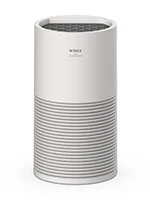 For a larger room Winix AT41 265 certified CFM across 410 sq ft, no ionizer. | Pet allergies, whole living room | 265CFM smoke AHAM VERIFIDE |
#ad We earn a commission if you buy through this link, at no extra cost to you. How this site is funded.
One label that is worth something
The Asthma and Allergy Foundation of America runs an asthma & allergy friendly certification program with Allergy Standards, which tests products against defined criteria rather than accepting manufacturer claims. Where a machine holds it, that is a genuine third-party signal in a category with very few. Where it does not, that is not evidence of anything — most good machines are not enrolled.
Common questions
Will an air purifier cure my pet allergy?
How much difference does it actually make?
What helps more than an air purifier?
Sources
- EPA — Guide to Air Cleaners in the Home
- Custovic A et al. Distribution, aerodynamic characteristics, and removal of the major cat allergen Fel d 1 in British homes. Thorax 1998;53(1):33-38
- AAFA — asthma & allergy friendly certification program
Figures were read on the dates shown against each source. If one has changed, or if we have got something wrong, tell us and we will correct the page.
Read next
- Pet allergiesThe Best Air Purifiers for PetsCertified CADR picks for a pet household, with annual running cost computed and every ionizer disclosed.
- Pet allergiesDo HEPA filters remove pet dander?What HEPA media actually captures, why 0.3 microns is the hardest case, and which units the register classifies HEPA-Type.
- Pet allergiesAir purifiers for asthma in a pet householdWhy ionizer status outranks CADR when someone is asthmatic, with measured ozone figures for every unit.