LEVOIT Core 400S Review
The best-selling air purifier in the category, read against the certification register rather than the packaging. We do not test units, and this page says what that means.
#ad We earn a commission if you buy through this link, at no extra cost to you. How this site is funded. Prices last checked September 12, 2026.
A genuinely good mid-size machine with one soft spot. ENERGY STAR certifies 231 CFM across 358 square feet with 0.00 ppb measured ozone and no ion stage, and LEVOIT publishes both a noise range and a filter price — which most rivals do not. It is beaten on air per watt by a cheaper Honeywell.
First, the disclosure that shapes everything below: we have not tested this unit. We own no air purifiers and run no laboratory, and we make no first-party performance claim anywhere on this site. What we do is read the certified record carefully and say where it stops — our method in full, including where it runs out.
The certified record
| Specification | Figure | Source |
|---|---|---|
| Smoke CADR | 231 CFM | ENERGY STAR |
| Dust CADR | 240 CFM | ENERGY STAR |
| Pollen CADR | 259 CFM | ENERGY STAR |
| PM2.5 CADR | 236 CFM | ENERGY STAR |
| Certified room size | 358 sq ft | ENERGY STAR, at 4.8 ACH |
| Advertised coverage | 1,718 sq ft at 1 ACH | LEVOIT |
| Annual energy use | 237 kWh | ENERGY STAR |
| Electricity per year | $43 | Our arithmetic at a named rate |
| Power draw | 38 W | LEVOIT |
| Air per watt | 5.8 CFM/W | ENERGY STAR |
| Measured ozone | 0.00 ppb | ENERGY STAR |
| Ionizer | None — fan and filter | ENERGY STAR |
| Filter classification | HEPA-Type | ENERGY STAR |
| Noise | 22–52 dB | LEVOIT |
| Replacement filter | $49.99 list; $59.99 for the Pet Allergy carbon variant | LEVOIT |
| AHAM directory | Not listed | AHAM VERIFIDE |
Electricity costs on this page use 18.34¢ per kWh, the U.S. average residential price for June 2026 from the U.S. Energy Information Administration, Electric Power Monthly, Table 5.3. Your rate is on your bill and is probably not this one; multiply the kWh figure by your own rate and you have your number.
What it genuinely gets right
A measured zero on ozone, with nothing bolted on. ENERGY STAR classifies it fan-and-filter and measures 0.00 ppb. No ion generator, no plasma stage, no UV lamp, nothing to remember to switch off. EPA advises avoiding portable cleaners that intentionally produce ozone, and this machine gives you nothing to weigh.
It publishes the numbers competitors leave blank. 22 to 52 dB and a named filter price are not glamorous specifications, but they are the two things a buyer cannot find for most of this category. Honeywell publishes neither for the HPA4300; Blueair publishes neither for the 211i Max. For a machine going in a bedroom, the bottom of that dB range is the number that matters and you can know it before you buy.
The features are real. App control, scheduling, an air-quality sensor and auto mode. This site does not rank on features because they do not move air, but they are a legitimate reason to prefer this over a Honeywell at similar money.
Where it is beaten, and where the marketing runs ahead
Air per watt. 5.8 CFM per watt against the Honeywell HPA4300’s 7.4, for near-identical certified coverage — 358 square feet against 354. That is $43 a year against $34. On a machine meant to run continuously, the cheaper unit is also the cheaper unit to own.
One register, not two. It is certified by ENERGY STAR and absent from AHAM’s directory. That is not a red flag — ENERGY STAR certification requires testing to the same ANSI/AHAM AC-1 standard through an EPA-recognized body — but it is one independent source rather than two, and the Honeywells are in both.
The coverage claim. 1,718 advertised against 358 certified is a ratio of 4.8, and the reason we keep returning to this model as the example is that LEVOIT prints both figures on the same page. The company is not hiding anything; the number people read is simply the wrong one.
“True HEPA” on a HEPA-Type filter. The register records HEPA-Type. This matters less for performance than it sounds — CADR already folds filtration efficiency together with airflow — and more as a signal about how the rest of the box copy was written.
Who should buy it
Buy it if your room is up to about 358 square feet, you want app control and a sensor, you want a published quiet figure because it is going beside a bed, and a measured zero on ozone matters to you.
Buy something else if running cost over years is the deciding factor — that is the HPA4300 — or if your room is materially larger than 358 square feet, which is the Core 600S rather than this.
Quick picks
The Core 400S against the two machines a buyer at this size should actually weigh it against.
| # | Product | Best for | Certified CADR | Price |
|---|---|---|---|---|
| 1 | 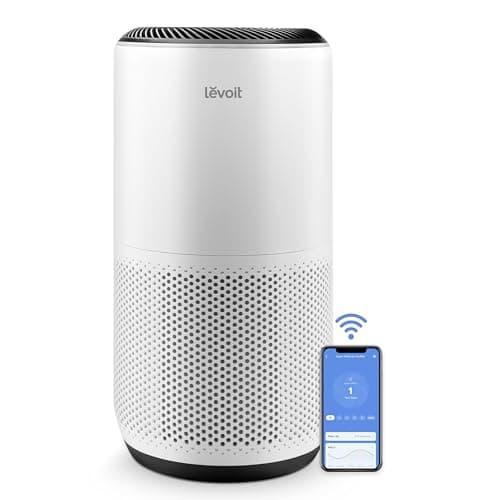 The unit reviewed LEVOIT Core 400S 231 certified CFM across 358 sq ft, 0.00 ppb, 22-52 dB published. | Popular pick, mid-size rooms | 231CFM smoke ENERGY STAR verified | |
| 2 | 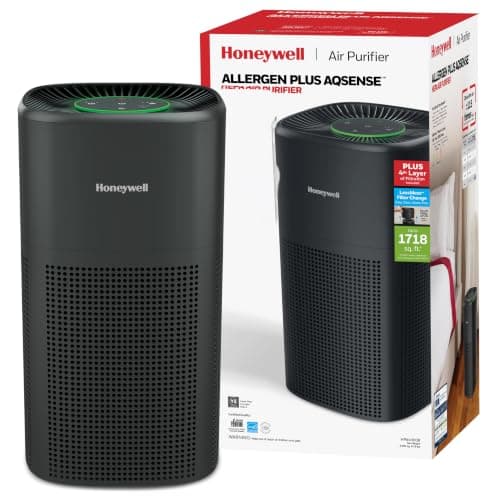 Cheaper to run, better classified Honeywell InSight HPA4300 229 certified CFM on 31 watts, recorded HEPA, in both registers. | True HEPA on the lowest power draw | 229CFM smoke AHAM VERIFIDE | |
| 3 | 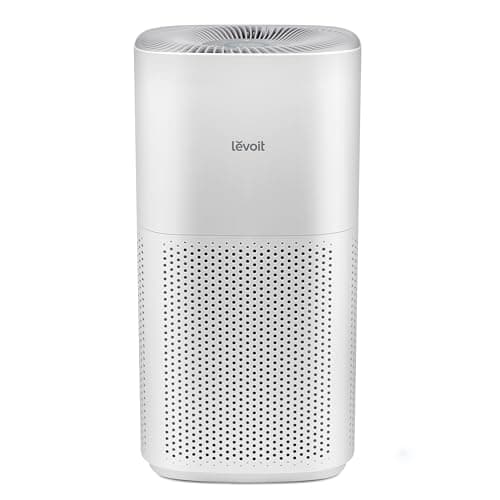 If the room is bigger LEVOIT Core 600S 391 certified CFM across 606 sq ft, same zero on ozone. | Large open-plan rooms | 391CFM smoke ENERGY STAR verified |
#ad We earn a commission if you buy through this link, at no extra cost to you. How this site is funded. Prices last checked September 12, 2026.
The alternatives worth weighing
Honeywell InSight HPA4300
Honeywell · model HPA4300B
#ad We earn a commission if you buy through this link, at no extra cost to you. How this site is funded. Prices last checked September 12, 2026.
The efficiency winner among true-HEPA units at living-room size: 229 certified smoke CADR on 31 watts, zero measured ozone, and a filter the register classifies as HEPA rather than HEPA-Type.
229 smoke / 238 dust / 245 pollen CFM · 233 PM2.5
- Certified room size
- 354 sq ft
- Energy / year
- 185 kWh
- Electricity / year
- $34
- Air per watt
- 7.4 CFM/W
- Power draw
- 31 W
- Noise
- Not published
- Measured ozone
- 0 ppb
- Filter class
- HEPA
- AHAM rule, 300 sq ft
- Clears it (200 needed)
No ionizer — filtration only
Both registers classify this unit as fan-and-filter only.
229 certified smoke CADR across 354 certified square feet — a near-identical room — on 31 watts against 38. 7.4 CFM per watt is the best figure on this site, the register records its filter HEPA rather than HEPA-Type, it is in both registers, and it costs $34 a year against $43.
The honest con: no published noise figure, no published filter price, no app, no sensor, no scheduling. On paper it wins; in a bedroom you are buying blind on the one specification that matters there.
LEVOIT Core 600S
LEVOIT · model Core 600S (LAP-C601S-WUS)
#ad We earn a commission if you buy through this link, at no extra cost to you. How this site is funded. Prices last checked September 12, 2026.
391 certified smoke CADR is real large-room capability, and it is honest about needing 387 kWh a year to deliver it — the highest electricity bill of any unit we recommend.
391 smoke / 398 dust / 436 pollen CFM · 394 PM2.5
- Certified room size
- 606 sq ft
- Advertised coverage
- 2,909 sq ft at 1 air change per hour
- Energy / year
- 387 kWh
- Electricity / year
- $71
- Air per watt
- 6 CFM/W
- Power draw
- 49 W
- Noise
- 26-55 dB
- Measured ozone
- 0 ppb
- Filter class
- HEPA-Type
- AHAM rule, 550 sq ft
- Clears it (367 needed)
No ionizer — filtration only
ENERGY STAR classifies this unit 'Fan and Filter', 0.00 ppb measured ozone.
The same design at the next size up: 391 certified smoke CADR across 606 certified square feet, the same 0.00 ppb measured ozone and the same absence of an ion stage. The two compared, with the crossover computed.
The honest con: $71 a year against $43, and 26-55 dB against 22-52. Below 358 square feet it is headroom you pay for twice.
Common questions
Is the LEVOIT Core 400S worth it?
Is the Core 400S really True HEPA?
What size room is the Core 400S good for?
Is the Core 400S good for pet allergies?
What is the Core 400S-P?
Sources
- ENERGY STAR certified room air cleaners database
- AHAM VERIFIDE directory of certified room air cleaners
- LEVOIT Core 400S product specification
- EPA — Guide to Air Cleaners in the Home
Figures were read on the dates shown against each source. If one has changed, or if we have got something wrong, tell us and we will correct the page.
Read next
- Room sizeLEVOIT Core 400S vs Core 600SIdentical on ozone, ionizer and filter class. Separated only by 231 CFM against 391 — and the crossover lands at 358 sq ft.
- Pet allergiesLEVOIT Core 400S vs Coway Airmega Mighty AP-1512HHThe Core 400S is ENERGY STAR verified at 358 sq ft and 38 W. The Coway is in no register and draws 77 W.
- Pet allergiesThe Best Air Purifiers for PetsCertified CADR picks for a pet household, with annual running cost computed and every ionizer disclosed.