Honeywell InSight HPA4300 Review
We do not test air purifiers. We read the certified record for one machine in full — and this is the machine this site recommends more often than any other, so it deserves the longest look.
#ad We earn a commission if you buy through this link, at no extra cost to you. How this site is funded. Prices last checked November 3, 2026.
The best certified value on this site for a particle problem, and the wrong machine for a smell. 229 CFM of certified smoke CADR on 31 watts gives it an Integrated Energy Factor of 7.4 — the highest of any HEPA-classified, ion-free machine here — with 0 ppb measured ozone and $34 a year of electricity. It has no carbon stage on record, and Honeywell publishes no noise figure, filter price or filter interval.
This machine wins more award slots on this site than any other, in roundup after roundup, which is exactly why it needed its own page. A recommendation repeated forty times without ever being examined in full is a habit rather than a finding. So here is the whole record, including the parts that argue against it.
The certified record, in full
This is one of a small number of units on this site that appear in both registers. That matters: AHAM and ENERGY STAR both require testing to ANSI/AHAM AC-1, and agreement between two independent listings is the strongest provenance available in this category.
| Certified figure | Value | Register |
|---|---|---|
| Smoke CADR | 229 CFM | Both, in agreement |
| Dust CADR | 238 CFM | Both |
| Pollen CADR | 245 CFM | Both |
| PM2.5 CADR | 233 CFM | Both |
| Suggested room size | 354 sq ft | AHAM (ENERGY STAR lists 355) |
| Annual energy use | 185 kWh | Both |
| Watts at the smoke setting | 31 W | AHAM |
| Integrated Energy Factor | 7.4 CFM/W | Both |
| Smoke CADR per watt | 7.39 CFM/W | ENERGY STAR |
| Dust CADR per watt | 7.63 CFM/W | ENERGY STAR |
| Pollen CADR per watt | 7.83 CFM/W | ENERGY STAR |
| Filter classification | HEPA | Both — not HEPA-Type |
| Second filter stage | None recorded | ENERGY STAR |
| Technology | Fan and filter only | Both |
| Measured ozone | 0 ppb | ENERGY STAR |
| Automatic mode | Air quality sensor | ENERGY STAR |
| Wi-Fi or app control | No | ENERGY STAR |
| ENERGY STAR Most Efficient | No | ENERGY STAR |
| Date certified | 2025-12-12 | ENERGY STAR |
| Markets | United States and Canada | ENERGY STAR |
The efficiency figure, and what it is worth in money
7.4 CFM per watt is the number to notice. It is the highest Integrated Energy Factor of any machine on this site that is both classified HEPA rather than HEPA-Type and free of an ion stage. Four units here are more efficient on paper — the much larger Coway Airmega ProX at 10.2, and three Blueairs between 8.2 and 9 — and every one of those is recorded HEPA-Type, with all three Blueairs carrying an ion generator.
In money: 185 kWh a year is $34 of electricity running continuously. For comparison, the LEVOIT Core 400S moves slightly more air at 231 CFM and costs $43 a year, and the Winix 5510 costs $59. Over the years a purifier actually runs, the gap is larger than the gap in purchase price — the full running-cost arithmetic.
Electricity costs on this page use 18.34¢ per kWh, the U.S. average residential price for June 2026 from the U.S. Energy Information Administration, Electric Power Monthly, Table 5.3. Your rate is on your bill and is probably not this one; multiply the kWh figure by your own rate and you have your number.
The filter: classified HEPA, and particle-only
The good half. Both registers record the filter as HEPA. That is a distinction most of this price bracket does not earn — the LEVOIT Core 400S is recorded HEPA-Type despite “True HEPA” on the box, and so are the Blueair Max range, the Alen 75i and the Medify MA-40. Why the register’s wording differs from the packaging.
The half that limits it. ENERGY STAR records exactly one filter type for this model and no second stage. Its larger sibling, the HPA6000, records activated carbon as a second filter; this one does not. A HEPA filter is a particle filter, and odor is a gas, so there is no mechanism here for litter box, wet dog, cooking or smoke smell. If the complaint that sent you shopping was a smell rather than dust, this is the wrong machine however good its numbers are.
What it does not have
No Wi-Fi and no app. ENERGY STAR records it as not connected-capable. It does carry an air-quality sensor driving an automatic mode, which is the part that actually affects running cost, but if you want phone control this is not the machine.
No published noise figure. Honeywell gives none and neither register records one. On a machine destined for a bedroom that is a real omission, and we would rather say so than repeat a number from a retail listing.
No washable pre-filter on record. In a shedding household that is the specification that protects the expensive cartridge, and it is the reason this machine is not our pick for a house full of animals — the units that do document one.
Five certified entries, one machine
AHAM carries this model five times over: HPA4300B and HPA4300W for the United States, HPA4300BC and HPA4300WC for Canada. Every entry lists identical figures — same CADR triple, same 354 square feet, same 185 kWh, same 7.4 CFM per watt.
That is worth knowing because the opposite situation is common and expensive. On this site’s Winix pages the model numbers genuinely diverge — the 5500-2 and the 5510 are different certified machines — which is why that comparison needed its own page. Here the suffix is a color and a market, not a performance difference, so you can buy whichever variant is cheaper without checking a second entry.

Who should buy it, and who should not
Buy it if your problem is particles — dust, dander, pollen, dust mite debris — in a room up to about 343 square feet, and especially if anyone in the house is asthmatic. A fan-and-filter machine with 0 ppb measured and no ion stage removes the ozone question entirely, and nothing on this site moves this much certified air for less electricity.
Do not buy it if the complaint is a smell, if you need the room covered above roughly 343 square feet, if hair volume means you need a washable pre-filter, or if an unpublished noise figure is a dealbreaker for a bedroom. For the first three there are better-documented answers below.
Quick picks
The unit reviewed, and the four machines we would send you to instead when one of its limits is the thing that matters to you.
| # | Product | Best for | Certified CADR | Price |
|---|---|---|---|---|
| 1 | 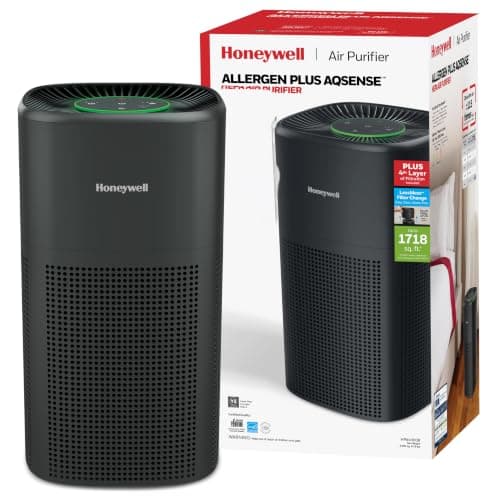 The unit reviewed Honeywell InSight HPA4300 229 certified CFM on 31 watts, recorded HEPA, 0.00 ppb, no ion stage. | True HEPA on the lowest power draw | 229CFM smoke AHAM VERIFIDE | |
| 2 | 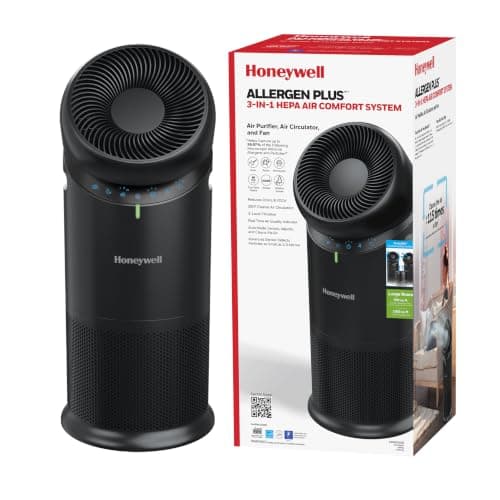 If the room is bigger — or smells Honeywell HPA6000 257 certified CFM, and the only InSight-era Honeywell with a carbon stage on record. | Large living rooms, true HEPA | 257CFM smoke AHAM VERIFIDE | |
| 3 | 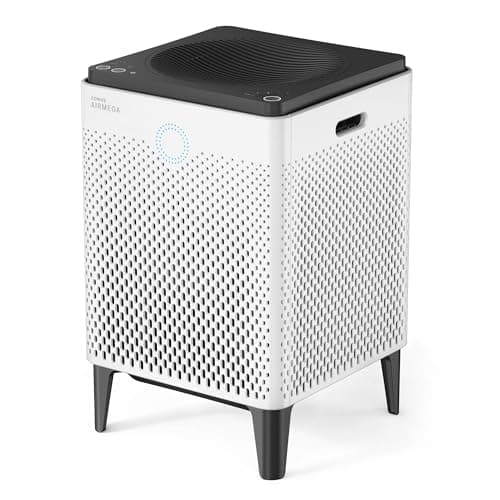 If odor is the real problem Coway Airmega 400 376 certified CFM with carbon, a washable pre-filter and a published filter price. | Large rooms, verified Coway | 376CFM smoke ENERGY STAR verified | |
| 4 | 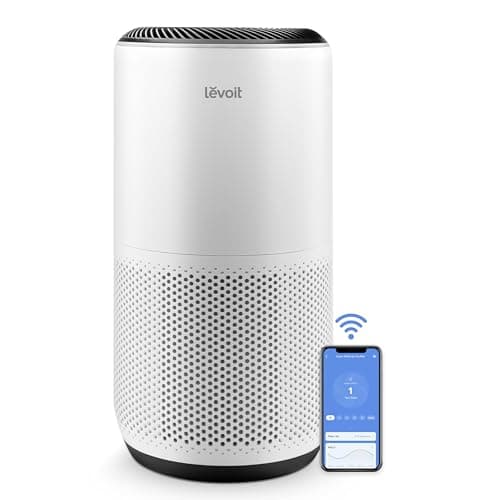 If you want the specs published LEVOIT Core 400S Slightly more air, a published noise range and a published filter price — at a worse efficiency. | Popular pick, mid-size rooms | 231CFM smoke ENERGY STAR verified | |
| 5 | No photo If the room is a small bedroom Honeywell InSight HPA4100 109 certified CFM, 16 watts, and ENERGY STAR Most Efficient — which the 4300 is not. | Bedrooms up to about 170 sq ft | 109CFM smoke AHAM VERIFIDE |
#ad We earn a commission if you buy through this link, at no extra cost to you. How this site is funded. Prices last checked November 3, 2026.
The alternatives, and what each one buys you
Honeywell InSight HPA4300
Honeywell · model HPA4300B
#ad We earn a commission if you buy through this link, at no extra cost to you. How this site is funded. Prices last checked November 3, 2026.
The efficiency winner among true-HEPA units at living-room size: 229 certified smoke CADR on 31 watts, zero measured ozone, and a filter the register classifies as HEPA rather than HEPA-Type.
229 smoke / 238 dust / 245 pollen CFM · 233 PM2.5
- Certified room size
- 354 sq ft
- Energy / year
- 185 kWh
- Electricity / year
- $34
- Air per watt
- 7.4 CFM/W
- Power draw
- 31 W
- Noise
- Not published
- Measured ozone
- 0 ppb
- Filter class
- HEPA
- AHAM rule, 343 sq ft
- Clears it (229 needed)
No ionizer — filtration only
Both registers classify this unit as fan-and-filter only.
229 certified smoke CADR on 31 watts, 7.4 CFM per watt, recorded HEPA by both registers, 0 ppb measured ozone, no ion stage, $34 a year. In both registers, which almost nothing here manages.
The honest con: no carbon stage on record, so no odor mechanism; and no published noise figure, filter price or replacement interval, so its total cost of ownership is not computable.
Honeywell HPA6000
Honeywell · model HPA6000B
#ad We earn a commission if you buy through this link, at no extra cost to you. How this site is funded. Prices last checked November 3, 2026.
More certified air movement than the HPA4300 for four more watts, and the same zero on ozone. The sensible step up if your room is nearer 400 square feet.
257 smoke / 262 dust / 285 pollen CFM · 259 PM2.5
- Certified room size
- 398 sq ft
- Energy / year
- 207 kWh
- Electricity / year
- $38
- Air per watt
- 7.3 CFM/W
- Power draw
- 34.9 W
- Noise
- Not published
- Measured ozone
- 0 ppb
- Filter class
- HEPA
- AHAM rule, 398 sq ft
- Short (266 needed)
257 certified smoke CADR across 398 certified square feet for 34.9 watts, also recorded HEPA with 0 ppb and no ion stage. The reason it is here rather than only in the size column: ENERGY STAR records activated carbon as a second filter on this model, which the 4300 does not have.
The honest con: $38 a year against $34, no automatic mode on record where the 4300 has an air-quality sensor, and the same Honeywell silence on noise, filter price and interval.
Coway Airmega 400
Coway · model Airmega 400 (AP-2015F)
#ad We earn a commission if you buy through this link, at no extra cost to you. How this site is funded. Prices last checked November 3, 2026.
The Coway that is actually in a certification register: 376 certified smoke CADR, 583 square feet, zero measured ozone. If you want a Coway, this is the one with third-party numbers.
376 smoke / 384 dust / 409 pollen CFM · 380 PM2.5
- Certified room size
- 583 sq ft
- Advertised coverage
- 3,120 sq ft in 60 minutes
- Energy / year
- 366 kWh
- Electricity / year
- $67
- Air per watt
- 6.1 CFM/W
- Power draw
- 66 W
- Noise
- 22-52 dB(A)
- Measured ozone
- 0 ppb
- Filter class
- Composite Filter
- AHAM rule, 470 sq ft
- Clears it (314 needed)
No ionizer — filtration only
ENERGY STAR classifies this unit 'Fan and Filter', 0.00 ppb measured ozone.
The machine to buy when the 4300’s missing carbon stage is the deciding factor. 376 certified smoke CADR, 0 ppb measured, no ion stage, washable pre-filters on both faces, and the only published filter price in this category. Our full review.
The honest con: $67 a year in electricity plus $129 in filters, a much higher price bracket, and a filter ENERGY STAR declines to classify either HEPA or HEPA-Type.
LEVOIT Core 400S
LEVOIT · model Core 400S (LAP-C401S)
#ad We earn a commission if you buy through this link, at no extra cost to you. How this site is funded. Prices last checked November 3, 2026.
The best-selling unit in the category, and a clean example of the coverage gap: ENERGY STAR certifies it for 358 square feet while the box advertises 1,718.
231 smoke / 240 dust / 259 pollen CFM · 236 PM2.5
- Certified room size
- 358 sq ft
- Advertised coverage
- 1,718 sq ft at 1 air change per hour
- Energy / year
- 237 kWh
- Electricity / year
- $43
- Air per watt
- 5.8 CFM/W
- Power draw
- 38 W
- Noise
- 22-52 dB
- Measured ozone
- 0 ppb
- Filter class
- HEPA-Type
- AHAM rule, 288 sq ft
- Clears it (192 needed)
No ionizer — filtration only
ENERGY STAR classifies this unit 'Fan and Filter' and measures 0.00 ppb ozone. LEVOIT markets it as ozone free.
The direct rival, and the trade is documentation against efficiency. 231 certified CFM — slightly more air than the Honeywell — with a published 22-52 dB noise range, a published filter price and a pet-allergy carbon filter variant LEVOIT lists separately. Our full review.
The honest con: ENERGY STAR classifies its filter HEPA-Type despite the “True HEPA” name, its Integrated Energy Factor is 5.8 against the Honeywell’s 7.4, and it costs $43 a year against $34.
Honeywell InSight HPA4100
Honeywell · model HPA4100B
#ad We earn a commission if you buy through this link, at no extra cost to you. How this site is funded. Prices last checked November 3, 2026.
A small-room unit that clears AHAM's two-thirds rule for a 169 square-foot bedroom on 16 watts. Zero measured ozone, and classified HEPA rather than HEPA-Type.
109 smoke / 117 dust / 117 pollen CFM · 113 PM2.5
- Certified room size
- 169 sq ft
- Energy / year
- 95 kWh
- Electricity / year
- $17
- Air per watt
- 6.9 CFM/W
- Power draw
- 16 W
- Noise
- Not published
- Measured ozone
- 0 ppb
- Filter class
- HEPA
- AHAM rule, 169 sq ft
- Short (113 needed)
The same family, sized down: 109 certified smoke CADR across 169 certified square feet on 16 watts — $17 a year, the cheapest running cost of anything here certified for a whole bedroom. Recorded HEPA, 0 ppb, no ion stage, and it carries the ENERGY STAR Most Efficient designation the 4300 does not.
The honest con: genuinely small — above about 169 square feet it stops clearing AHAM’s rule — and no Amazon listing we could find names the model, so its buy button is a tagged search rather than a product link.
What this review cannot tell you
Certified CADR is measured on a new filter in a sealed chamber against tobacco smoke, dust and pollen. Your filter will be six months old and your door will open. There is no CADR test for pet dander and no certification for one, so the figures above are the best comparable numbers in this category and they are not a dander measurement.
We also cannot tell you whether this unit will still be running in five years, because we do not own one and nobody publishes failure rates. That is real information and we do not have it. What we can do is show every number we used and where it came from, so you can disagree with the conclusion using the same evidence.
Common questions
Is the Honeywell InSight HPA4300 worth buying?
Does the Honeywell HPA4300 remove odors?
How loud is the Honeywell HPA4300?
Is the HPA4300 ENERGY STAR Most Efficient?
What filter does the Honeywell HPA4300 use and how often does it need changing?
Sources
- AHAM VERIFIDE directory of certified room air cleaners
- AHAM — air filtration standards and the two-thirds sizing rule
- ENERGY STAR certified room air cleaners database
- EPA — Guide to Air Cleaners in the Home
- Honeywell filters and accessories (the replacement source AHAM points to)
Figures were read on the dates shown against each source. If one has changed, or if we have got something wrong, tell us and we will correct the page.
Read next
- AllergiesThe Best Air Purifiers for AllergiesThe flagship roundup: certified CADR, measured ozone, computed running cost, and the coverage claims checked against the registers.
- CADR & costTrue HEPA vs HEPA-TypeWhy 'True HEPA' certifies nothing, and which units the registers actually classify as HEPA.
- CADR & costHoneywell vs LEVOITHoneywell wins filter classification and air per watt across the range. LEVOIT wins published noise, published filter prices and the biggest room. Ozone is a tie at zero.
- CADR & costWhat an air purifier costs to runCertified annual energy use converted to dollars for every unit, with the rate and its source stated.
- AllergiesHoneywell HPA6000 ReviewMore air than the HPA4300, the best pollen figure of any Honeywell we cover, and zero measured ozone. The carbon stage depends on which register you read.