Honeywell vs LEVOIT
Two brands that sit next to each other on every shelf and split almost perfectly: one is better on the numbers the registers publish, the other on the numbers the manufacturer publishes.
#ad We earn a commission if you buy through this link, at no extra cost to you. How this site is funded. Prices last checked September 26, 2026.
The split is almost perfectly clean. Honeywell wins everything the registers measure: a HEPA filter classification on every model we cover, and the best air-per-watt figures on this site. LEVOIT wins everything the manufacturer chooses to publish: a noise range and a filter price for every Core unit, plus a machine that covers 606 square feet when Honeywell’s range stops at 398. Ozone is a tie at zero.
These two occupy the same shelf and the same price bracket, and the comparison is usually made on app features. That is the least informative axis available. The useful one is that each brand is strong exactly where the other is weak, and which one that makes right for you depends on whether you care more about what was measured or about what you can find out in advance.
Model by model, at matched size
| Honeywell HPA4300 | LEVOIT Core 400S | Honeywell HPA6000 | LEVOIT Core 600S | |
|---|---|---|---|---|
| Smoke CADR | 229 CFM | 231 CFM | 257 CFM | 391 CFM |
| Certified room | 354 sq ft | 358 sq ft | 398 sq ft | 606 sq ft |
| Annual energy | 185 kWh | 237 kWh | 207 kWh | 387 kWh |
| Electricity / yr | $34 | $43 | $38 | $71 |
| Air per watt | 7.4 CFM/W | 5.8 CFM/W | 7.3 CFM/W | 6.0 CFM/W |
| Filter classification | HEPA | HEPA-Type | HEPA | HEPA-Type |
| Measured ozone | 0.00 ppb | 0.00 ppb | 0.00 ppb | 0.00 ppb |
| Ion stage | None | None | None | None |
| Registers | AHAM and ENERGY STAR | ENERGY STAR and AHAM | AHAM and ENERGY STAR | ENERGY STAR and AHAM |
| Published noise | Not published | 22-52 dB | Not published | 26-55 dB |
| Published filter price | Not published | $49.99 | Not published | $59.99 |
| Published filter interval | Not published | Not published | Not published | Not published |
Electricity costs on this page use 18.34¢ per kWh, the U.S. average residential price for June 2026 from the U.S. Energy Information Administration, Electric Power Monthly, Table 5.3. Your rate is on your bill and is probably not this one; multiply the kWh figure by your own rate and you have your number.
The cleanest brand split on this site
Both registers record a filter classification per model, and it is usually a mess — brands scatter across HEPA and HEPA-Type with no pattern. These two are the exception. Every Honeywell we cover is recorded HEPA. Every LEVOIT Core we cover is recorded HEPA-Type, including the models whose boxes say “True HEPA”.
Before that decides anything, the honest caveat this site applies everywhere: CADR is measured on the whole machine and already contains filtration efficiency, so a HEPA-Type machine moving more air delivers more clean air than a HEPA machine moving less. The classification is a real, published, third-party field — and it is an input measure, not an outcome measure.
Where it does carry weight is in a room where somebody is sensitive and you are choosing between two machines of similar output. At matched size that is exactly the situation here: 229 CFM against 231, across 354 and 358 certified square feet. The output is a wash; the classification is not.
Honeywell wins air per watt across the whole range
This is the least-discussed and most consequential difference. Honeywell’s three models post 7.4, 7.3 and 6.9 CFM per watt. LEVOIT’s post 5.8 and 6.0. There is no overlap: the least efficient Honeywell beats the most efficient LEVOIT.
In money, at the size most people buy: the HPA4300 certifies 354 square feet on 185 kWh a year and the Core 400S certifies 358 on 237. That is $34 against $43 for the same room, every year, on a machine designed to run continuously — how running costs compound over a machine’s life.
What each brand will tell you before you buy
Now the axis that runs the other way. LEVOIT publishes a dB range and a replacement filter price for every Core machine: 22-52 dB and $49.99 for the 400S, 26-55 dB and $59.99 for the 600S. Honeywell publishes neither, for any model we cover. We could find no noise figure and no filter price on its listings or its documentation.
For a bedroom machine the dB range is the specification that decides whether the thing is still switched on in six months, and it is knowable in advance for one of these brands only. Neither brand publishes a filter interval, so neither annual filter cost can be computed — LEVOIT gets you half way there and Honeywell not at all — what each manufacturer actually publishes about filters.
To be precise about what Honeywell does document, because “publishes nothing” would be unfair: its listings describe a pre-filter for pet hair and an activated carbon layer for odors and VOCs on both models here, and describe the HPA6000’s pre-filter as cleanable. What is missing is anything quantitative — no decibels, no months, no price.
Where LEVOIT wins outright
The top of the range. Honeywell’s largest machine here certifies 398 square feet. The Core 600S certifies 606. For an open-plan floor that is not a preference, it is the whole decision — Honeywell simply does not field a machine at that size in the range we cover.
Features that are actually specified. App and voice control, a laser particle sensor, a PM2.5 readout, scheduling. Honeywell’s models here document an air-quality sensor with a color indicator, timers, a child lock and a filter-change indicator — real, but on-unit rather than connected. This site does not rank on features because they do not move air, but if you want the phone in the loop, only one of these brands offers it.
The published quiet figure, again. It bears repeating because it is the most common post-purchase regret in this category, and LEVOIT is one of the few brands that lets you check it before you commit — how to read a dB range.
Where they tie, and why it matters
Every machine from both brands that we cover measures 0.00 ppb of ozone with no ion generator. Not one model in either range carries a plasma stage, a bipolar ionizer or a UV lamp that the registers record.
That sounds unremarkable until you compare it with the rest of the category. The Blueair Max range carries an ion classification from AHAM that ENERGY STAR does not record; Winix splits its range between PlasmaWave models and plain ones; the best-selling Coway is in no register at all. Against that backdrop, two brands that are boringly consistent on the safety number are worth more than the feature lists suggest — why this site weights ozone the way it does.
Quick picks
The best-evidenced machine from each brand, plus the LEVOIT that goes where Honeywell does not.
| # | Product | Best for | Certified CADR | Price |
|---|---|---|---|---|
| 1 | 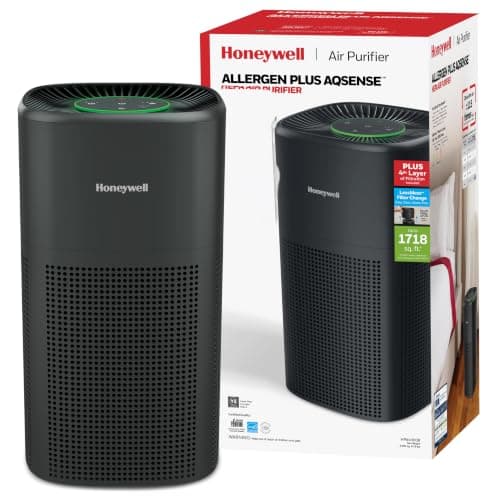 Best Honeywell, efficiency pick Honeywell InSight HPA4300 229 certified CFM on 31 watts, recorded HEPA, 0.00 ppb, in both registers. | True HEPA on the lowest power draw | 229CFM smoke AHAM VERIFIDE | |
| 2 | 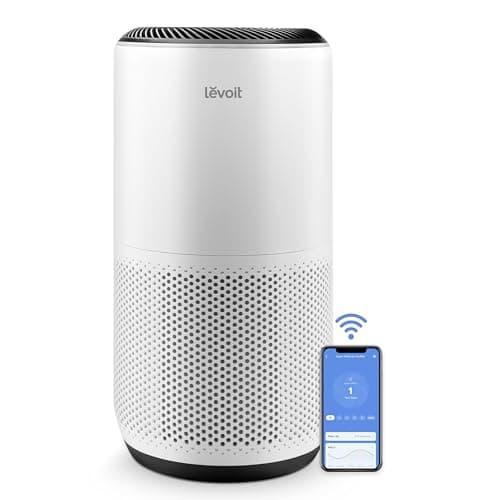 Best LEVOIT at matched size LEVOIT Core 400S 231 certified CFM with a published 22-52 dB range and a named filter price. | Popular pick, mid-size rooms | 231CFM smoke ENERGY STAR verified | |
| 3 | 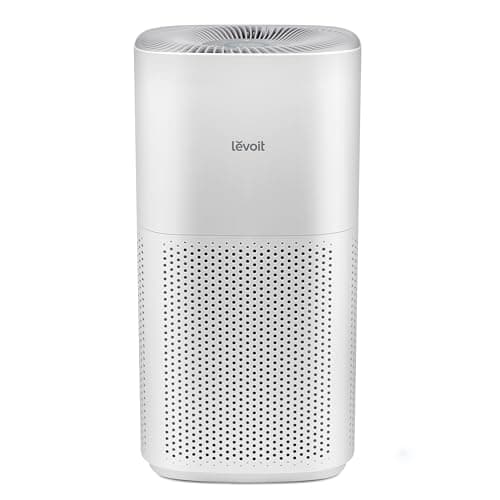 Bigger than Honeywell goes LEVOIT Core 600S 391 certified CFM across 606 sq ft, same measured zero on ozone. | Large open-plan rooms | 391CFM smoke ENERGY STAR verified |
#ad We earn a commission if you buy through this link, at no extra cost to you. How this site is funded. Prices last checked September 26, 2026.
The picks
Honeywell InSight HPA4300
Honeywell · model HPA4300B
#ad We earn a commission if you buy through this link, at no extra cost to you. How this site is funded. Prices last checked September 26, 2026.
The efficiency winner among true-HEPA units at living-room size: 229 certified smoke CADR on 31 watts, zero measured ozone, and a filter the register classifies as HEPA rather than HEPA-Type.
229 smoke / 238 dust / 245 pollen CFM · 233 PM2.5
- Certified room size
- 354 sq ft
- Energy / year
- 185 kWh
- Electricity / year
- $34
- Air per watt
- 7.4 CFM/W
- Power draw
- 31 W
- Noise
- Not published
- Measured ozone
- 0 ppb
- Filter class
- HEPA
- AHAM rule, 300 sq ft
- Clears it (200 needed)
No ionizer — filtration only
Both registers classify this unit as fan-and-filter only.
229 certified smoke CADR across 354 certified square feet on 31 watts — 7.4 CFM per watt, the best figure on this site, for $34 a year. Listed in both registers, filter recorded HEPA, 0.00 ppb measured, no ion stage, and a documented pre-filter and carbon layer.
The honest con: no published noise figure, no filter interval and no filter price, so you cannot check the bedroom question or budget the filters before buying — and its pre-filter is not described as washable, which the model above it is.
LEVOIT Core 400S
LEVOIT · model Core 400S (LAP-C401S)
#ad We earn a commission if you buy through this link, at no extra cost to you. How this site is funded. Prices last checked September 26, 2026.
The best-selling unit in the category, and a clean example of the coverage gap: ENERGY STAR certifies it for 358 square feet while the box advertises 1,718.
231 smoke / 240 dust / 259 pollen CFM · 236 PM2.5
- Certified room size
- 358 sq ft
- Advertised coverage
- 1,718 sq ft at 1 air change per hour
- Energy / year
- 237 kWh
- Electricity / year
- $43
- Air per watt
- 5.8 CFM/W
- Power draw
- 38 W
- Noise
- 22-52 dB
- Measured ozone
- 0 ppb
- Filter class
- HEPA-Type
- AHAM rule, 350 sq ft
- Short (234 needed)
No ionizer — filtration only
ENERGY STAR classifies this unit 'Fan and Filter' and measures 0.00 ppb ozone. LEVOIT markets it as ozone free.
231 certified smoke CADR across 358 certified square feet with 0.00 ppb measured, no ion stage, now in both registers — plus the two numbers Honeywell never prints: 22-52 dB and a $49.99 filter. The full record on it.
The honest con: $43 a year against the Honeywell’s $34 for the same certified room, a HEPA-Type rather than HEPA classification despite the “True HEPA” box copy, and no washable pre-filter documented.
LEVOIT Core 600S
LEVOIT · model Core 600S (LAP-C601S-WUS)
#ad We earn a commission if you buy through this link, at no extra cost to you. How this site is funded. Prices last checked September 26, 2026.
391 certified smoke CADR is real large-room capability, and it is honest about needing 387 kWh a year to deliver it — the highest electricity bill of any LEVOIT we cover.
391 smoke / 398 dust / 436 pollen CFM · 394 PM2.5
- Certified room size
- 606 sq ft
- Advertised coverage
- 2,909 sq ft at 1 air change per hour
- Energy / year
- 387 kWh
- Electricity / year
- $71
- Air per watt
- 6 CFM/W
- Power draw
- 49 W
- Noise
- 26-55 dB
- Measured ozone
- 0 ppb
- Filter class
- HEPA-Type
- AHAM rule, 550 sq ft
- Clears it (367 needed)
No ionizer — filtration only
ENERGY STAR classifies this unit 'Fan and Filter', 0.00 ppb measured ozone.
391 certified smoke CADR across 606 certified square feet — 52% more room than Honeywell’s largest — with the same 0.00 ppb and no ion stage. The full record on it.
The honest con: $71 a year is the highest electricity bill of any LEVOIT we cover, 6.0 CFM per watt is well behind every Honeywell, and ENERGY STAR carries a second model code under the same name that measures 2 ppb.
The verdict
Common questions
Is Honeywell or LEVOIT better?
Which is cheaper to run?
Is LEVOIT really True HEPA?
Do either brand's machines produce ozone?
Which brand goes bigger?
Sources
- AHAM VERIFIDE directory of certified room air cleaners
- ENERGY STAR certified room air cleaners database
- AHAM — air filtration standards and the two-thirds rule
- LEVOIT Core 400S product specification
Figures were read on the dates shown against each source. If one has changed, or if we have got something wrong, tell us and we will correct the page.
Read next
- CADR & costLEVOIT vs WinixWinix posts more certified air at every size; LEVOIT publishes noise and filter prices Winix does not. One Winix line carries an ion stage.
- CADR & costLEVOIT vs CowayBrand-level comparison on certified coverage, running cost and which models are actually in a register.
- CADR & costTrue HEPA vs HEPA-TypeWhy 'True HEPA' certifies nothing, and which units the registers actually classify as HEPA.