Are AirDoctor air purifiers worth it?
AirDoctor is one of the few premium brands with real third-party numbers, which makes it one of the few we can assess rather than guess at. The numbers are not the ones the marketing implies.
#ad We earn a commission if you buy through this link, at no extra cost to you. How this site is funded. Prices last checked November 3, 2026.
On the certified record, no — not at the price. ENERGY STAR certifies the AirDoctor AD1500 at 264 square feet and 170 CFM of smoke CADR, with an ion generator and 3 ppb of measured ozone. The Honeywell InSight HPA4300 is certified for 354 square feet and 229 CFM, with the filter recorded HEPA and 0.00 ppb measured, for well under half as much.
Most premium air purifier brands cannot be assessed on this site, because they publish their own numbers and appear in no register. AirDoctor is the exception and deserves credit for it: two of its machines are ENERGY STAR certified, which means the CADR was produced under ANSI/AHAM AC-1 by an EPA-recognized body and the ozone was measured. That is more than Dyson, Molekule or Alen’s whole range offer. It also means the claims can be checked.
How we judged it
Exactly as every other machine on this site is judged, which is the only fair way to assess a brand that spends more on marketing than its rivals. Certified smoke CADR against the room it is certified for; air delivered per watt; measured ozone and whether an ionizing stage is fitted; what the register calls the filter; and what the whole year costs. No testing of our own, no opinion about build quality, and no weight given to the fact that the machine looks expensive.
The certified record, both models
Read from ENERGY STAR’s certified room air cleaner database on 2026-10-17, the day this page was written.
| Machine | Smoke CADR | Certified room | CFM per watt | Measured ozone | Filter class |
|---|---|---|---|---|---|
| AirDoctor AD1500 | 170 CFM | 264 sq ft | 6.1 | 3 ppb | HEPA-Type |
| AirDoctor AD4000 | 370 CFM | 574 sq ft | 5.6 | 1 ppb | HEPA-Type |
| Honeywell InSight HPA4300 | 229 CFM | 354 sq ft | 7.4 | 0.00 ppb | HEPA |
| Blueair Blue Pure 211i Max | 435 CFM | 674 sq ft | 9 | 2 ppb | HEPA-Type |
| LEVOIT Core 400S | 231 CFM | 358 sq ft | 5.8 | 0.00 ppb | HEPA-Type |
The AD1500 is the row to sit with. It delivers 170 CFM into a certified 264 square feet. The Honeywell delivers 35% more certified air across 90 more certified square feet, at a better air-per-watt figure, with a measured zero on ozone and no ion stage. Both are listed by the same program under the same standard.
The UltraHEPA claim and the register’s classification
AirDoctor’s launch announcement for the 1500 states that its UltraHEPA filter is independently tested and certified to capture 99.99% of airborne particles at 0.003 microns. We have no basis to call that untrue and we have not tested it; 0.003 microns is far below the 0.3 micron size at which the HEPA definition is written, and a filter can behave well there.
What we can report is that the register which classifies every certified machine on the same scale records both AirDoctor models’ filters as HEPA-Type. The same field records HEPA for the Honeywell InSight range. Those two labels are not interchangeable, and the difference is the subject of its own page — True HEPA vs HEPA-Type.
The coverage claim, and the one AirDoctor got right
The usual pattern in this category is a certified room size buried under an advertised one four or five times larger. AirDoctor’s own announcement is better than that: it states 320 square feet at four air changes per hour, which is close to the 264 square feet the register certifies at 4.8 air changes. Credit where it is due — that is a more honest figure than LEVOIT’s 1,718 square feet or Coway’s 3,285.
The inflation happens at retail. The listing for the same machine is headed up to 1,280 ft², which is 320 multiplied by four: the same unit counted at one air change an hour instead of four. One air change an hour is not a cleaning rate anybody should buy on — what the room really needs, by AHAM’s rule. For a 300 square foot bedroom AHAM’s two-thirds rule asks for 200 CFM; the AD1500 delivers 170, so it clears that room and nothing like the 1,280 on the box.
The ion stage, stated fairly
ENERGY STAR records the AD1500’s technology as Fan and Filter, Ion Generator and measures 3 ppb of ozone. Two things need saying in the same breath. First, 3 ppb is a long way below the 50 ppb limit California’s Air Resources Board certifies portable air cleaners against, so this is not a machine emitting dangerous ozone. Second, it is not zero, and the units we recommend for allergic and asthmatic households measure 0.00 — why we hold that line.
We could not source AirDoctor documentation saying whether the ion stage can be switched off, so the product entry on this site says so rather than guessing. For the AD4000 the register’s technology field is blank, so we do not claim an ion stage is fitted and we do not claim it is absent — the sibling’s entry is not evidence about this model.
What AirDoctor gets right
A page that only prosecutes is not an assessment. Four things stand up.
It is in a register at all. Two models certified by ENERGY STAR puts AirDoctor ahead of several brands that charge similar money and publish only their own numbers.
Its own coverage claim is nearly honest, as above — the four-air-change figure is the one a buyer should use, and AirDoctor published it.
The AD4000 is genuinely a large-room machine. 370 CFM across 574 certified square feet is real capability, more than most units on this site, and 1 ppb is a low measured figure.
It publishes a filter interval — approximately every six months, per its announcement — which Honeywell does not do for the machine we recommend over it. An interval without a price is half a number, but it is more than many brands give.
The filter bill, which is the half nobody quotes
AirDoctor publishes a replacement interval — approximately every six months for the 1500’s combined UltraHEPA and carbon cartridge, per its own announcement — and that is more than Honeywell publishes for the machine we recommend over it. An interval is half the number, though. The other half is a price, and we could not source a manufacturer price for the AD1500 cartridge from AirDoctor itself; the figures circulating in third-party guides disagree with each other and with the current retail listings, so this page prints none.
What that means in practice is that the recurring cost of an AirDoctor sits in the same unknowable category as the Honeywell’s, with one difference: a twice-yearly cartridge is twice the purchase frequency of the annual sets Coway and Alen publish, and the premium filters in this class are not cheap. If the recurring bill is the thing you want visible before you commit, the only machines we cover that publish both an interval and a price are the Coway Airmega line, at $129 a set on a 12-month cycle — the full table of what each manufacturer publishes.
Electricity, by contrast, is certified for both AirDoctor models and therefore knowable. The AD1500 draws 166 kWh a year, which is about $30; the AD4000 draws 396 kWh, about $73. Neither is expensive to run. The AD1500 is simply expensive to buy for the room it covers.
How to check any of this yourself in two minutes
Nothing on this page needs to be taken on trust, and the method generalizes to any brand. Open the ENERGY STAR certified room air cleaner database, search the model number, and read four fields: room size in square feet, the smoke CADR, ozone emissions in ppb and the filter type. Then compare the room size with the figure on the listing you were about to buy from.
The gap between those two numbers is the single most useful thing a buyer in this category can learn to read, and it is not a scandal — it is usually the difference between one air change an hour and the 4.8 the register uses. Once you can convert between them, a 1,280 square foot claim and a 264 square foot certification stop being a contradiction and become the same machine described twice.
Two cautions on the method. A model absent from the database is not necessarily worse — Coway and Alen are absent from AHAM’s directory and both are certified elsewhere — it is unverified, which is a different complaint. And variant suffixes matter: certification attaches to a specific model number, so an AD4000 entry says nothing about an AD3500, and the letter on the end of a listing title is worth matching before you conclude anything.
The verdict, in one line per buyer
Bedroom or home office, under about 350 square feet: the Honeywell InSight HPA4300 does more certified air in a bigger certified room with a HEPA-classified filter and a measured zero on ozone, for well under half the money. There is no reading of the registers where the AD1500 is the better buy on air per dollar.
Large open-plan room: the Blueair Blue Pure 211i Max delivers 435 certified CFM across 674 certified square feet — more air and more room than the AD4000 — though it carries its own ion stage and a 2 ppb measurement, so an asthmatic household should weigh the Coway Airmega 450 instead.
If you want the AirDoctor anyway: buy the AD4000 rather than the AD1500. The big one is a capable machine priced above its performance; the small one is an expensive machine for a small certified room, and the room is the part the marketing does not lead with.
Quick picks
Ranked on certified CADR against the room each unit is certified for, with both AirDoctor models included so the comparison is visible rather than asserted.
| # | Product | Best for | Certified CADR | Price |
|---|---|---|---|---|
| 1 | 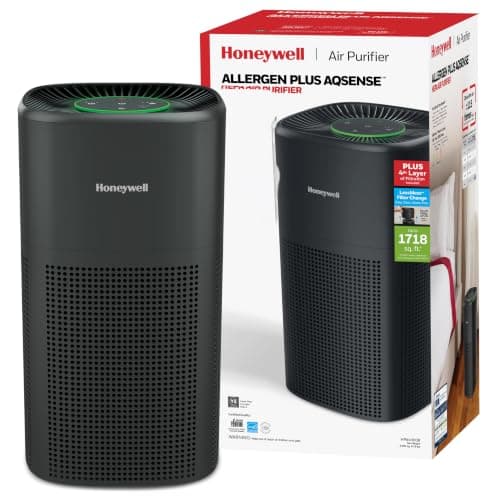 Buy this instead of the AD1500 Honeywell InSight HPA4300 229 certified CFM across 354 certified sq ft, 0.00 ppb, filter recorded HEPA. | True HEPA on the lowest power draw | 229CFM smoke AHAM VERIFIDE | |
| 2 | 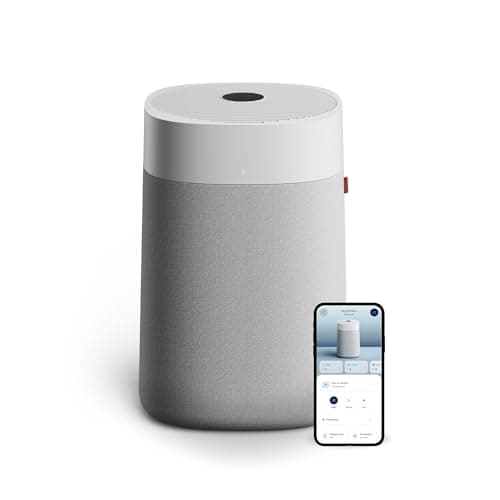 Buy this instead of the AD4000 Blueair Blue Pure 211i Max 435 certified CFM across 674 certified sq ft at 9.0 CFM per watt. | Open-plan spaces above 500 sq ft | 435CFM smoke AHAM VERIFIDE | |
| 3 | 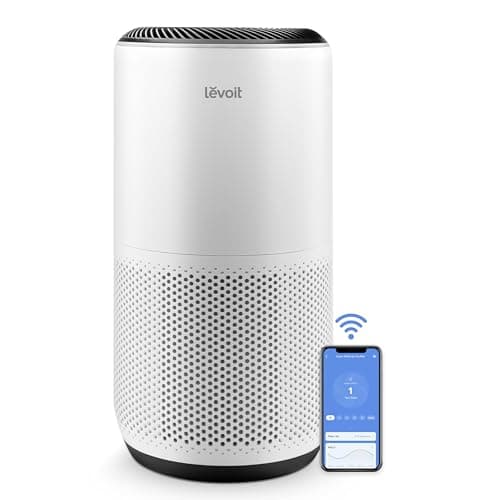 Best if you want the numbers published LEVOIT Core 400S 231 certified CFM, 22-52 dB and a $49.99 filter — figures AirDoctor does not give. | Popular pick, mid-size rooms | 231CFM smoke ENERGY STAR verified | |
| 4 | 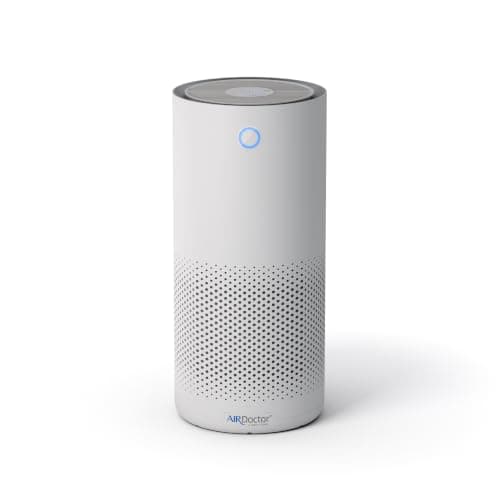 The unit this page assesses AirDoctor AD1500 170 certified CFM across 264 certified sq ft, with an ion generator and 3.00 ppb. | Nothing we would not rather buy twice as cheaply | 170CFM smoke ENERGY STAR verified | |
| 5 | 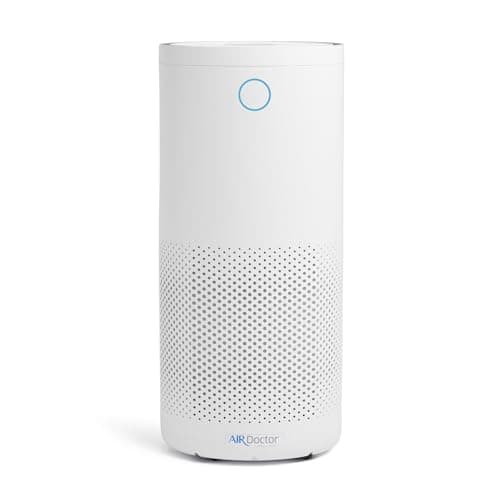 The larger one, assessed AirDoctor AD4000 370 certified CFM across 574 certified sq ft at 5.6 CFM per watt. | Large rooms, if the brand matters more than the arithmetic | 370CFM smoke ENERGY STAR verified |
#ad We earn a commission if you buy through this link, at no extra cost to you. How this site is funded. Prices last checked November 3, 2026.
The machines, with the honest downside on each
Honeywell InSight HPA4300
Honeywell · model HPA4300B
#ad We earn a commission if you buy through this link, at no extra cost to you. How this site is funded. Prices last checked November 3, 2026.
The efficiency winner among true-HEPA units at living-room size: 229 certified smoke CADR on 31 watts, zero measured ozone, and a filter the register classifies as HEPA rather than HEPA-Type.
229 smoke / 238 dust / 245 pollen CFM · 233 PM2.5
- Certified room size
- 354 sq ft
- Energy / year
- 185 kWh
- Electricity / year
- $34
- Air per watt
- 7.4 CFM/W
- Power draw
- 31 W
- Noise
- Not published
- Measured ozone
- 0 ppb
- Filter class
- HEPA
- AHAM rule, 300 sq ft
- Clears it (200 needed)
No ionizer — filtration only
Both registers classify this unit as fan-and-filter only.
229 certified smoke CADR across 354 certified square feet at 7.4 CFM per watt — the best air per watt on this site — with the filter recorded HEPA, 0.00 ppb measured ozone and no ion stage. About $34 a year. Our full review.
The honest con: no published noise figure, no filter price and no replacement interval — the one place AirDoctor is more forthcoming.
Blueair Blue Pure 211i Max
Blueair · model 3613111100 (Blue Pure 211i Max)
#ad We earn a commission if you buy through this link, at no extra cost to you. How this site is funded. Prices last checked November 3, 2026.
The most air per watt of anything here and by some distance the largest certified coverage — 674 square feet. It does carry an ion generator, which is the reason it is not our asthma pick.
435 smoke / 453 dust / 450 pollen CFM · 444 PM2.5
- Certified room size
- 674 sq ft
- Energy / year
- 256 kWh
- Electricity / year
- $47
- Air per watt
- 9 CFM/W
- Power draw
- 44 W
- Noise
- Not published
- Measured ozone
- 2 ppb
- Filter class
- HEPA-Type
- AHAM rule, 600 sq ft
- Clears it (400 needed)
Ion generator — fitted
The two registers disagree: AHAM classifies this model 'Fan Filter with Ion Generator' while ENERGY STAR records it as 'Fan and Filter'. ENERGY STAR's measured ozone figure is 2 ppb. We report both rather than picking the flattering one.
435 certified CFM across 674 certified square feet at 9 CFM per watt, which is the best efficiency figure of any large machine here — about $47 a year to run. Our full review.
The honest con: AHAM records an ion generator with no documented off switch and ENERGY STAR measures 2 ppb, the filter is classified HEPA-Type, and Blueair publishes neither a noise figure nor a filter schedule.
LEVOIT Core 400S
LEVOIT · model Core 400S (LAP-C401S)
#ad We earn a commission if you buy through this link, at no extra cost to you. How this site is funded. Prices last checked November 3, 2026.
The best-selling unit in the category, and a clean example of the coverage gap: ENERGY STAR certifies it for 358 square feet while the box advertises 1,718.
231 smoke / 240 dust / 259 pollen CFM · 236 PM2.5
- Certified room size
- 358 sq ft
- Advertised coverage
- 1,718 sq ft at 1 air change per hour
- Energy / year
- 237 kWh
- Electricity / year
- $43
- Air per watt
- 5.8 CFM/W
- Power draw
- 38 W
- Noise
- 22-52 dB
- Measured ozone
- 0 ppb
- Filter class
- HEPA-Type
- AHAM rule, 300 sq ft
- Clears it (200 needed)
No ionizer — filtration only
ENERGY STAR classifies this unit 'Fan and Filter' and measures 0.00 ppb ozone. LEVOIT markets it as ozone free.
231 certified CFM across 358 certified square feet, 0.00 ppb measured, plus 22-52 dB and a $49.99 filter. Our full review.
The honest con: the filter is classified HEPA-Type despite the “True HEPA” marketing, LEVOIT publishes no replacement interval, and its advertised 1,718 square feet is the coverage inflation AirDoctor mostly avoided.
AirDoctor AD1500
AirDoctor · model AD1500
#ad We earn a commission if you buy through this link, at no extra cost to you. How this site is funded. Prices last checked November 3, 2026.
The most expensive certified square foot on this site: $399 for the 264 square feet ENERGY STAR certifies, with an ion generator, 3.00 ppb of measured ozone and a filter the register classifies HEPA-Type rather than HEPA.
170 smoke / 174 dust / 173 pollen CFM · 172 PM2.5
- Certified room size
- 264 sq ft
- Advertised coverage
- 320 sq ft at 4 air changes per hour
- Energy / year
- 166 kWh
- Electricity / year
- $30
- Air per watt
- 6.1 CFM/W
- Noise
- as low as 35 dB
- Measured ozone
- 3 ppb
- Filter class
- HEPA-Type
- AHAM rule, 250 sq ft
- Clears it (167 needed)
Ion generator — fitted
ENERGY STAR records this model's technology as 'Fan and Filter, Ion Generator' and measures 3.00 ppb of ozone. We could not source AirDoctor documentation saying whether the ion stage can be switched off, so we do not claim either way.
170 certified CFM across 264 certified square feet at 6.1 CFM per watt, about $30 a year in electricity, and AirDoctor publishes a noise floor of as low as 35 dB and a six-month filter interval.
The honest con: the certified room is the smallest of any machine in this price bracket on the site, the register classifies the filter HEPA-Type rather than HEPA, it carries an ion generator we could not confirm is switchable, and it measures 3 ppb rather than zero. The air per dollar is the worst here by a wide margin.
AirDoctor AD4000
AirDoctor · model AD4000
#ad We earn a commission if you buy through this link, at no extra cost to you. How this site is funded. Prices last checked November 3, 2026.
Genuine large-room capability — 370 certified smoke CFM across 574 square feet — at $679, which is roughly what two certified machines covering more air between them would cost.
370 smoke / 393 dust / 450 pollen CFM · 381 PM2.5
- Certified room size
- 574 sq ft
- Energy / year
- 396 kWh
- Electricity / year
- $73
- Air per watt
- 5.6 CFM/W
- Noise
- Not published
- Measured ozone
- 1 ppb
- Filter class
- HEPA-Type
- AHAM rule, 550 sq ft
- Clears it (367 needed)
Ionizer status unclear
ENERGY STAR's technology field is blank for this model, so unlike the AD1500 we cannot say from the register whether an ion stage is fitted, and we will not infer it from the sibling.
370 certified CFM across 574 certified square feet with 1 ppb measured — genuinely capable for a large room, and about $73 a year in electricity.
The honest con: 5.6 CFM per watt is below every large machine we recommend, the Blueair above delivers more certified air across more certified room for less money, the filter is classified HEPA-Type, and the register’s technology field is blank so we cannot tell you whether an ion stage is fitted.
Common questions
Is AirDoctor AHAM certified?
Is UltraHEPA better than HEPA?
What room size is the AirDoctor AD1500 actually certified for?
Does the AirDoctor produce ozone?
Should I buy an AirDoctor for allergies?
Sources
- ENERGY STAR certified room air cleaners database
- AHAM VERIFIDE directory of certified room air cleaners
- AirDoctor — AirDoctor 1500 launch announcement, September 17 2026
- California Air Resources Board — list of CARB-certified air cleaning devices
- AHAM — air filtration standards and the two-thirds rule
Figures were read on the dates shown against each source. If one has changed, or if we have got something wrong, tell us and we will correct the page.
Read next
- AllergiesThe Best Air Purifiers for AllergiesThe flagship roundup: certified CADR, measured ozone, computed running cost, and the coverage claims checked against the registers.
- AllergiesHEPA vs ionizers vs ozone generatorsWhat EPA advises about ionizers and ozone, with published measurements for every certified unit.
- AllergiesThe Best Air Purifiers for HomeThe certified pick at each room size, because the honest answer to the generic question depends on the room you put it in.
- AllergiesDo UV air purifiers work?No, not for allergies. EPA found no evidence UV reduces mite or mold allergenicity and says home units deliver too little dose. A dead spore is still an allergen.
- AllergiesHoneywell InSight HPA4300 ReviewThe most efficient HEPA-classified unit here, with zero measured ozone and no ion stage. Particle-only though, and Honeywell publishes no noise figure, filter price or interval.