Honeywell vs Coway
One brand is consistent and stops early. The other reaches further than anything else we cover and also sells the most popular unverified machine in the category.
#ad We earn a commission if you buy through this link, at no extra cost to you. How this site is funded. Prices last checked September 27, 2026.
Honeywell wins the small and mid sizes on evidence and efficiency: recorded HEPA on every model, 7.4 CFM per watt, and listings in both registers. Coway wins everything above 385 square feet, because Honeywell does not compete there — and it publishes noise figures and one complete filter bill that Honeywell never does. The catch with Coway is that its best-known machine is in no register at all.
This is the comparison that decides most mid-price purchases, and it is unusually asymmetric. These brands do not overlap the way LEVOIT and Winix do; they cover different parts of the size range and they are transparent about different things.
The certified ranges, side by side
| Model | Smoke CADR | Certified room | Air per watt | Ozone | Register |
|---|---|---|---|---|---|
| Honeywell InSight HPA4100 | 109 CFM | 169 sq ft | 6.9 CFM/W | 0.00 ppb | Both |
| Honeywell InSight HPA4300 | 229 CFM | 354 sq ft | 7.4 CFM/W | 0.00 ppb | Both |
| Honeywell HPA6000 | 257 CFM | 398 sq ft | 7.3 CFM/W | 0.00 ppb | Both |
| Coway Airmega Mighty AP-1512HH | 233 claimed | 361 sq ft claimed | Not published | Not measured | Neither |
| Coway Airmega 400 | 376 CFM | 583 sq ft | 6.1 CFM/W | 0.00 ppb | ENERGY STAR |
| Coway Airmega 450 | 443 CFM | 687 sq ft | 6.7 CFM/W | 0.00 ppb | ENERGY STAR |
| Coway Airmega ProX | 577 CFM | 894 sq ft | 10.2 CFM/W | 0.00 ppb | ENERGY STAR |
Electricity costs on this page use 18.34¢ per kWh, the U.S. average residential price for June 2026 from the U.S. Energy Information Administration, Electric Power Monthly, Table 5.3. Your rate is on your bill and is probably not this one; multiply the kWh figure by your own rate and you have your number.
The shape of each range is the real difference
Honeywell’s three machines run from 169 to 398 certified square feet and stop. There is no Honeywell in the range we cover for an open-plan floor. Coway starts where Honeywell finishes and keeps going to 894.
So for a bedroom or a single closed room, this is a real contest. For a great room, a loft or a floor without doors, it is not a contest at all — what actually covers a large room has no Honeywell in it, and that is a statement about the range rather than about the brand.
Efficiency splits by size, and the ProX breaks the pattern
Below 400 square feet Honeywell wins comfortably. 7.4 and 7.3 CFM per watt against the Airmega 400’s 6.1 means the HPA4300 certifies 354 square feet for $34 a year where the Coway wants $67 for 583.
Then the pattern inverts at the top. The Airmega ProX posts 10.2 CFM per watt — the highest figure on this site, ahead of every Honeywell — while covering more than twice the room. Coway is not a less efficient brand; it is a brand whose efficiency lives at the large end — the full record on the ProX.
Coway’s asterisk: the machine most people buy
The AP-1512HH Mighty outsells everything else in this comparison and it is the one machine here with no third-party numbers of any kind. No certified CADR, no certified energy figure, no measured ozone — and it ships a bipolar ionizing stage that nobody outside Coway has measured.
That is not an argument against Coway as a brand: the Airmega line is among the best-documented on this site, with measured zeros, washable pre-filters and, on the Airmega 400, the only complete filter bill we can publish. It is an argument for buying the Coway that files rather than the Coway that sells — the full record on the Mighty, including what is missing.
The filter field, where Honeywell is unbeaten
Both registers record a filter classification per model. Honeywell is recorded HEPA on all three machines we cover — the only brand on this site with a clean sweep of that field. Coway is the opposite case, and in an unusual way: the Airmega 450 and ProX are recorded HEPA-Type, while the Airmega 400 is recorded as a “Composite Filter” and is not classified HEPA or HEPA-Type at all, even though Coway describes the Max2 cartridge as activated carbon plus HEPA.
The caveat this site applies everywhere still applies: certified CADR is measured on the whole machine and already folds in what the filter removes, so the classification is an input measure and the airflow is the outcome. A HEPA-Type machine moving more air delivers more clean air than a HEPA machine moving less.
Where it does decide something is when two machines are close on output. At matched size these two are: 257 CFM from the HPA6000 against the Airmega 400’s 376 across 398 and 583 certified square feet. The Coway moves more air; the Honeywell is the one whose filter grade the register will actually state — what those classifications do and do not promise.
What each brand publishes beyond the registers
Coway publishes a noise range for every Airmega we cover — 22-52 dB(A) on the 400, 23-46 on the ProX — and for the Airmega 400 it publishes both a filter price and an interval, which no other manufacturer in this comparison does for any model. That makes the 400 the one machine on this site whose whole annual running cost is arithmetic rather than a blank.
Honeywell publishes no decibel figure, no filter interval and no filter price for any of its three models. Its listings do document a pre-filter for pet hair and an activated carbon layer, and describe the HPA6000’s pre-filter as cleanable — real information, but nothing you can put a number against — what every manufacturer publishes about filter cost.
Who each brand is actually for
Honeywell suits the buyer optimizing a single room. A bedroom, a nursery, a home office: the machine will run for years in one place, the electricity compounds, and the register has recorded both a HEPA filter and a measured zero. That the range stops at 398 square feet does not matter if your room is smaller than that.
Coway suits the buyer solving a whole floor, or a pet problem. Washable pre-filters on every Airmega, carbon in the cartridge, certified coverage up to 894 square feet and published noise ranges. In a house with animals the pre-filter alone changes the filter economics, because hair loads a cartridge far faster than fine particulate does.
The one buyer neither brand serves well is the person who wants the complete running cost before purchase. Coway answers it on exactly one machine; Honeywell on none.
Quick picks
The best machine from each brand at the size it actually wins, plus the Coway to buy if the room is large.
| # | Product | Best for | Certified CADR | Price |
|---|---|---|---|---|
| 1 | 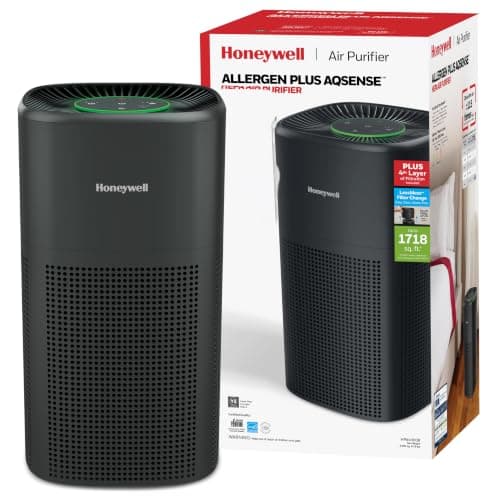 Best under 400 sq ft Honeywell InSight HPA4300 229 certified CFM on 31 watts, recorded HEPA, 0.00 ppb, in both registers. | True HEPA on the lowest power draw | 229CFM smoke AHAM VERIFIDE | |
| 2 | 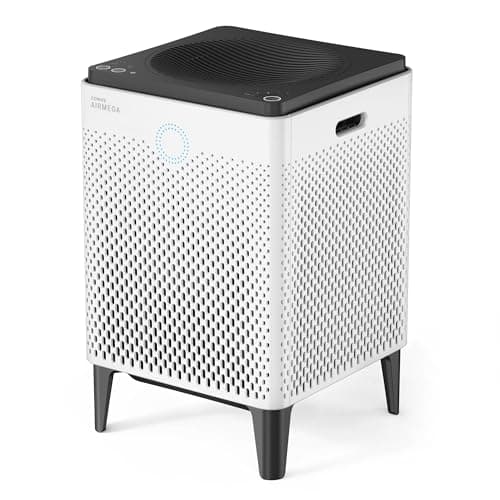 Best Coway for a mid-large room Coway Airmega 400 376 certified CFM, washable pre-filters, and the only published filter bill. | Large rooms, verified Coway | 376CFM smoke ENERGY STAR verified | |
| 3 | 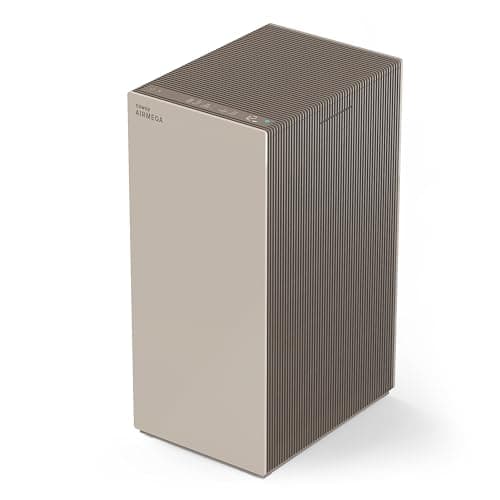 Past Honeywell's range Coway Airmega ProX 577 certified CFM across 894 sq ft at 10.2 CFM per watt. | The largest room one machine can certifiably cover | 577CFM smoke ENERGY STAR verified |
#ad We earn a commission if you buy through this link, at no extra cost to you. How this site is funded. Prices last checked September 27, 2026.
The picks
Honeywell InSight HPA4300
Honeywell · model HPA4300B
#ad We earn a commission if you buy through this link, at no extra cost to you. How this site is funded. Prices last checked September 27, 2026.
The efficiency winner among true-HEPA units at living-room size: 229 certified smoke CADR on 31 watts, zero measured ozone, and a filter the register classifies as HEPA rather than HEPA-Type.
229 smoke / 238 dust / 245 pollen CFM · 233 PM2.5
- Certified room size
- 354 sq ft
- Energy / year
- 185 kWh
- Electricity / year
- $34
- Air per watt
- 7.4 CFM/W
- Power draw
- 31 W
- Noise
- Not published
- Measured ozone
- 0 ppb
- Filter class
- HEPA
- AHAM rule, 300 sq ft
- Clears it (200 needed)
No ionizer — filtration only
Both registers classify this unit as fan-and-filter only.
229 certified smoke CADR across 354 certified square feet on 31 watts — the best air-per-watt figure on this site, in both registers, filter recorded HEPA, 0.00 ppb measured, no ion stage, for $34 a year.
The honest con: no published noise figure, no filter interval and no filter price, so you cannot check the bedroom question or budget the filters — and the range stops at 398 square feet.
Coway Airmega 400
Coway · model Airmega 400 (AP-2015F)
#ad We earn a commission if you buy through this link, at no extra cost to you. How this site is funded. Prices last checked September 27, 2026.
The Coway that is actually in a certification register: 376 certified smoke CADR, 583 square feet, zero measured ozone. If you want a Coway, this is the one with third-party numbers.
376 smoke / 384 dust / 409 pollen CFM · 380 PM2.5
- Certified room size
- 583 sq ft
- Advertised coverage
- 3,120 sq ft in 60 minutes
- Energy / year
- 366 kWh
- Electricity / year
- $67
- Air per watt
- 6.1 CFM/W
- Power draw
- 66 W
- Noise
- 22-52 dB(A)
- Measured ozone
- 0 ppb
- Filter class
- Composite Filter
- AHAM rule, 500 sq ft
- Clears it (334 needed)
No ionizer — filtration only
ENERGY STAR classifies this unit 'Fan and Filter', 0.00 ppb measured ozone.
376 certified smoke CADR across 583 certified square feet with 0.00 ppb measured, washable pre-filters on both faces, and the only fully published filter bill on this site — $129 a set on a stated interval. Our full review.
The honest con: $67 a year against the Honeywell’s $34, ENERGY STAR declines to classify its filter HEPA or HEPA-Type at all, and its filters cost more per year than its electricity.
Coway Airmega ProX
Coway · model Airmega ProX (AP-3522F)
#ad We earn a commission if you buy through this link, at no extra cost to you. How this site is funded. Prices last checked September 27, 2026.
The largest certified coverage on this site at 894 square feet, and the highest air-per-watt figure we have recorded at 10.2 CFM per watt — with a measured zero on ozone.
577 smoke / 586 dust / 450 pollen CFM · 581 PM2.5
- Certified room size
- 894 sq ft
- Advertised coverage
- 4,253 sq ft in 60 minutes
- Energy / year
- 335 kWh
- Electricity / year
- $61
- Air per watt
- 10.2 CFM/W
- Power draw
- 65 W
- Noise
- 23-46 dB(A)
- Measured ozone
- 0 ppb
- Filter class
- HEPA-Type
- AHAM rule, 800 sq ft
- Clears it (534 needed)
No ionizer — filtration only
ENERGY STAR classifies this unit 'Fan and Filter' and measures 0.00 ppb ozone. Coway's specification lists no ionizing stage.
577 certified smoke CADR across 894 certified square feet at 10.2 CFM per watt — more room than any Honeywell and better efficiency than all of them, on 335 kWh a year. The full record on it.
The honest con: a much higher price bracket, 51 lb, no replacement filter price we could source, and a pollen CADR below its own smoke figure — so pollen buyers gain nothing from the size.
The verdict
Common questions
Is Honeywell or Coway better?
Is the Coway AP-1512HH better than a Honeywell?
Which brand is cheaper to run?
Which brand tells you more before you buy?
Sources
- AHAM VERIFIDE directory of certified room air cleaners
- ENERGY STAR certified room air cleaners database
- AHAM — air filtration standards and the two-thirds rule
- Coway Airmega 400 specification
Figures were read on the dates shown against each source. If one has changed, or if we have got something wrong, tell us and we will correct the page.
Read next
- CADR & costHoneywell vs LEVOITHoneywell wins filter classification and air per watt across the range. LEVOIT wins published noise, published filter prices and the biggest room. Ozone is a tie at zero.
- CADR & costLEVOIT vs CowayBrand-level comparison on certified coverage, running cost and which models are actually in a register.
- Pet allergiesCoway Airmega 400 Review376 certified CFM, 583 sq ft, 0.00 ppb and a washable pre-filter — plus the only complete running-cost figure on this site, because Coway publishes both halves.