The Best Air Purifiers for Dust Mite Allergy
A purifier can only take out what is in the air. With dust mites, most of the allergen is in your mattress — so this page is as much about what to expect as what to buy.
#ad We earn a commission if you buy through this link, at no extra cost to you. How this site is funded.
Yes, but less than one will for a cat. Dust mite allergen lives inside bedding, upholstery and carpet and is barely airborne until something disturbs it. A purifier removes the fine fraction that stays suspended after disturbance. Barrier covers, hot washing and humidity control do the larger share of the work.
Dust mite allergy is the case where this site’s usual method gets uncomfortable. We rank machines on certified numbers, and the certified numbers here are good — but the honest framing is that a purifier is a supporting player against dust mites in a way it is not against cat dander. We would rather say that on the page than let you find out after the box is open.
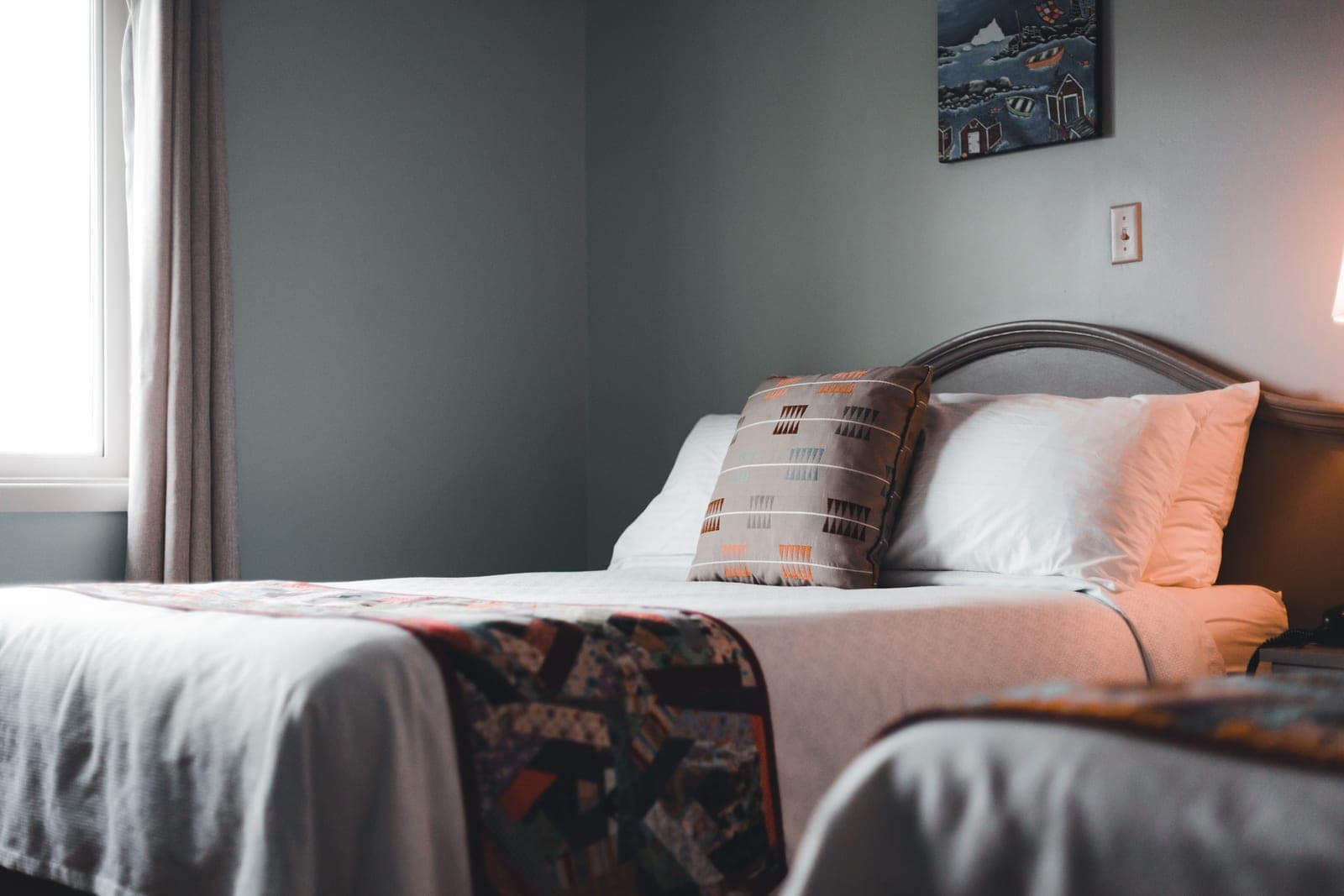
Where the allergen actually is
Dust mites themselves are not the allergen. The proteins that trigger symptoms come from their droppings and their fragmented bodies, and both accumulate wherever the mites live. AAFA describes that habitat plainly: mites feed on shed human skin, and those flakes “work their way deep into fabric items in your home, such as furniture, carpets, bedding (pillow and mattress), and stuffed toys.” A large part of the mite population, it notes, “may remain because they live deep inside the stuffing of sofas, chairs, mattresses, pillows, and carpeting.”
Nothing that moves room air reaches inside a mattress. That single fact sets the ceiling on what any purifier — ours, anyone’s, at any price — can do about a mite problem. It is also why this page ranks differently from our roundup for household dust, which is a question about airborne particulate and is answered straightforwardly by the certified dust CADR column.
The measurement that decides this page
In 1999, Custovic and colleagues at the North West Lung Center in Manchester published a short study that is more useful to a buyer than almost anything written about air purifiers since. They set out to measure airborne group 2 mite allergen (Der p 2) in a room, and they opened by naming the problem: the “major obstacle for the successful measurement of airborne mite allergen is its very low concentration in the absence of vigorous disturbance.”
To get a measurable sample at all, they vacuumed the room for fifteen minutes with the bag and filter removed, then sampled the air for thirty minutes with a six-stage cascade impactor that sorts particles by size. The result:
A separate letter in the Journal of Allergy and Clinical Immunology the same year made the complementary point in its title: mite allergen is not only carried on mite feces. It also rides on fibers and skin flakes, some of which are fine enough to behave like the small fraction above.
Read those together and the buying question resolves itself. There is a real airborne fraction, it is small, it is the respirable part, and it is squarely inside what a filter handles. There is also a much larger fraction that settles on its own before a purifier could plausibly have pulled it through — and an enormous reservoir that never becomes airborne at all.
What that means a purifier can and cannot do
It can shorten the window after a disturbance. Making a bed, turning over in your sleep, vacuuming, sitting down heavily on a sofa — each of these puts allergen into the air, and the fine fraction would otherwise stay there. A machine sized correctly for the room clears that fraction repeatedly through the night.
It cannot reduce the reservoir. It does not reach into the mattress, it does not kill mites, and it does nothing about the humidity they depend on. AAFA is direct about the limit of the appliance class: “freestanding air cleaners only filter air in a limited area.” EPA frames the same principle generally — the most effective ways to improve indoor air are to reduce or remove the sources and to ventilate, and “filtration does not replace the need to control pollutants and ventilate.”
How we picked
Five criteria, applied in this order, every one of them from a public register rather than from us:
- Certified dust CADR, as the nearest tested analogue to the respirable fraction above. Certified, not advertised.
- Certified coverage for a bedroom. This is a bedroom problem before it is a house problem, and the room where the machine runs matters more than the room it was marketed for.
- Measured ozone at or near zero. Dust mite allergy overlaps heavily with asthma, and EPA advises avoiding cleaners that intentionally produce ozone because ozone is a lung irritant. Where a register publishes a measured figure, we print it.
- A washable pre-filter, where the manufacturer documents one. The large fraction is exactly what loads a HEPA cartridge early, and a rinsable mesh in front of it is the difference between a twelve-month filter and a nine-month one.
- Running cost. A purifier only helps while it is running, and this is a case for running it all night, every night. Certified annual energy use decides that, and it varies by a factor of four across otherwise similar machines.
Quick picks
Ranked on certified dust CADR against bedroom-scale coverage, then on measured ozone, then on what it costs to run all night.
| # | Product | Best for | Certified CADR | Price |
|---|---|---|---|---|
| 1 | No photo Best overall Honeywell InSight HPA4300 238 certified dust CFM on 31 watts, classified HEPA, 0.00 ppb ozone. | True HEPA on the lowest power draw | 229CFM smoke AHAM VERIFIDE | |
| 2 | No photo Best for a small bedroom Honeywell InSight HPA4100 117 certified dust CFM across 169 sq ft on 16 watts, zero ozone. | Bedrooms up to about 170 sq ft | 109CFM smoke AHAM VERIFIDE | |
| 3 | 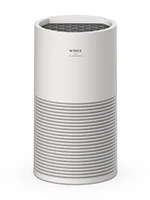 Best mid-size, no ion stage Winix AT41 259 certified dust CFM across 410 sq ft, fan and filter only. | Pet allergies, whole living room | 265CFM smoke AHAM VERIFIDE | |
| 4 | 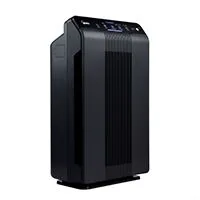 Best washable pre-filter Winix 5500-2 The only documented rinsable pre-filter here, plus a real carbon stage. | Pet odor, if you switch PlasmaWave off | 239CFM smoke AHAM VERIFIDE | |
| 5 | No photo Best for a carpeted room Blueair DustMagnet 5440i Low intake vents and 231 certified dust CFM, aimed at settled dust. | Settled dust and shed hair | 216CFM smoke AHAM VERIFIDE | |
| 6 | No photo Skip this one Blueair Blue Pure 211+ 347 certified dust CFM, but 5 ppb measured ozone beside your bed. | Large rooms, if ozone is not a concern for you | 348CFM smoke ENERGY STAR verified |
#ad We earn a commission if you buy through this link, at no extra cost to you. How this site is funded.
| Unit | Certified dust CADR | Certified room | Measured ozone | Electricity a year |
|---|---|---|---|---|
| Honeywell InSight HPA4300 | 238 CFM | 354 sq ft | 0.00 ppb | $34 |
| Honeywell InSight HPA4100 | 117 CFM | 169 sq ft | 0.00 ppb | $17 |
| Winix AT41 | 259 CFM | 410 sq ft | 0.00 ppb | $50 |
| Winix 5500-2 | 244 CFM | 370 sq ft | Not published | $65 |
| Blueair DustMagnet 5440i | 231 CFM | 335 sq ft | 1 ppb | $40 |
| Blueair Blue Pure 211+ | 347 CFM | 539 sq ft | 5 ppb | $64 |
Electricity costs on this page use 18.34¢ per kWh, the U.S. average residential price for June 2026 from the U.S. Energy Information Administration, Electric Power Monthly, Table 5.3. Your rate is on your bill and is probably not this one; multiply the kWh figure by your own rate and you have your number.
The picks
Honeywell InSight HPA4300
Honeywell · model HPA4300B
#ad We earn a commission if you buy through this link, at no extra cost to you. How this site is funded.
The efficiency winner among true-HEPA units at living-room size: 229 certified smoke CADR on 31 watts, zero measured ozone, and a filter the register classifies as HEPA rather than HEPA-Type.
229 smoke / 238 dust / 245 pollen CFM · 233 PM2.5
- Certified room size
- 354 sq ft
- Energy / year
- 185 kWh
- Electricity / year
- $34
- Air per watt
- 7.4 CFM/W
- Power draw
- 31 W
- Noise
- Not published
- Measured ozone
- 0 ppb
- Filter class
- HEPA
- AHAM rule, 300 sq ft
- Clears it (200 needed)
No ionizer — filtration only
Both registers classify this unit as fan-and-filter only.
238 certified CFM against dust across 354 certified square feet, on 31 watts. The register classifies its filter HEPA rather than HEPA-Type, a distinction most of this bracket does not earn, and ENERGY STAR measures its ozone emission at 0.00 ppb. At $34 a year it is cheap enough to leave on every night, which is the only way this machine earns its keep.
The honest con: Honeywell publishes no washable pre-filter for it and no noise figure we could source, so the large fraction goes straight onto the HEPA media and we cannot tell you in advance how it sounds on low. If a quiet, rinsable machine matters more to you than filter classification, the Winix 5500-2 below is the trade.
Honeywell InSight HPA4100
Honeywell · model HPA4100B
#ad We earn a commission if you buy through this link, at no extra cost to you. How this site is funded.
A small-room unit that clears AHAM's two-thirds rule for a 169 square-foot bedroom on 16 watts. Zero measured ozone, and classified HEPA rather than HEPA-Type.
109 smoke / 117 dust / 117 pollen CFM · 113 PM2.5
- Certified room size
- 169 sq ft
- Energy / year
- 95 kWh
- Electricity / year
- $17
- Air per watt
- 6.9 CFM/W
- Power draw
- 16 W
- Noise
- Not published
- Measured ozone
- 0 ppb
- Filter class
- HEPA
- AHAM rule, 150 sq ft
- Clears it (100 needed)
The bedroom is where this problem lives, and most bedrooms are not 350 square feet. This one clears AHAM’s two-thirds rule for a 169 square-foot room on 16 watts — $17 of electricity a year, the lowest figure on this site. Same HEPA classification and the same 0.00 ppb measured ozone as its larger sibling.
The honest con: a 250 square-foot room needs 167 CFM under AHAM’s rule and this unit delivers 109. Measure before you buy it; undersizing is the most common mistake in the category, and the size calculator settles it in about ten seconds.
Winix AT41
Winix · model AT41
#ad We earn a commission if you buy through this link, at no extra cost to you. How this site is funded.
The best-evidenced pick for a pet household: the highest certified smoke CADR of any mid-price unit here, no ion generator, and a measured zero on ozone.
265 smoke / 259 dust / 244 pollen CFM · 261 PM2.5
- Certified room size
- 410 sq ft
- Energy / year
- 272 kWh
- Electricity / year
- $50
- Air per watt
- 5.6 CFM/W
- Power draw
- 45 W
- Noise
- Not published
- Measured ozone
- 0 ppb
- Filter class
- HEPA-Type
No ionizer — filtration only
AHAM classifies this model 'Fan with Filter' — no ion generator, unlike Winix's PlasmaWave line.
259 certified CFM against dust across 410 certified square feet, and AHAM classifies it “Fan with Filter” — no ion generator at all, unlike the PlasmaWave models Winix is better known for. Measured ozone is zero. If the bedroom is genuinely large, this is the pick.
The honest con: ENERGY STAR classifies the filter HEPA-Type rather than HEPA, and at 272 kWh it costs $50 a year against the HPA4300’s $34, for 21 more CFM against dust. What that classification does and does not mean.
Winix 5500-2
Winix · model 5500-2
#ad We earn a commission if you buy through this link, at no extra cost to you. How this site is funded.
The unit almost every roundup in this category picks. Certified performance is real, but it ships PlasmaWave and it costs 31% more a year to run than Winix's own AT41 for less air movement.
239 smoke / 244 dust / 247 pollen CFM · 241 PM2.5
- Certified room size
- 370 sq ft
- Energy / year
- 356 kWh
- Electricity / year
- $65
- Air per watt
- 4.1 CFM/W
- Power draw
- 57.8 W
- Noise
- Not published
- Filter class
- HEPA + Carbon
PlasmaWave — can be switched off
AHAM classifies this model 'Fan Filter with Ion Generator'. Winix documents PlasmaWave as switchable, and the unit runs as a plain HEPA machine with it off.
The one machine here with a manufacturer-documented washable pre-filter, which matters more for mite allergen than for most particulate: four fifths of what goes airborne is above 4.7 microns, and a rinsable mesh catches that before it loads the HEPA cartridge. AHAM records the filter set as HEPA plus carbon and certifies 244 CFM against dust across 370 square feet.
The honest con: two of them. It ships PlasmaWave, an ion generator — Winix documents it as switchable, and we would switch it off. And it is not in the ENERGY STAR register, so no measured ozone figure exists for it, while its 356 kWh a year works out at $65, the highest running cost on this page.
Blueair DustMagnet 5440i
Blueair · model 5431112000 (DustMagnet 5440i)
#ad We earn a commission if you buy through this link, at no extra cost to you. How this site is funded.
The only unit here designed around where settled dust actually is — intake vents low on the body rather than on top. Its certified pollen CADR, 274, is its strongest number.
216 smoke / 231 dust / 274 pollen CFM · 227 PM2.5
- Certified room size
- 335 sq ft
- Energy / year
- 220 kWh
- Electricity / year
- $40
- Air per watt
- 5.9 CFM/W
- Power draw
- 37.3 W
- Noise
- Not published
- Measured ozone
- 1 ppb
- Filter class
- HEPA Type and Activated Carbon
Ion generator — fitted
AHAM classifies this model 'Fan Filter with Ion Generator'.
The only unit we cover that is designed around where settled dust actually is: the intake vents sit low on the body rather than on top, which is the right geometry for allergen being kicked up off a carpet rather than drifting in from outside. AHAM certifies 231 CFM against dust across 335 square feet, with a carbon stage included.
The honest con: AHAM classifies this model “Fan Filter with Ion Generator” and the ENERGY STAR register measures 1 ppb ozone on the same certified platform. Blueair does not document the ion stage as defeatable. That is a small number and a real one, and in an asthmatic household the two Honeywells measure zero.
Blueair Blue Pure 211+
Blueair · model Blue Pure 211+
#ad We earn a commission if you buy through this link, at no extra cost to you. How this site is funded.
Strong certified numbers, and the highest measured ozone emission of any unit we cover at 5 ppb. Legal, small, and still ten times the reading on the units we prefer for asthma.
348 smoke / 347 dust / 348 pollen CFM · 347 PM2.5
- Certified room size
- 539 sq ft
- Energy / year
- 350 kWh
- Electricity / year
- $64
- Air per watt
- 5.8 CFM/W
- Noise
- Not published
- Measured ozone
- 5 ppb
- Filter class
- HEPA-Type
Ion generator — fitted
ENERGY STAR classifies this model 'Ion Generator, Fan and Filter' and measures 5 ppb ozone.
It looks like the obvious answer: 347 certified CFM against dust is the highest figure on this page by a wide margin, across 539 certified square feet.
Why we do not pick it here: ENERGY STAR measures 5 ppb ozone, the highest reading of any unit on this site. That is legal and it is far below the program limit, but it is ten times the reading on the units above, and dust mite allergy is the diagnosis that travels with asthma more often than any other in this category. For a machine you intend to run beside your bed for eight hours a night, it is the wrong trade.
Sizing it for the room you actually sleep in
Bedrooms are smaller than the rooms these machines are marketed for, and that cuts both ways: a modest unit is often enough, and the biggest name on the box is often more than you need. AHAM’s own rule is that the smoke CADR should be at least two thirds of the room’s area in square feet, so the arithmetic is short.
| Bedroom | Smoke CADR needed | Smallest pick that clears it |
|---|---|---|
| 100 sq ft | 67 CFM | Honeywell HPA4100 (109) |
| 150 sq ft | 100 CFM | Honeywell HPA4100 (109) |
| 200 sq ft | 134 CFM | Blueair DustMagnet 5440i (216) |
| 250 sq ft | 167 CFM | Blueair DustMagnet 5440i (216) |
| 300 sq ft | 200 CFM | Blueair DustMagnet 5440i (216) |
| 350 sq ft | 234 CFM | Winix 5500-2 (239) |
| 400 sq ft | 267 CFM | None of the picks above |
Two caveats on that table. AHAM’s figures assume an eight-foot ceiling, so a vaulted or loft bedroom needs proportionally more; and the rule is a general-purpose sizing convention rather than an allergy-specific one. If you want the arithmetic done for your actual dimensions, including ceiling height, the size calculator does it. If you would rather see the bedroom picks chosen on room size first instead of on mite allergen, the bedroom roundup ranks them that way.
The half of the running cost nobody publishes
Every dollar figure on this page is electricity, and electricity is the half of the bill that gets certified. The other half is filters, and for all six units here the manufacturer publishes neither a replacement interval nor a replacement price that we could source. So we print nothing, rather than an estimate dressed up as a specification.
It matters more for a mite household than for most. Four fifths of the airborne allergen rides on particles above 4.7 microns, and coarse particles are exactly what loads a HEPA cartridge early — a filter in a carpeted, textile-heavy bedroom will not last as long as the same filter in a hard-floored office. That is the argument for the Winix 5500-2 in spite of its ion stage and its electricity bill: a rinsable mesh in front of the cartridge takes the coarse fraction, and which units document a washable pre-filter is a short list. Before you commit to any of them, what filters actually cost over three years is the number that changes rankings.
What we could not check
We do not test units. Nothing on this page is a measurement we took, and every figure above is either a certification register’s or a named study’s — the method in full, including where it runs out. Three specific limits apply here and it would be dishonest to bury them.
The airborne study is one protocol. Custovic and colleagues sampled a room after fifteen minutes of deliberately extreme disturbance. That is a reasonable worst case and it is not your Tuesday evening. The 79/21 split is the best public evidence we found on where mite allergen sits in the air; it is not a constant.
There is no mite-allergen CADR. We rank on certified dust CADR because it is the closest tested analogue, and we have said so plainly rather than implying the certification answers the question directly.
Two ozone figures come from sibling models. The Winix AT41’s zero was measured under the ENERGY STAR program on the AT40, and the DustMagnet’s 1 ppb on a sibling of the same certified platform. Both are noted as such in the registers and we would rather flag it than let the numbers look cleaner than they are.
The three things that beat any purifier here
We earn a commission when you buy a purifier through a link on this site. We would still rather you did these three things first, because they act on the reservoir rather than on the air, and AAFA puts all three ahead of the appliance.
- Allergen-barrier covers on the mattress and pillows. Zippered encasings “made of a material with pores too small to let dust mites and their waste product through.” This is the highest-yield change available, because it puts a barrier between you and the largest reservoir in the house for the eight hours you are closest to it.
- Wash bedding at 130°F or hotter. AAFA is specific about the temperature: water “at least 130° F or more to kill dust mites.” A warm wash removes some allergen; it does not kill the mites.
- Hold indoor humidity between 30 and 50 percent. Mites take moisture from the air and thrive above 50 percent relative humidity. The appliance for this is a dehumidifier or air conditioning, not a purifier — which appliance does what is worth five minutes if you are unsure, because running a humidifier in a mite-affected bedroom works directly against you.
So is it worth buying one?
For a bedroom, yes — with calibrated expectations. The fraction a purifier removes is the respirable fraction, it is the part that reaches deepest into the lungs, and it is the part that would otherwise still be in the air an hour after you disturbed it. That is a real and worthwhile intervention, and our top pick costs $34 a year to run.
What it is not is a solution on its own, and any page that sells it to you as one has not read the measurements. If you are choosing between a purifier and a set of encasings and you can only do one, buy the encasings. If you can do both, the order in the list above is the order we would do them in.
If your symptoms are worst in the first hour after waking, the overnight-exposure page goes through the fuller picture. If a pet also sleeps on the bed, mite allergen is not your only problem and the pet roundup sizes for a continuously shedding source instead.
Common questions
Do air purifiers help with dust mite allergy?
Will an air purifier kill dust mites?
Where should I put the purifier if dust mites are the problem?
Is a HEPA vacuum better than an air purifier for dust mites?
Does an ionizer help with dust mite allergen?
Sources
- Custovic A et al. Dust mite allergens are carried on not only large particles. Pediatr Allergy Immunol 1999;10(4):258-260
- De Lucca S et al. Mite allergen (Der p 1) is not only carried on mite feces. J Allergy Clin Immunol 1999;103(1 Pt 1):174-175
- Asthma and Allergy Foundation of America — dust mite allergy
- EPA — Guide to Air Cleaners in the Home
- AHAM VERIFIDE directory of certified room air cleaners
- ENERGY STAR certified room air cleaners database
Figures were read on the dates shown against each source. If one has changed, or if we have got something wrong, tell us and we will correct the page.
Read next
- AllergiesAllergen particle sizes, explainedWhere each common allergen sits by particle size, and why 0.3 microns is the hardest case rather than the smallest.
- AllergiesWaking up with allergy symptoms every morningWhy morning symptoms point at the bedroom, and the order to change things in.
- Room sizeThe Best Air Purifiers for a BedroomCertified picks with enough headroom to run quietly all night, and zero measured ozone.