Air purifier vs humidifier
They get shelved together and they do unrelated things. Picking the wrong one is the commonest appliance mistake in this area.
#ad We earn a commission if you buy through this link, at no extra cost to you. How this site is funded.
An air purifier removes airborne particles by drawing air through a filter. A humidifier adds water vapor to dry air. They solve unrelated problems and neither substitutes for the other — and if your issue is damp or mold, the appliance you want is a dehumidifier, which is the opposite of a humidifier.
These sit next to each other in shops and get compared constantly, which is a sign the difference is not obvious enough. It is worth five minutes.
What each one actually does
| Air purifier | Humidifier | Dehumidifier | |
|---|---|---|---|
| Removes particles | Yes | No | No |
| Changes humidity | No | Raises it | Lowers it |
| Helps with pet dander | Yes | No | No |
| Helps with pollen | Yes | No | No |
| Helps with dry throat, static | No | Yes | No |
| Helps with damp and mold growth | Spores only, while running | Makes it worse | Yes — the actual fix |
| Helps with dust mites | Airborne fraction only | Can make it worse | Yes, by lowering humidity |
| Performance standard | ANSI/AHAM AC-1, CADR | Output in gal/day | Pints per day |
| Public certification register | AHAM and ENERGY STAR | Limited | ENERGY STAR |
The one place they genuinely interact
Humidity affects two common allergen sources. Dust mites need moisture from the air to survive and do markedly better in humid conditions. Mold requires moisture to grow at all. Raise indoor humidity substantially and you can increase both — which is why a humidifier bought to soothe a dry throat can make an allergy problem worse over a season.
Conversely, lowering humidity suppresses both, which is why a dehumidifier is a legitimate allergy intervention in a damp house in a way a humidifier is not.
Which do you need?
- Sneezing, itchy eyes, pet allergy, pollen season, dust: a purifier. Size it with the calculator.
- Dry throat on waking in winter, static, cracked lips, a nosebleed-prone child: a humidifier.
- Condensation on windows, musty smell, visible mold, a damp basement: a dehumidifier first, and a purifier alongside it for the airborne spores. More on mold.
- Both dry air and allergies: two appliances. A combination unit is a compromise on both plus a water tank to keep clean.
Quick picks
If the purifier is the appliance you actually need, these are the certified options.
| # | Product | Best for | Certified CADR | Price |
|---|---|---|---|---|
| 1 | No photo If you need the purifier Honeywell InSight HPA4300 229 certified CFM on 31 watts, zero measured ozone. | True HEPA on the lowest power draw | 229CFM smoke AHAM VERIFIDE | |
| 2 | 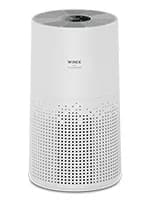 Purifier with carbon Winix C710 HEPA plus carbon per AHAM — for musty or cooking odor. | Lowest running cost at living-room size | 248CFM smoke AHAM VERIFIDE |
#ad We earn a commission if you buy through this link, at no extra cost to you. How this site is funded.
The maintenance point nobody mentions
A humidifier holds standing water and needs regular cleaning. A neglected one aerosolizes whatever is growing in the reservoir, which is a genuine source of the biological particulate a purifier is then asked to remove. Running a dirty humidifier next to an air purifier is a closed loop with a filter bill attached.
A purifier has no water and its maintenance is filters and, where fitted, a washable pre-filter. What that costs.
Common questions
Do I need an air purifier or a humidifier?
Can a humidifier make allergies worse?
Do combination purifier-humidifiers work?
Sources
Figures were read on the dates shown against each source. If one has changed, or if we have got something wrong, tell us and we will correct the page.
Read next
- AllergiesThe Best Air Purifiers for Mold SporesCertified picks for airborne spores, with the honest caveat that moisture is the actual problem.
- CADR & costWhat CADR actually meansThe cornerstone explainer: what CADR measures, why it resists gaming, and certified versus claimed.
- AllergiesAllergen particle sizes, explainedWhere each common allergen sits by particle size, and why 0.3 microns is the hardest case rather than the smallest.