The Best Air Purifiers for a Dorm Room
A room you share, a roommate three feet away, a housing handbook with opinions about appliances, and a budget. Four constraints the bedroom roundups do not have to satisfy.
#ad We earn a commission if you buy through this link, at no extra cost to you. How this site is funded. Prices last checked November 3, 2026.
For a typical dorm double of 155 to 200 square feet, the Honeywell InSight HPA4300: 229 certified CFM, the filter recorded HEPA rather than HEPA-Type, 0.00 ppb measured ozone and no ion stage — which is also what gets it past housing rules that approve particulate filtration only. Read your own handbook before buying anything with an ionizer in it.
A dorm room is not just a small bedroom. It is a small bedroom with somebody else’s lungs in it, a facilities office with rules, two outlets, and a September in which the whole thing has to fit in a car. That changes which machine wins, and it is why this page exists next to the small-rooms roundup, which optimizes for size alone.
How we ranked them
Five tests, in this order, and the first two are the ones no other roundup on this site applies.
1. Would a housing office approve it? Particulate filtration, nothing that generates ozone by design, nothing that needs modification to the room. 2. Is the air it treats shared? If a roommate breathes it, an ion stage is not your decision alone. 3. Does the certified CADR clear the room? AHAM’s two-thirds rule against real published dorm dimensions. 4. Can it run at night without a complaint? Published noise, where anybody publishes it. 5. What does a year cost? Certified electricity plus a filter price, where a filter price exists.
The rules come first, and they are not the same everywhere
The quickest way to waste $200 as a student is to buy a machine the building will not let you plug in. Policies differ by school and sometimes by hall, and the language is specific enough to matter. St. Mary’s College of Maryland tells students with allergies that only specific particulate filtering devices such as HEPA filtration/HEPA air cleaners are approved for the residences. Other schools permit air purifiers on condition they are certified to emit minimal ozone and are electrically safe, and point students at California’s certified-device list to check a model.
Both rules point the same way, and they happen to point where this site already points. A machine whose ozone figure is a measured 0.00 ppb in EPA’s own certification database, with no ion generator in its technology classification, satisfies either policy and needs no argument with a residence director. California’s program certifies portable air cleaners against a limit of 50 ppb, so the certified-list route is about compliance rather than danger — but a zero is easier to defend than a legal non-zero.
What size a dorm room actually is
Published figures, not guesses. University of Arizona Housing lists doubles of 155 square feet (11'6" x 13'6"), 182 square feet (14' x 13') and 200 square feet (10' x 20') across three halls; NC State’s University Towers doubles are 210 square feet. The spread is wider than that across the country — University of Wisconsin’s smallest doubles are 87.5 square feet and the average double in one hall is nearly 256 — but 155 to 200 covers most of what students actually get.
| Room | Floor area | AHAM two-thirds rule | Picks that clear it |
|---|---|---|---|
| Small single | 100 sq ft | 67 CFM | All five, comfortably |
| Arizona double, Gila Hall | 155 sq ft | 104 CFM | All five |
| Arizona double, a second hall | 182 sq ft | 122 CFM | All five |
| Arizona double, Coronado Hall | 200 sq ft | 134 CFM | All but the HPA4100 |
| Large double or small triple | 256 sq ft | 171 CFM | HPA4300, Core 400S, MA-40 |
Two things follow. First, a dorm room is small enough that almost any certified machine clears it, so the differences below are not about capability. Second, the advertised coverage on the box — 1,500 square feet, 1,700 square feet — is irrelevant to you twice over: it is the one-air-change figure, and your room is 180 square feet — do the sum for your own room.
The roommate problem, which is really a noise problem
In a 180 square foot room you are both inside the machine’s sound field, and the fan speed that delivers the certified CADR is the loud one. This is the single most common reason a dorm purifier ends up switched off in October and in a closet by November — and EPA says the same thing about purifiers generally: noise is an important issue because users often turn them off to avoid it.
Which makes the published-noise question decisive here even though it is a footnote elsewhere. LEVOIT Core 400S: 22-52 dB, published by LEVOIT, with a sleep mode. Honeywell InSight HPA4300, Medify Air MA-40, Honeywell InSight HPA4100: nothing published by anyone. That is not a claim they are loud; it is that you cannot know before you commit, which in a shared room is a different kind of risk.
The logistics no spec sheet covers
Where it physically goes. A dorm double has two beds, two desks and almost no floor, and an air purifier needs clearance to work — intake and outlet both unobstructed, which rules out the gap behind a wardrobe and under a desk with a chair pushed in. The practical spot is usually the foot of the bed or beside the desk, which is also the spot EPA’s placement advice points at: get the clean air to the breathing zone without an obstruction in the way — placement, in detail.
The outlets. Older halls have few of them, and a purifier is a continuous load sharing a strip with a mini-fridge, a laptop and a kettle somebody is not supposed to have. The draw itself is small — the Honeywell InSight HPA4300 is 31 watts at its certified setting, less than a light bulb — but check the strip is rated and not daisy-chained, because that is the kind of thing housing inspections do notice.
It has to move twice a year. Full-size towers are light but bulky, and the box is worth keeping: a purifier that travels in its own carton survives two moves a year better than one wrapped in a duvet. If storage over the summer is the problem, that is a point in favor of the physically smallest unit that still clears the room.
Buy the filters before you need them. This is the one that actually goes wrong. A replacement filter in week six of the second semester means ordering to a mailroom that may or may not accept it, during exams, from a dorm room with no car. One spare filter bought at the same time as the machine removes the whole problem for the year — and it is another reason to prefer a machine whose maker publishes a filter price at all.
What to do if the answer is no. If your hall prohibits the machine you want, two routes exist before giving up. Check whether the rule is about ozone-generating devices rather than purifiers in general, in which case a fan-and-filter unit with a measured 0.00 ppb may be explicitly permitted. And if the need is medical, housing offices handle accommodation requests routinely — Providence College, for example, approves purifiers in academic spaces through exactly that process.
What a school year costs
Electricity is the easy half and it is small. At the national average rate, running the Honeywell InSight HPA4300 continuously for a whole year costs about $34; the Honeywell InSight HPA4100 is $17 and the Medify Air MA-40 $48. An eight-month academic year is two-thirds of each. If utilities are included in your housing fee it is zero to you.
Electricity costs on this page use 18.34¢ per kWh, the U.S. average residential price for June 2026 from the U.S. Energy Information Administration, Electric Power Monthly, Table 5.3. Your rate is on your bill and is probably not this one; multiply the kWh figure by your own rate and you have your number.
Filters are the half that bites, and the brands split cleanly. LEVOIT publishes $49.99 for a Core 400S filter. Honeywell and Medify publish no filter price we could source, and no replacement interval, which means the recurring cost of the cheapest machine here cannot be planned for — the full table of what each manufacturer publishes.
Quick picks
Ranked for a shared 155-200 square foot room: certified CADR that clears it, a measured zero on ozone, no ion stage, and a filter cost you can find out before you buy.
| # | Product | Best for | Certified CADR | Price |
|---|---|---|---|---|
| 1 | 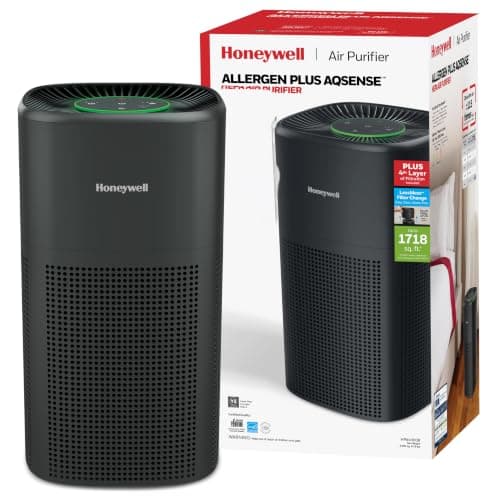 Best overall for a dorm double Honeywell InSight HPA4300 229 certified CFM, filter recorded HEPA, 0.00 ppb — clears a 343 sq ft room. | True HEPA on the lowest power draw | 229CFM smoke AHAM VERIFIDE | |
| 2 | 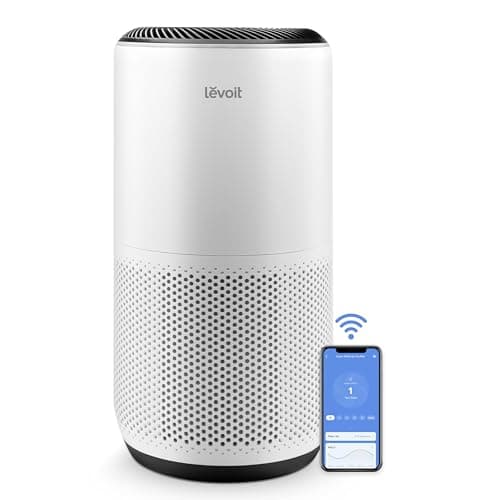 Best with a roommate LEVOIT Core 400S The only pick here with a published noise range: 22-52 dB, plus a $49.99 filter. | Popular pick, mid-size rooms | 231CFM smoke ENERGY STAR verified | |
| 3 | 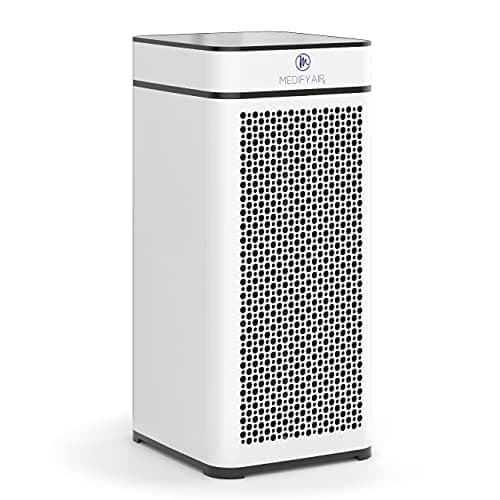 Best for a triple or a common room Medify Air MA-40 245 certified CFM across 380 certified sq ft with a measured zero on ozone. | Straightforward mid-size coverage | 245CFM smoke ENERGY STAR verified | |
| 4 | No photo Best for a small single Honeywell InSight HPA4100 169 certified sq ft on just 95 kWh a year, with the filter recorded HEPA. | Bedrooms up to about 170 sq ft | 109CFM smoke AHAM VERIFIDE | |
| 5 | 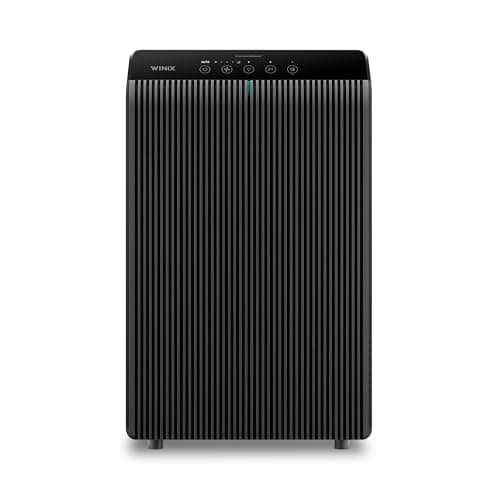 The one to skip in a shared room Winix 5510 A PlasmaWave ion stage with no measured ozone figure in any register. | The 5500-2's replacement, pet odor | 253CFM smoke AHAM VERIFIDE |
#ad We earn a commission if you buy through this link, at no extra cost to you. How this site is funded. Prices last checked November 3, 2026.
The picks
Honeywell InSight HPA4300
Honeywell · model HPA4300B
#ad We earn a commission if you buy through this link, at no extra cost to you. How this site is funded. Prices last checked November 3, 2026.
The efficiency winner among true-HEPA units at living-room size: 229 certified smoke CADR on 31 watts, zero measured ozone, and a filter the register classifies as HEPA rather than HEPA-Type.
229 smoke / 238 dust / 245 pollen CFM · 233 PM2.5
- Certified room size
- 354 sq ft
- Energy / year
- 185 kWh
- Electricity / year
- $34
- Air per watt
- 7.4 CFM/W
- Power draw
- 31 W
- Noise
- Not published
- Measured ozone
- 0 ppb
- Filter class
- HEPA
- AHAM rule, 200 sq ft
- Clears it (134 needed)
No ionizer — filtration only
Both registers classify this unit as fan-and-filter only.
229 certified smoke CADR clears a 343 square foot room under AHAM’s rule, which is nearly double the biggest dorm double above. 0.00 ppb measured ozone, no ion generator, and the filter recorded HEPA — the exact wording a housing rule that approves HEPA filtration asks for. At 7.4 CFM per watt it is the cheapest serious machine on this site to leave running.
The honest con: no published noise figure, which is the one thing you most want to know in a shared room, and no filter price or interval, so the recurring cost is a blank. It is also a full-size tower rather than something that tucks under a desk.
LEVOIT Core 400S
LEVOIT · model Core 400S (LAP-C401S)
#ad We earn a commission if you buy through this link, at no extra cost to you. How this site is funded. Prices last checked November 3, 2026.
The best-selling unit in the category, and a clean example of the coverage gap: ENERGY STAR certifies it for 358 square feet while the box advertises 1,718.
231 smoke / 240 dust / 259 pollen CFM · 236 PM2.5
- Certified room size
- 358 sq ft
- Advertised coverage
- 1,718 sq ft at 1 air change per hour
- Energy / year
- 237 kWh
- Electricity / year
- $43
- Air per watt
- 5.8 CFM/W
- Power draw
- 38 W
- Noise
- 22-52 dB
- Measured ozone
- 0 ppb
- Filter class
- HEPA-Type
- AHAM rule, 200 sq ft
- Clears it (134 needed)
No ionizer — filtration only
ENERGY STAR classifies this unit 'Fan and Filter' and measures 0.00 ppb ozone. LEVOIT markets it as ozone free.
The only pick here whose maker publishes what it sounds like: 22-52 dB, with a sleep mode, on top of 231 certified CFM across 358 certified square feet, 0.00 ppb measured and no ion stage. A $49.99 filter price means you can budget the year. Our full review.
The honest con: ENERGY STAR classifies the filter HEPA-Type despite the “True HEPA” marketing — worth knowing if your housing rule says HEPA specifically — and LEVOIT publishes no replacement interval, so the filter price has no schedule attached.
Medify Air MA-40
Medify Air · model MA-40-V4.0
#ad We earn a commission if you buy through this link, at no extra cost to you. How this site is funded. Prices last checked November 3, 2026.
Certified for 380 square feet with zero measured ozone. Middling efficiency, but a straightforward mechanical machine with nothing bolted on.
245 smoke / 257 dust / 263 pollen CFM · 250 PM2.5
- Certified room size
- 380 sq ft
- Energy / year
- 261 kWh
- Electricity / year
- $48
- Air per watt
- 5.6 CFM/W
- Noise
- Not published
- Measured ozone
- 0 ppb
- Filter class
- HEPA-Type
- AHAM rule, 300 sq ft
- Clears it (200 needed)
No ionizer — filtration only
ENERGY STAR classifies this unit 'Fan and Filter', 0.00 ppb measured ozone.
245 certified CFM across 380 certified square feet with 0.00 ppb measured and no ionizing stage — enough for a triple, a suite common room or a lounge, at about $48 a year. Our full review.
The honest con: the register classifies the filter HEPA-Type despite the marketing, and Medify publishes neither a noise figure nor a filter price nor an interval — three blanks in a row on a machine that costs more than the Honeywell above.
Honeywell InSight HPA4100
Honeywell · model HPA4100B
#ad We earn a commission if you buy through this link, at no extra cost to you. How this site is funded. Prices last checked November 3, 2026.
A small-room unit that clears AHAM's two-thirds rule for a 169 square-foot bedroom on 16 watts. Zero measured ozone, and classified HEPA rather than HEPA-Type.
109 smoke / 117 dust / 117 pollen CFM · 113 PM2.5
- Certified room size
- 169 sq ft
- Energy / year
- 95 kWh
- Electricity / year
- $17
- Air per watt
- 6.9 CFM/W
- Power draw
- 16 W
- Noise
- Not published
- Measured ozone
- 0 ppb
- Filter class
- HEPA
- AHAM rule, 150 sq ft
- Clears it (100 needed)
109 certified CFM across 169 certified square feet, which clears a 163 square foot room — a single, not a double. The filter is recorded HEPA, ozone measures 0.00 ppb, and at 95 kWh a year it is $17 of electricity for twelve months.
The honest con: no listing for this exact model clears our ASIN bar, so the buy link is a tagged Amazon search rather than a product page — check the model number before paying, because Honeywell’s InSight range looks identical across three sizes. It is also genuinely too small for a 200 square foot double.
Winix 5510
Winix · model 5510
#ad We earn a commission if you buy through this link, at no extra cost to you. How this site is funded. Prices last checked November 3, 2026.
The certified successor to the discontinued 5500-2, and a real improvement on it: 14 CFM more smoke CADR, 22 more certified square feet and 33 kWh a year less. It still ships PlasmaWave and it is still in no ozone register.
253 smoke / 252 dust / 247 pollen CFM · 252 PM2.5
- Certified room size
- 392 sq ft
- Energy / year
- 323 kWh
- Electricity / year
- $59
- Air per watt
- 4.6 CFM/W
- Power draw
- 65 W
- Noise
- Not published
- Filter class
- HEPA+Active Carbon Filter
- AHAM rule, 200 sq ft
- Clears it (134 needed)
PlasmaWave — fitted
AHAM classifies this model 'Fan Filter* with Ion Generator'. It is absent from ENERGY STAR, so unlike Winix's T810 there is no measured ozone figure for it, and we could not source Winix's own documentation for whether PlasmaWave is switchable on this model number.
On paper it is tempting: 253 certified CFM across 392 certified square feet, at a price that undercuts most of this list, and it is the certified successor to the best-selling Winix 5500-2.
The honest con: AHAM classifies it Fan Filter with Ion Generator — the PlasmaWave stage — and it appears in no ENERGY STAR listing, so no measured ozone figure exists for it. We could not source Winix documentation confirming the stage can be switched off on this model number. In a room where somebody else breathes the same air and had no say, that combination is the reason to pass. It is also the thirstiest machine here at 323 kWh a year — $59 — how it compares with the 5500-2.
Common questions
Are air purifiers allowed in dorm rooms?
What size air purifier does a dorm room need?
Will it keep my roommate awake?
Should I avoid ionizers in a shared room?
What will it cost me over a school year?
Sources
- University of Arizona Housing — residence hall room layouts and dimensions
- St. Mary's College of Maryland, Residence Life — housing policies (air purifiers in residences)
- California Air Resources Board — list of CARB-certified air cleaning devices
- AHAM — air filtration standards and the two-thirds rule
- ENERGY STAR certified room air cleaners database
- EPA — Guide to Air Cleaners in the Home
Figures were read on the dates shown against each source. If one has changed, or if we have got something wrong, tell us and we will correct the page.
Read next
- Room sizeThe Best Air Purifiers for Small RoomsCertified coverage for rooms under about 200 sq ft, and the popular units that do not reach it.
- Room sizeThe Best Air Purifiers for ApartmentsSizing for small connected spaces, dealing with neighbors' smoke and cooking, and keeping the bill down.
- Room sizeAir purifier noise and sleeping through itWhat the dB range means, why the low figure is the only one that matters, and how to buy quiet.
- Room sizeAir purifier size calculatorEnter your room dimensions and get the minimum certified CADR, with the arithmetic shown.
- Room sizeWhere to place an air purifierClearances, proximity to the source, and the placement mistakes that quietly waste half a machine.