Coway Airmega Mighty2 vs Airmega Mighty AP-1512HH
The successor to the most-recommended air purifier in the category. The headline numbers barely move; the stage list does, and that is the part worth reading.
#ad We earn a commission if you buy through this link, at no extra cost to you. How this site is funded. Prices last checked November 3, 2026.
Buy the Mighty2 if you are buying either. Coway’s own figures give it 240 CFM of smoke CADR against the AP-1512HH’s 233, on 56 watts against 77, with a quieter published floor — and its stage list drops the Bipolar Device that Coway names as the fourth stage of the original. Neither model is in any certification register, so every figure on both sides is the manufacturer’s.
The AP-1512HH has been the default recommendation in this category for a decade, which makes its replacement worth reading carefully. The short version is that the interesting change is not in the headline number.
How we judged it
The same way as everything else here, with one adjustment stated up front. Normally this site ranks on a third-party certified CADR and refuses to put an unverified machine in a top slot. Neither of these machines has one — Coway is absent from AHAM’s directory entirely, and while the Airmega 400, 450 and ProX are in ENERGY STAR, the AP-1512HH and the AP-1512N are not. So this page compares two sets of manufacturer figures, labels them as such throughout, and includes certified alternatives in the picks for anyone who wants a number somebody else produced.
The numbers, side by side
| Airmega Mighty2 (AP-1512N) | Airmega Mighty (AP-1512HH) | |
|---|---|---|
| Smoke CADR, claimed | 240 CFM | 233 CFM |
| Dust / pollen CADR, claimed | 242 / 249 | 246 / 240 |
| Room size, 4.8 air changes | 375 sq ft (derived) | 361 sq ft (Coway's figure) |
| Advertised coverage | 1,800 sq ft in 60 minutes | 1,748 sq ft in 60 minutes |
| Power draw | 56 W | 77 W |
| Noise, published | 19-50 dB | 24-53 dB(A) |
| Filtration stages | 3 — pre-filter, carbon, HEPA | 4 — pre-filter, deodorization, Bipolar Device, HEPA |
| Washable pre-filter | Yes | Yes |
| Filter interval | 12 months, one cartridge | 12 months HEPA, 6 for the deodorizer |
| In a certification register | No | No |
| Measured ozone | None exists | None exists |
On output, this is not an upgrade
240 against 233 CFM is a 3% difference. The dust figure actually moves the other way — 246 down to 242 — and pollen moves up from 240 to 249. Those are not meaningful differences in a room. They are the kind of variation that would sit inside the tolerance of a single test, and since both sets of numbers come from the same company rather than from a standardized third-party test, there is no basis for treating a seven-CFM gap as a real one.
Translated into room size, both are living-room machines of the same class: about 360 square feet for the Mighty2 under AHAM’s two-thirds rule against 349 for the AP-1512HH. In a pet household this site sizes harder, at 6 air changes an hour, which brings them to 300 and 291 square feet respectively.
On power, it is a real improvement
This is where the generational change shows up. 56 watts against 77 is 27% less electricity for marginally more claimed air — and Coway’s own launch announcement claims 20% less energy than the previous model, so the direction is not in dispute.
The honest caveat is that neither figure is a certified annual energy use. Watts at an unstated setting is a weaker number than the kWh-per-year that ENERGY STAR publishes for certified machines, which is measured across the duty cycle rather than quoted at one speed. For the machines on this site that do carry it, annual electricity runs from $17 to $120 — the arithmetic is on the running-cost page.
Electricity costs on this page use 18.34¢ per kWh, the U.S. average residential price for June 2026 from the U.S. Energy Information Administration, Electric Power Monthly, Table 5.3. Your rate is on your bill and is probably not this one; multiply the kWh figure by your own rate and you have your number.
The change that actually matters
Coway lists the AP-1512HH’s filtration as four stages, and names the third one a “Bipolar Device”. That is an ionizing stage, and it is the reason this site has never put the Mighty in a pick list scoped to asthma, to a nursery, or to a cat’s room: an ionizing stage with no measured ozone figure from anybody is an open question we will not resolve in the machine’s favor — why we hold that line.
Coway’s specification for the Mighty2 lists three stages: a washable pre-filter, and a Max2 cartridge that combines activated carbon with HEPA. There is no ionizing stage on the list, and no Bipolar Device anywhere in Coway’s materials for this model — not on the product page, not in the launch announcement, not in the retail listing’s feature list.
For the reader this site is written for — somebody with an allergy, an asthmatic in the house, or an animal that cannot leave the room — that single change is worth more than every CADR difference on this page put together.
On noise, and the unit problem
Coway publishes 19-50 dB for the Mighty2 and 24-53 dB(A) for the AP-1512HH. Taken at face value that is a quieter floor and a quieter ceiling, and the floor is the figure that decides whether a machine stays on overnight — why only the low-speed number matters in a bedroom.
One caution before you weigh it heavily: the two are not quoted in identical units, and neither is measured under a standard anyone can check. A published dB figure is a manufacturer’s claim in this category, always — no certification program touches noise at all. Treat the comparison as indicative rather than decisive.
The filter change is a simplification
The AP-1512HH takes a separate deodorization filter at six months and a HEPA filter at twelve. The Mighty2 takes one Max2 cartridge that combines carbon and HEPA, dated at 12 months.
That is easier to live with and harder to price. Coway publishes no replacement price for the Mighty2 cartridge on its product page, so the recurring half of the bill cannot be computed for it — the same blank the AP-1512HH has. Three machines on this site publish both a filter price and an interval, and neither Coway Mighty is among them — the full table of what each manufacturer publishes.
Telling them apart before you pay
These two are easy to confuse, and the listings do not help: the Mighty2 is sold under a title that contains the older model’s name, as the “Next Gen of AP-1512HH”. One thing settles it.
Check the model number, not the name. The original is AP-1512HH; the successor is AP-1512N, with a color suffix — AP-1512N(W) for white, AP-1512N(BG) for the beige-gray. Both Mighty2 colors sell at the same price and carry the same specification. If the listing says HH, it is the older four-stage machine with the Bipolar Device in it.
And on the award in the title: Coway’s own listing describes the Mighty2 as the next generation of a well-known publication’s top pick. That recommendation was earned by the AP-1512HH, by a publication that does its own testing — which this site does not do and does not borrow. It is also not a certified Clean Air Delivery Rate, and it does not transfer to a different model number any more than the AP-1512HH’s figures do. Judge the successor on its own sheet, which is what this page is for.
The verdict, by buyer
Buying your first one: the Mighty2, on the power draw, the noise floor and the missing ionizing stage. It costs more than the original at the moment and the air figures are effectively tied, so you are paying for the three things that are not CADR.
You already own an AP-1512HH that works: keep it. Seven claimed CFM is not a reason to replace a functioning appliance, and the environmental arithmetic of throwing one away is worse than the 21 watts you would save. If the ionizing stage is the thing that bothers you, that is a different calculation and a legitimate one.
You want a figure somebody other than Coway produced: neither of these. The Honeywell InSight HPA4300 is certified in both registers at 229 CFM across 354 square feet with a measured 0.00 ppb, and the LEVOIT Core 400S is certified by ENERGY STAR at 231 CFM with a published filter price — why a certified figure is worth more than a claimed one.
Quick picks
Both Coways plus the two certified machines at the same size, so the choice between a claimed figure and a measured one is visible rather than assumed.
| # | Product | Best for | Certified CADR | Price |
|---|---|---|---|---|
| 1 | 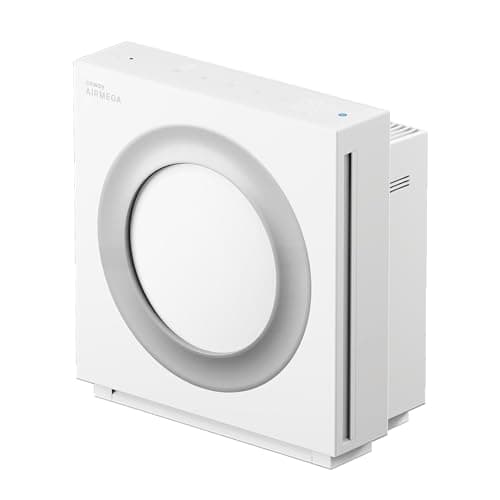 The better of the two Coways Coway Airmega Mighty2 240 CFM claimed, 56 watts, 19-50 dB, and no ionizing stage in Coway's own list. | The Mighty's replacement, quieter and leaner | 240CFM smoke Manufacturer-claimed | |
| 2 | 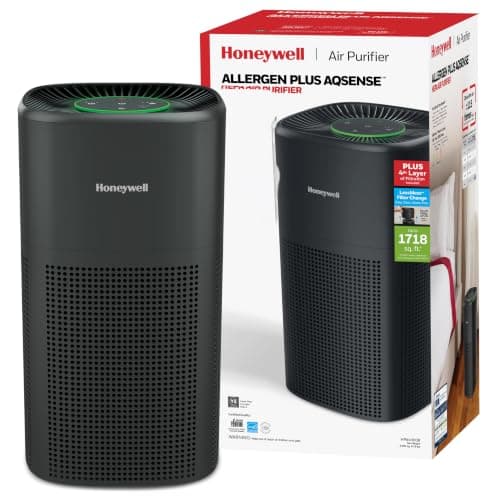 If you want a number somebody checked Honeywell InSight HPA4300 229 certified CFM, filter recorded HEPA, 0.00 ppb measured, 7.4 CFM per watt. | True HEPA on the lowest power draw | 229CFM smoke AHAM VERIFIDE | |
| 3 | 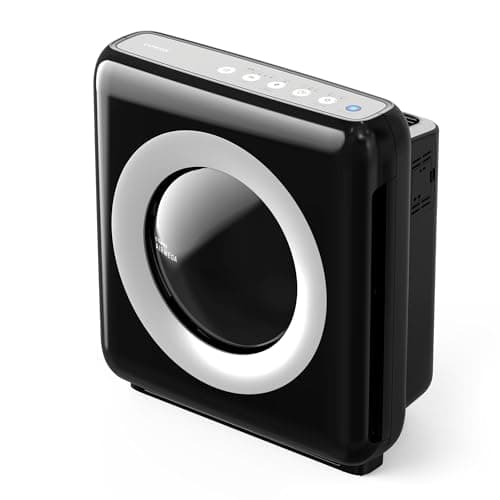 The original, now the cheaper one Coway Airmega Mighty AP-1512HH 233 CFM claimed, 77 watts, and a Bipolar Device as the fourth stage. | The popular default, unverified | 233CFM smoke Manufacturer-claimed | |
| 4 | 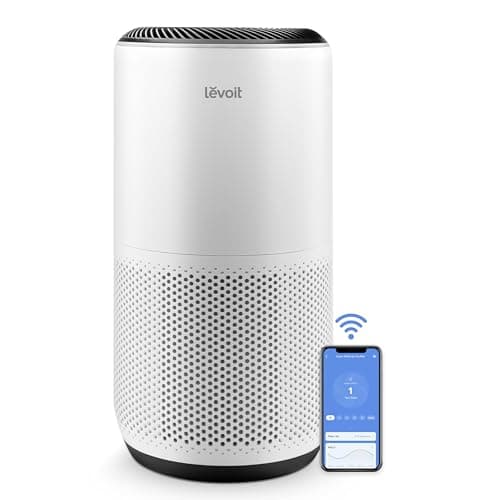 The certified cross-shop at this size LEVOIT Core 400S 231 certified CFM across 358 certified sq ft, 0.00 ppb, with the filter price published. | Popular pick, mid-size rooms | 231CFM smoke ENERGY STAR verified |
#ad We earn a commission if you buy through this link, at no extra cost to you. How this site is funded. Prices last checked November 3, 2026.
The four machines
Coway Airmega Mighty2
Coway · model Airmega Mighty2 (AP-1512N)
#ad We earn a commission if you buy through this link, at no extra cost to you. How this site is funded. Prices last checked November 3, 2026.
The successor to the most-recommended purifier in the category, and the upgrade that matters is not the 7 CFM: Coway's own stage list for this model no longer includes the Bipolar Device fitted to the AP-1512HH.
240 smoke / 242 dust / 249 pollen CFM
- Certified room size
- 375 sq ft
- Advertised coverage
- 1,800 sq ft in 60 minutes
- Power draw
- 56 W
- Noise
- 19-50 dB
- AHAM rule, 350 sq ft
- Clears it (234 needed)
No ionizer — filtration only
Coway's specification for this model names its stages as a washable pre-filter plus a Max2 cartridge combining activated carbon and HEPA, and lists no ionizing stage — where the same company explicitly lists a 'Bipolar Device' as the fourth stage of the AP-1512HH. That is the manufacturer's own account on both sides, not an independent one: this model is in neither register, so nobody has measured its ozone, and 'none' here means none published rather than none verified.
240 CFM of claimed smoke CADR on 56 watts, a published 19-50 dB range, a washable pre-filter that slides out without opening the cover, and a single 12-month cartridge. Coway lists no ionizing stage for it.
The honest con: it is in no certification register, so every number above is Coway’s own and nobody has measured its ozone; the room size at 4.8 air changes had to be derived because Coway does not publish it for this model; and no replacement filter price is published, so the yearly cost cannot be computed.
Honeywell InSight HPA4300
Honeywell · model HPA4300B
#ad We earn a commission if you buy through this link, at no extra cost to you. How this site is funded. Prices last checked November 3, 2026.
The efficiency winner among true-HEPA units at living-room size: 229 certified smoke CADR on 31 watts, zero measured ozone, and a filter the register classifies as HEPA rather than HEPA-Type.
229 smoke / 238 dust / 245 pollen CFM · 233 PM2.5
- Certified room size
- 354 sq ft
- Energy / year
- 185 kWh
- Electricity / year
- $34
- Air per watt
- 7.4 CFM/W
- Power draw
- 31 W
- Noise
- Not published
- Measured ozone
- 0 ppb
- Filter class
- HEPA
- AHAM rule, 300 sq ft
- Clears it (200 needed)
No ionizer — filtration only
Both registers classify this unit as fan-and-filter only.
229 certified smoke CADR across 354 certified square feet at 7.4 CFM per watt, listed in both registers, filter recorded HEPA, 0.00 ppb measured and no ion stage — about $34 a year. Our full review.
The honest con: no washable pre-filter, which is the one place both Coways beat it in a shedding household, and Honeywell publishes no noise figure, filter price or interval at all.
Coway Airmega Mighty AP-1512HH
Coway · model Airmega Mighty AP-1512HH
#ad We earn a commission if you buy through this link, at no extra cost to you. How this site is funded. Prices last checked November 3, 2026.
The most-recommended air purifier in this category, and the one with no third-party CADR to check. Coway's own figures are good; at 77 watts it is also the thirstiest machine here for its output.
233 smoke / 246 dust / 240 pollen CFM
- Certified room size
- 361 sq ft
- Advertised coverage
- 1,748 sq ft in 60 minutes
- Power draw
- 77 W
- Noise
- 24-53 dB(A)
- AHAM rule, 300 sq ft
- Clears it (200 needed)
Bipolar device — fitted
Coway lists a 'Bipolar Device' as the fourth filtration stage. Because this model is in neither register, there is no independent ozone measurement for it — and Coway does not publish one.
233 CFM claimed across 361 square feet at Coway’s own 4.8-air-change figure, with the washable pre-filter that makes it a sensible pet machine and 24-53 dB(A) published. Our full review.
The honest con: 77 watts is the thirstiest draw here for the output, the fourth stage is a Bipolar Device with no ozone measurement from anyone, and like its successor it is in no register.
LEVOIT Core 400S
LEVOIT · model Core 400S (LAP-C401S)
#ad We earn a commission if you buy through this link, at no extra cost to you. How this site is funded. Prices last checked November 3, 2026.
The best-selling unit in the category, and a clean example of the coverage gap: ENERGY STAR certifies it for 358 square feet while the box advertises 1,718.
231 smoke / 240 dust / 259 pollen CFM · 236 PM2.5
- Certified room size
- 358 sq ft
- Advertised coverage
- 1,718 sq ft at 1 air change per hour
- Energy / year
- 237 kWh
- Electricity / year
- $43
- Air per watt
- 5.8 CFM/W
- Power draw
- 38 W
- Noise
- 22-52 dB
- Measured ozone
- 0 ppb
- Filter class
- HEPA-Type
- AHAM rule, 300 sq ft
- Clears it (200 needed)
No ionizer — filtration only
ENERGY STAR classifies this unit 'Fan and Filter' and measures 0.00 ppb ozone. LEVOIT markets it as ozone free.
231 certified CFM across 358 certified square feet with 0.00 ppb measured and no ion stage, plus the two figures both Coways leave blank: 22-52 dB and a $49.99 filter. Our full review.
The honest con: no washable pre-filter documented, the register classifies the filter HEPA-Type despite the “True HEPA” marketing, and LEVOIT publishes no replacement interval to go with that price.
Common questions
Is the Coway Airmega Mighty2 worth upgrading to?
Does the Mighty2 still have the Bipolar Device?
Is the Coway Airmega Mighty2 AHAM certified?
What room size does the Mighty2 actually cover?
Which is better for pet hair?
Sources
- Coway — Airmega Mighty2 AP-1512N specification
- Coway — Airmega Mighty AP-1512HH specification
- AHAM VERIFIDE directory of certified room air cleaners
- ENERGY STAR certified room air cleaners database
- AHAM — air filtration standards and the two-thirds rule
Figures were read on the dates shown against each source. If one has changed, or if we have got something wrong, tell us and we will correct the page.
Read next
- Pet hair & odorCoway Airmega Mighty AP-1512HH ReviewCapable on Coway's own numbers, with a washable pre-filter and published filter intervals — but in no register, at 77 watts, with an unmeasured ionizing stage.
- Pet hair & odorWinix C710 vs Coway Airmega Mighty AP-1512HHThe C710 is AHAM-certified at 248 CFM with a published 235 kWh. The Coway is in no register and draws 77 watts.
- Pet hair & odorWinix vs CowayWinix is AHAM-listed and splits between PlasmaWave and plain models. Coway is ENERGY STAR-only and splits between the certified Airmegas and the unverified best-seller.
- Pet hair & odorThe Best Air Purifiers for Pet HairWhy the washable pre-filter decides this category, and the certified units that have one.
- Pet hair & odorAir Purifiers With Washable Pre-FiltersThe cheapest performance upgrade in the category, with the filter-cost arithmetic worked out.