Air Purifier vs Dehumidifier
They are not competing products and they are not interchangeable. Which one you need depends entirely on whether your problem is made of particles or of water.
#ad We earn a commission if you buy through this link, at no extra cost to you. How this site is funded.
An air purifier removes particles from air. A dehumidifier removes water from air. Mold, dust mites and musty smell are all moisture-driven, so the dehumidifier acts on the cause and the purifier treats what is already airborne. Pollen, dander and smoke are particle problems, and a dehumidifier does nothing for them.
This comparison gets framed as a purchase decision — which one should I buy — when it is really a diagnosis. Work out what your problem is made of and the appliance chooses itself.
What each machine physically does
An air purifier pulls room air through filter media and pushes it back out. Its performance is measured as Clean Air Delivery Rate: the volume of genuinely clean air produced per minute, combining how much air moves and how much of the particulate the media catches. Both registers we use publish that figure per model, which is why this site can rank machines at all.
A dehumidifier pulls room air across a cold coil, condenses water vapor out of it, drains the water and returns drier air. Its performance is measured in pints of water removed per day. It has no filtration claim worth the name, and neither AHAM nor ENERGY STAR publishes a CADR for one — because there is nothing to publish.
They both move air through a box, which is where the confusion starts. What comes out is different in each case: one has had particles taken out of it, the other has had water taken out of it.
Which machine for which problem
| Problem | What drives it | Machine that acts on the cause | What the other one does |
|---|---|---|---|
| Mold growth | Persistently damp surfaces | Dehumidifier | Purifier captures airborne spores while it runs |
| Dust mite allergy | Humidity above ~50% in textiles | Dehumidifier | Purifier removes the fine airborne fraction |
| Musty smell | Gas-phase compounds from damp | Dehumidifier | Carbon stage adsorbs the smell while it runs |
| Pollen | Outdoor air and what you carry in | Purifier | Dehumidifier does nothing |
| Pet dander | A continuously shedding animal | Purifier | Dehumidifier does nothing |
| Smoke particulate | Combustion, indoors or out | Purifier | Dehumidifier does nothing |
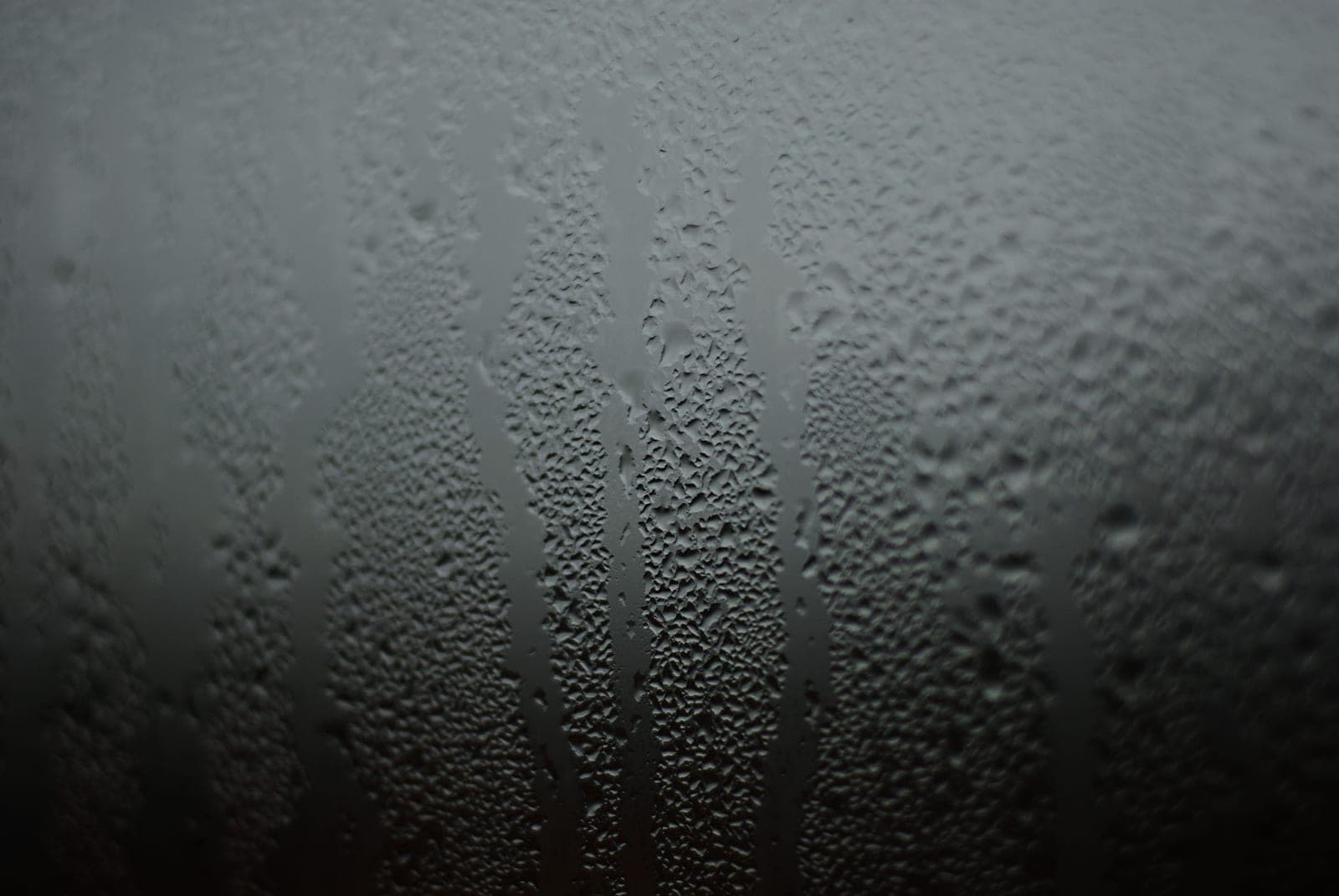
| Condensation on windows | Warm moist air on cold glass | Dehumidifier | Purifier does nothing |
Humidity is the control variable
For the moisture-driven problems there is a single number that decides everything, and it is not a CADR. AAFA advises keeping indoor humidity between 30 and 50 percent, and notes that dust mites like humidity levels above 50. Mold needs surfaces that stay wet. Both conditions are set by relative humidity and both are removed by holding it in that band.
No air purifier changes relative humidity. It is not a failure of the machine — it is not what the machine is for. Running a correctly sized purifier in a room at 65% relative humidity will reduce the airborne allergen concentration and will not reduce the rate at which more of it is produced.
When you genuinely need both
A damp house with a cat needs both machines, because it has two unrelated problems. So does a basement bedroom in a humid climate where somebody reacts to dust mites: the dehumidifier suppresses the mite population over weeks and the purifier handles the fraction that goes airborne every time the bed is disturbed tonight.
The sequencing that saves money is to fix moisture first and size the purifier afterward. A room held at 45% relative humidity produces less mold spore and less mite allergen, which means the purifier is doing less work, which sometimes means a smaller and cheaper machine is enough. Doing it the other way round — buying the biggest purifier first — leaves the source running.
EPA frames the general principle the same way, and it argues against our own commercial interest: the most effective ways to improve indoor air are to reduce or remove the sources of pollutants and to ventilate with clean outdoor air, and filtration does not replace the need to do those things.
For the airborne half, these two
If you have fixed the moisture and want the filtration half of the job done properly, both picks below are fan-and-filter machines with a measured zero on ozone — which matters because damp-house complaints and asthma overlap heavily, and because mold remediation is a context where ozone-generating devices get marketed hard.
Quick picks
The filtration half of a damp-house problem. The dehumidifier is doing the structural work.
| # | Product | Best for | Certified CADR | Price |
|---|---|---|---|---|
| 1 | No photo Best for a damp room Honeywell HPA6000 257 certified CFM, 0.00 ppb ozone, cheap enough to run alongside a dehumidifier. | Large living rooms, true HEPA | 257CFM smoke AHAM VERIFIDE | |
| 2 | No photo Best for a large damp space LEVOIT Core 600S 391 certified CFM across 606 sq ft, zero measured ozone, no ionizer. | Large open-plan rooms | 391CFM smoke ENERGY STAR verified |
#ad We earn a commission if you buy through this link, at no extra cost to you. How this site is funded.
Honeywell HPA6000
Honeywell · model HPA6000B
#ad We earn a commission if you buy through this link, at no extra cost to you. How this site is funded.
More certified air movement than the HPA4300 for four more watts, and the same zero on ozone. The sensible step up if your room is nearer 400 square feet.
257 smoke / 262 dust / 285 pollen CFM · 259 PM2.5
- Certified room size
- 398 sq ft
- Energy / year
- 207 kWh
- Electricity / year
- $38
- Air per watt
- 7.3 CFM/W
- Power draw
- 34.9 W
- Noise
- Not published
- Measured ozone
- 0 ppb
- Filter class
- HEPA
- AHAM rule, 350 sq ft
- Clears it (234 needed)
257 certified smoke CADR across 398 certified square feet, 0.00 ppb measured ozone, and a filter the register classifies HEPA rather than HEPA-Type. At $38 a year it is cheap enough to leave running alongside a dehumidifier without the combined bill becoming the problem.
The honest con: no carbon stage documented in the register, so it addresses spores rather than the musty smell, and Honeywell publishes no noise figure we could source.
LEVOIT Core 600S
LEVOIT · model Core 600S (LAP-C601S-WUS)
#ad We earn a commission if you buy through this link, at no extra cost to you. How this site is funded.
391 certified smoke CADR is real large-room capability, and it is honest about needing 387 kWh a year to deliver it — the highest electricity bill of any unit we recommend.
391 smoke / 398 dust / 436 pollen CFM · 394 PM2.5
- Certified room size
- 606 sq ft
- Advertised coverage
- 2,909 sq ft at 1 air change per hour
- Energy / year
- 387 kWh
- Electricity / year
- $71
- Air per watt
- 6 CFM/W
- Power draw
- 49 W
- Noise
- 26-55 dB
- Measured ozone
- 0 ppb
- Filter class
- HEPA-Type
- AHAM rule, 550 sq ft
- Clears it (367 needed)
No ionizer — filtration only
ENERGY STAR classifies this unit 'Fan and Filter', 0.00 ppb measured ozone.
391 certified smoke CADR across 606 certified square feet with 0.00 ppb measured ozone and no ion generator. Damp problems tend to live in basements and large low-traffic rooms, and this is the coverage that reaches them.
The honest con: $71 a year, and you will be running a dehumidifier in the same room — which is typically the larger of the two electricity bills. Size the purifier to the room rather than buying the biggest one.
Electricity costs on this page use 18.34¢ per kWh, the U.S. average residential price for June 2026 from the U.S. Energy Information Administration, Electric Power Monthly, Table 5.3. Your rate is on your bill and is probably not this one; multiply the kWh figure by your own rate and you have your number.
For the spore side of a mold problem specifically, the mold roundup sets out the order of operations in full. For mites, what a filter can actually reach goes through the measured airborne fraction.
Common questions
Do I need an air purifier or a dehumidifier?
Will a dehumidifier remove allergens from the air?
What humidity should I aim for?
Can one machine do both jobs?
Sources
- EPA — Guide to Air Cleaners in the Home
- Asthma and Allergy Foundation of America — dust mite allergy
- AHAM VERIFIDE directory of certified room air cleaners
- ENERGY STAR certified room air cleaners database
Figures were read on the dates shown against each source. If one has changed, or if we have got something wrong, tell us and we will correct the page.
Read next
- CADR & costAir purifier vs humidifierWhich appliance solves which problem, and when you genuinely need two of them.
- AllergiesThe Best Air Purifiers for Mold SporesCertified picks for airborne spores, with the honest caveat that moisture is the actual problem.
- AllergiesThe Best Air Purifiers for Dust Mite AllergyThe measured airborne fraction, what a filter can actually reach, and the certified picks that reach it without adding ozone.