Air purifier vs ozone generator
They are sold side by side and they are not comparable products. One of them regulators tell you not to use around people.
#ad We earn a commission if you buy through this link, at no extra cost to you. How this site is funded.
An air purifier removes particles by drawing air through a filter. An ozone generator deliberately produces ozone, a reactive gas. EPA advises avoiding air cleaners that intentionally produce ozone, and states that no federal government agency has approved such devices for use in occupied spaces.
This comparison gets searched because the two products appear in the same listings, at similar prices, with similar language about “purifying the air”. They are not variants of one idea and the difference is not a matter of degree.
Two different mechanisms
Air purifier
A fan pulls room air through a filter. Particles are physically captured and stay in the filter until you throw it away. Nothing is emitted. The performance is quantified by Clean Air Delivery Rate, measured under a published standard, and for a large share of consumer machines that figure has been verified by an independent laboratory and published in a register you can search.
Ozone generator
An electrical discharge or UV source converts oxygen into ozone, which is released into the room. Ozone is chemically reactive and does react with some odor compounds and some biological material. That reactivity is the entire mechanism — and it is also why it is a respiratory irritant, because your airway lining is also biological material.
What the EPA says
Note the precision of “occupied spaces”. Ozone treatment does have legitimate professional applications — commercial remediation after fire or flood, carried out in a sealed and evacuated building, with a documented airing-out period afterward. That is a controlled industrial process. It is not the same thing as running a $90 device in a bedroom overnight, which is how these are frequently marketed and used.
Side by side
| Air purifier (HEPA) | Ozone generator | |
|---|---|---|
| Mechanism | Mechanical filtration | Deliberate ozone production |
| Removes particles | Yes, captured in filter | Not by filtration |
| Addresses odor | Only with activated carbon | By chemical reaction |
| Emits anything | No | Ozone, by design |
| Independent performance standard | ANSI/AHAM AC-1, CADR | None comparable |
| Public certification register | AHAM and ENERGY STAR | None |
| Regulator position | Recommended with caveats | Avoid in occupied spaces |
| Safe with people present | Yes | No |
Why people buy them anyway
Almost always because of a problem that has resisted everything else: cigarette smoke in a rental, a musty basement, a cat-urine smell in a previous owner’s carpet. Those are genuinely hard problems and the marketing for ozone generators targets exactly that frustration, usually with language about “eliminating at the source” that sounds like a step up from filtration.
The honest answer for each of those is unglamorous. Smoke residue is on surfaces and needs cleaning or sealing. A musty basement needs the moisture fixed. Urine in a carpet needs an enzymatic cleaner or a new carpet. In each case a purifier with real carbon reduces the airborne component while the actual fix happens, and an ozone generator does not remove the source either — it just adds a lung irritant to the room.
Quick picks
Certified machines with a real carbon stage — the filtration answer to an odor problem.
| # | Product | Best for | Certified CADR | Price |
|---|---|---|---|---|
| 1 | 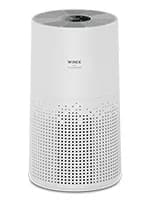 For odor, without ozone Winix C710 HEPA plus carbon per AHAM — the honest answer to a smell problem. | Lowest running cost at living-room size | 248CFM smoke AHAM VERIFIDE | |
| 2 | 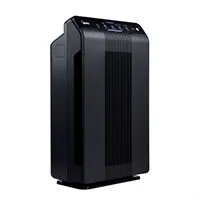 Most carbon of our picks Winix 5500-2 HEPA plus carbon with a washable pre-filter, PlasmaWave switchable. | Pet odor, if you switch PlasmaWave off | 239CFM smoke AHAM VERIFIDE |
#ad We earn a commission if you buy through this link, at no extra cost to you. How this site is funded.
The gray area worth naming
Some ordinary purifiers include an ionizer or plasma stage that produces a small amount of ozone as a by-product rather than as a purpose. That is a different situation from an ozone generator, and the measured numbers make it concrete: the certified units we cover measure between 0.00 and 5 ppb against a 50 ppb program limit. Those are not ozone generators and it would be scaremongering to describe them as such.
The reasonable position is the one on the ionizer page: if somebody has a respiratory condition, choose a machine that measures zero, because several do and they cost no more.
Common questions
Are ozone generators safe to use at home?
Do ozone generators remove smells?
What should I use instead for a bad smell?
Sources
- EPA — Guide to Air Cleaners in the Home
- ENERGY STAR certified room air cleaners database
- AHAM VERIFIDE directory of certified room air cleaners
Figures were read on the dates shown against each source. If one has changed, or if we have got something wrong, tell us and we will correct the page.
Read next
- AllergiesHEPA vs ionizers vs ozone generatorsWhat EPA advises about ionizers and ozone, with published measurements for every certified unit.
- AllergiesThe Best Air Purifiers for Mold SporesCertified picks for airborne spores, with the honest caveat that moisture is the actual problem.
- Pet hair & odorActivated carbon and pet odorWhy 'includes activated carbon' means nothing without a weight, and how to read the claim.