Blueair DustMagnet 5440i Review
A machine with an actual design thesis, read against the register rather than the marketing. We do not test units; here is the record and where the thesis runs out.
#ad We earn a commission if you buy through this link, at no extra cost to you. How this site is funded. Prices last checked September 27, 2026.
The only machine we cover with a design thesis rather than a spec sheet: intakes low on the body, aimed at dust as it settles. The certified record is 216 smoke CADR across 335 certified square feet at 5.9 CFM per watt, with a documented activated carbon stage and 1 ppb of measured ozone. The thesis is untested; the numbers are real but modest for the money.
The disclosure that shapes everything below: we have not tested this unit. We own no air purifiers and run no laboratory — and on this machine in particular that matters, because its central claim is precisely the kind no certification measures — our method, including where it runs out.
The certified record
| Specification | Figure | Source |
|---|---|---|
| Smoke CADR | 216 CFM | AHAM VERIFIDE |
| Dust CADR | 231 CFM | AHAM VERIFIDE |
| Pollen CADR | 274 CFM | AHAM VERIFIDE |
| PM2.5 CADR | 227 CFM | AHAM VERIFIDE |
| Certified room size | 335 sq ft | AHAM, at 4.8 ACH |
| Two-thirds-rule room | 324 sq ft | Our arithmetic on the CADR |
| Annual energy use | 220 kWh | AHAM |
| Electricity per year | $40 | Our arithmetic at a named rate |
| Power draw | 37.3 W | AHAM |
| Air per watt | 5.9 CFM/W | AHAM |
| Measured ozone | 1 ppb | ENERGY STAR |
| Technology (AHAM) | Fan Filter with Ion Generator | AHAM VERIFIDE |
| Filter classification | HEPA Type and Activated Carbon | AHAM |
| Noise | Not published in our sources | — |
| Filter interval and price | Not published in our sources | — |
Electricity costs on this page use 18.34¢ per kWh, the U.S. average residential price for June 2026 from the U.S. Energy Information Administration, Electric Power Monthly, Table 5.3. Your rate is on your bill and is probably not this one; multiply the kWh figure by your own rate and you have your number.
The design thesis, and what can be said about it
Almost every air purifier draws air in at the top or the front, at roughly the height of a side table. The DustMagnet draws through vents low on the body, on the argument that dust spends most of its life near the floor: coarse particles settle within minutes, get kicked up by feet and vacuuming, and settle again.
That argument is sound as physics. It is also, as far as we can establish, untested by anyone. The AHAM procedure measures how fast a machine clears a sealed chamber; it does not measure where in a real room the machine gathers from. So this site treats the intake design as a design choice worth knowing about, not as a performance claim — and ranks the machine on the numbers that were measured.
On those numbers the interesting one is pollen: 274 CFM against a smoke figure of 216, which is 27% higher. Pollen is the largest of the three test particles, so a machine that does disproportionately well there is doing well on the coarse fraction — which is at least consistent with the design argument, without proving it.
What it does well
The coarse fraction, on the evidence available. Its best certified column is the one closest to house dust and shed hair, and it carries documented activated carbon alongside the particle media — useful in the rooms where dust and odor arrive together — how we rank machines for dust.
Sensible efficiency. 5.9 CFM per watt is mid-pack overall but respectable for a machine this size, costing $40 a year to run continuously.
It is a piece of furniture on purpose. The flat top is designed to be used as a side table, which sounds like marketing until you have tried to place a cylinder in a small bedroom. A machine that fits where you want it is a machine that stays plugged in.
Where it is beaten
Coverage per dollar, by its own stablemate. The Blueair 311i Max certifies 439 square feet at 8.4 CFM per watt against this machine’s 335 and 5.9. Unless the low-intake idea is what you are buying, the 311i Max is the better-value Blueair — the full record on it.
The ion classification. AHAM records an ion generator; ENERGY STAR measures 1 ppb. Small, well under the program limit, and still not the zero that the Coway Airmegas and every Honeywell return. In a nursery or an asthma household we would take the zero.
Two blanks. No published noise figure and no filter interval or price, so the bedroom question is unanswerable in advance and half the running cost is unquotable — the same gap as on every Blueair we cover.
Room size. 335 certified square feet is genuinely small for the bracket. If your dusty room is a living room rather than a bedroom, this machine is undersized before the design argument even starts.
Who should buy it
Buy it for a bedroom or home office up to about 324 square feet where settled dust and shed hair are the specific complaint, you want a surface you can put a lamp on, and 1 ppb is acceptable to you.
Buy something else if the room is larger, if anyone in the house has asthma, or if you want the running cost knowable in advance. The Coway Airmega 400 answers all three and adds washable pre-filters.
Placing a machine that draws from the bottom
One practical consequence of the intake design: it needs floor clearance more than it needs wall clearance. Standing it on thick carpet, tucking it behind a sofa skirt or pushing it into a corner works against the one thing that makes it different. A hard floor or a low-pile rug, with clear space around the base, is what the design assumes.
The same logic applies to when you run it. Settled dust becomes airborne when the room is disturbed — vacuuming, making a bed, a dog shaking itself — so the useful pattern is continuous operation at a middle speed rather than bursts after the fact. General placement advice still holds: where a purifier goes in a room covers clearance and airflow paths for conventional machines.
Quick picks
The DustMagnet against the two machines a dust-focused buyer should weigh it against.
| # | Product | Best for | Certified CADR | Price |
|---|---|---|---|---|
| 1 | 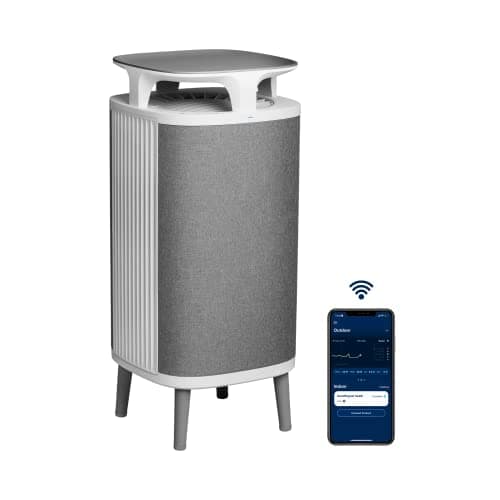 The unit reviewed Blueair DustMagnet 5440i 216 certified CFM, a 274 pollen figure, low intakes and documented carbon. | Settled dust and shed hair | 216CFM smoke AHAM VERIFIDE | |
| 2 | 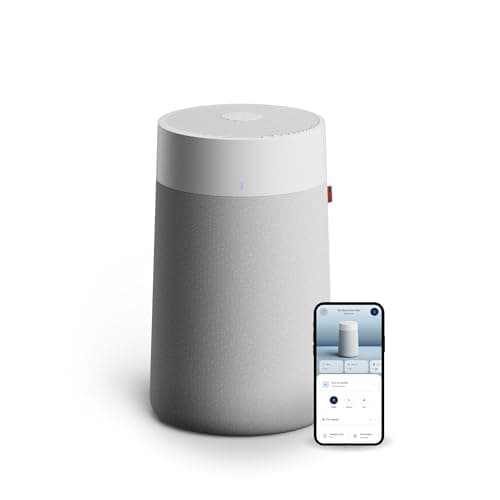 Better value, same brand Blueair Blue Pure 311i Max 283 certified CFM across 439 sq ft at 8.4 CFM per watt. | Mid-size rooms on a small electricity bill | 283CFM smoke AHAM VERIFIDE | |
| 3 | 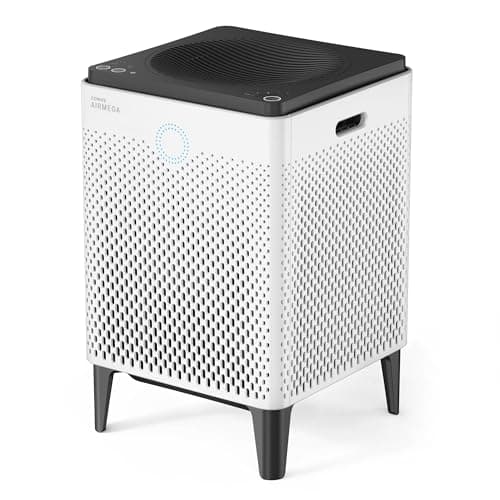 If the measured zero matters Coway Airmega 400 376 certified CFM with 0.00 ppb and washable pre-filters. | Large rooms, verified Coway | 376CFM smoke ENERGY STAR verified |
#ad We earn a commission if you buy through this link, at no extra cost to you. How this site is funded. Prices last checked September 27, 2026.
The alternatives worth weighing
Blueair Blue Pure 311i Max
Blueair · model 3332111100 (Blue Pure 311i Max)
#ad We earn a commission if you buy through this link, at no extra cost to you. How this site is funded. Prices last checked September 27, 2026.
439 certified square feet on under 30 watts. The best power-to-coverage ratio at mid size, with the same ion-generator caveat as the rest of the Max range.
283 smoke / 314 dust / 365 pollen CFM · 298 PM2.5
- Certified room size
- 439 sq ft
- Energy / year
- 193 kWh
- Electricity / year
- $35
- Air per watt
- 8.4 CFM/W
- Power draw
- 29.6 W
- Noise
- Not published
- Measured ozone
- 2 ppb
- Filter class
- HEPA-Type
- AHAM rule, 400 sq ft
- Clears it (267 needed)
Ion generator — fitted
AHAM classifies this model 'Fan Filter with Ion Generator'; ENERGY STAR records 'Fan and Filter' with 2 ppb measured ozone.
283 certified smoke CADR across 439 certified square feet at 8.4 CFM per watt — more room and better efficiency than the DustMagnet, for $35 a year.
The honest con: 2 ppb rather than 1, conventional top intakes, and the same two blanks on noise and filter cost.
Coway Airmega 400
Coway · model Airmega 400 (AP-2015F)
#ad We earn a commission if you buy through this link, at no extra cost to you. How this site is funded. Prices last checked September 27, 2026.
The Coway that is actually in a certification register: 376 certified smoke CADR, 583 square feet, zero measured ozone. If you want a Coway, this is the one with third-party numbers.
376 smoke / 384 dust / 409 pollen CFM · 380 PM2.5
- Certified room size
- 583 sq ft
- Advertised coverage
- 3,120 sq ft in 60 minutes
- Energy / year
- 366 kWh
- Electricity / year
- $67
- Air per watt
- 6.1 CFM/W
- Power draw
- 66 W
- Noise
- 22-52 dB(A)
- Measured ozone
- 0 ppb
- Filter class
- Composite Filter
- AHAM rule, 500 sq ft
- Clears it (334 needed)
No ionizer — filtration only
ENERGY STAR classifies this unit 'Fan and Filter', 0.00 ppb measured ozone.
376 certified smoke CADR across 583 certified square feet with 0.00 ppb measured, no ion stage, washable pre-filters on both faces and a published filter price. Our full review.
The honest con: a higher price bracket, $67 a year plus filters that cost more than the electricity, and a filter the register declines to classify.
Common questions
Is the Blueair DustMagnet 5440i worth it?
What size room is the DustMagnet 5440i for?
Does the DustMagnet produce ozone?
Does it really collect more dust than a normal air purifier?
Sources
- AHAM VERIFIDE directory of certified room air cleaners
- ENERGY STAR certified room air cleaners database
- EPA — Guide to Air Cleaners in the Home
Figures were read on the dates shown against each source. If one has changed, or if we have got something wrong, tell us and we will correct the page.
Read next
- Pet hair & odorThe Best Air Purifiers for DustRanked on certified dust CADR specifically — the one figure that answers this question directly.
- Room sizeBlueair Blue Pure 311i Max Review439 certified square feet on under 30 watts, with a pollen CADR 29% above its smoke figure — against 2 ppb measured ozone and an ion stage the registers describe differently.
- CADR & costBlueair vs CowayBlueair: 8.2-9.0 CFM per watt and 2 ppb of measured ozone with an ion stage the registers dispute. Coway: 0.00 ppb, washable pre-filters, and the biggest certified machine here.